Built-Up Roofing in West Valley City, UT

Assess built-up roof plies, surfacing, drains, flashings, and moisture in West Valley City before setting repair, recover, or replacement limits.

Inspect the built-up roof layers

An aggregate ridge beside a drain can hide a split in the cap sheet or a depression below the plies. We clear a test area and check the surface before recommending a patch. In West Valley City, UT, work near 3500 South may involve commercial and residential edges, while Fairbourne Station includes several occupied uses. We plan around the building, but the assembly condition decides the repair boundary.

Built-up roofing combines reinforcing plies with asphalt or bitumen to form a multi-layer membrane. The top may carry gravel, mineral surfacing, or a smooth cap sheet. Those layers give the roof redundancy, but they can also conceal where water travels. We identify the surfacing and visible plies, inspect laps and transitions, and open selected test areas when needed. The owner sees what is sound, what is wet, and which finding changes the proposal.
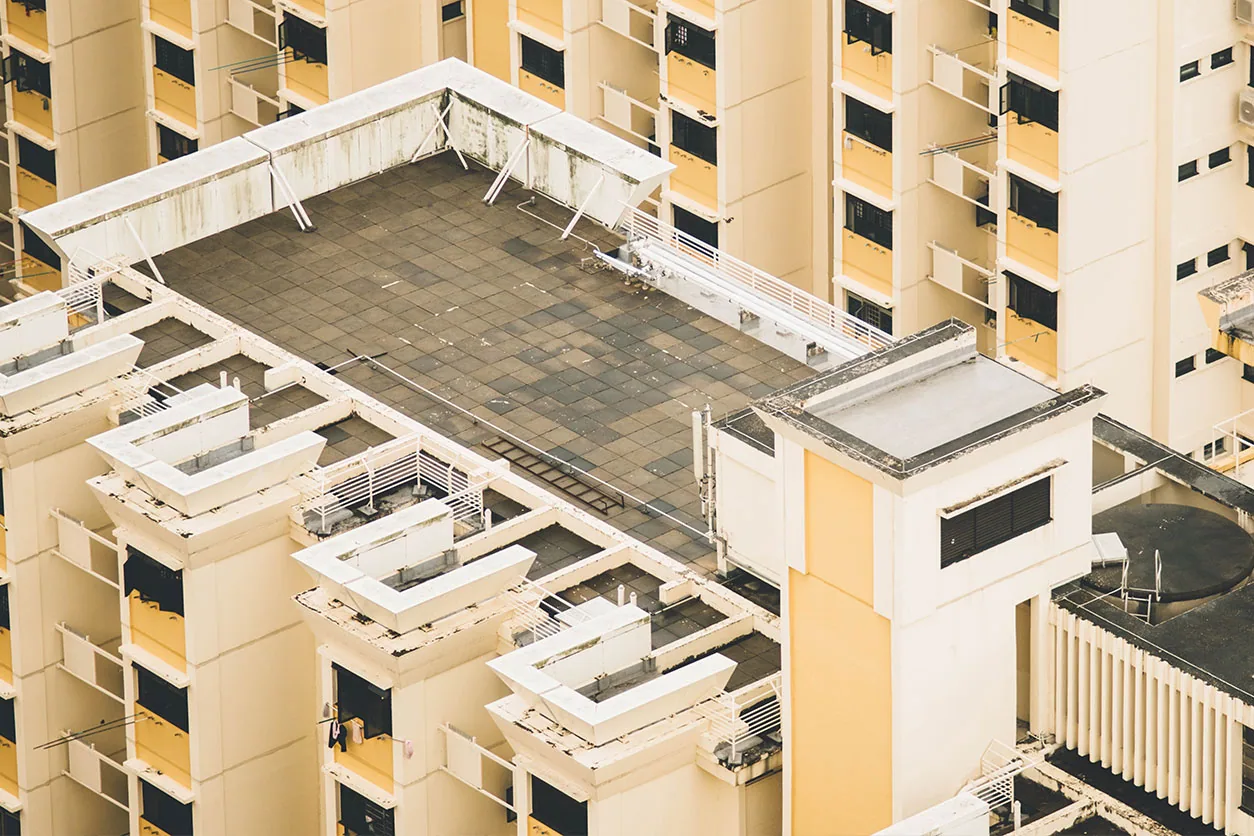
Gravel can shift under foot traffic or collect around drains and curbs. We move only enough surfacing to inspect the cap sheet and locate the split. A puncture may stop at one ply, while a blister or open seam can involve more layers. We mark the exposed defect and check how far the bond has separated. The repair cannot be sized accurately from the surface ridge alone.

At smooth-surfaced areas, we look for cracks, alligatoring, exposed reinforcement, and patches that no longer adhere. Around aggregate, we check for loose embedded gravel and signs of erosion. We prepare the area according to the selected repair method and confirm the new material can bond. If a split continues under the cap, we trace it to stable material. A roof inspection can document those findings before a larger opening is approved.

Built-Up Roofing

Check how many layers remain sound

Built-Up Roofing

A test cut separates a surface repair from a deeper assembly problem. We identify the cap sheet, reinforcing plies, asphalt, insulation, and deck where the opening allows. Wet insulation or a soft substrate can keep water moving beyond the visible defect. We photograph the layers and note the cut location. If the material below is dry and stable, the repair can often stop at the affected ply and its tie-in.

Multiple roof layers can complicate a recover or replacement. We check how existing plies are attached and whether added weight or thickness fits the structure and details. A modified bitumen assembly uses related sheet materials but may have different ply and cap-sheet construction. We do not treat those systems as interchangeable. The estimate lists known tear-off layers and calls out the areas that need more testing before removal quantities can be fixed.

Trace water to the drain bowl

Built-up roofs can hold water in low areas when the drain bowl or slope does not move it away. We remove loose debris, inspect the strainer and sump, and look for water lines in the surfacing. If the outlet is clear but ponding remains, we check for a settled deck or compacted insulation. That finding affects whether the membrane repair includes tapered insulation or a drain adjustment.

Curbs, parapets, scuppers, and metal edges need compatible transitions through each ply. We inspect the flashing height and the bond at corners, then mark any loose termination. A new cap sheet cannot correct metal that has separated from the wall or an undersized curb. For a localized opening, a roof repair scope can keep the work limited to the confirmed defect. We price drainage and edge corrections as separate items where they affect the final assembly.

Built-Up Roofing

Account for winter exposure

Freeze-thaw cycles make low points and exposed flashing worth checking before a repair plan is set. The airport station's 1991-2020 normal records minimums of 32 degrees Fahrenheit or colder on 20.6 January days and 7.9 December days. We use those calendar patterns to set an inspection window, then check the surface and product limits at the building. Before opening a roof, we check current surface conditions, drainage, and the selected material’s limits.

Fairbourne Station's planned mix spans office, hotel, medical, retail, housing, civic, and public-space uses. A roof project there can require a different access sequence than work at a warehouse or industrial property. The 3500 South corridor is a major arterial where redevelopment scenarios have been considered. Nearby street access may set where a lift parks or where debris moves. We coordinate those details with the facility contact rather than blocking a route during active use.

Price the repair against tear-off

Cost follows the affected area, number of plies, surfacing removal, and detail work. A small cut through one ply differs from a wet section that requires tear-off to the deck. We estimate visible quantities and mark each test location. If a core shows moisture beyond the first boundary, we document the revised area and request approval before adding work.

Repeated leak repairs, saturated insulation, or widespread ply separation can favor replacement. A recover may be considered only when moisture, attachment, layer count, and edge height allow another assembly. A TPO roof system can be compared if the design and existing conditions support it. We list the new insulation, membrane, drain, and edge scopes separately. That gives the owner a usable comparison between repair now and a broader capital project.

Record the plies and repair limits

Closeout photos should show the opened layers before repair and the finished surface after tie-in. We record where wet insulation was removed, which plies remain, and which sections were not tested. The owner can store that information with prior service records. A later inspection can compare the same drain or seam without assuming concealed areas were dry.

Commercial and residential uses mix at selected 3500 South locations. That broader setting can influence delivery routes and noise windows, while the site contact confirms the actual access plan. A roof condition report can keep photos and observations tied to each section. We note the agreed access window, work completed, and any follow-up area. The closeout file should make the next roof decision easier to scope.

Built-Up Roofing

Common questions

How do you find a leak beneath gravel surfacing?

We clear a small inspection area, follow visible water paths, and check laps, flashings, and drains. If the source remains unclear, a test cut can show where moisture entered and how far it reached. We mark the opening and document the layers found. The repair follows confirmed damage rather than spreading across every low spot.

Can a built-up roof be patched one ply at a time?

That can work when damage is isolated and the remaining plies and substrate are sound. We identify which layers are affected and tie the repair into stable material. If wet insulation or a weak deck lies below, a surface-only patch will not address the assembly. The scope notes the test result and the repair depth.

Does gravel need to be removed before a recover?

Loose or embedded surfacing may need removal or preparation so the new assembly can attach as designed. We check how much surfacing is present, whether the underlying plies are secure, and how added height affects drains and curbs. The specified system determines preparation. We price surfacing removal separately when it changes disposal or labor.

What makes a built-up roof a replacement candidate?

Broad ply separation, repeated leaks, wet insulation, or multiple failed transitions can shift the value toward removal. We map the defects and test representative areas before comparing options. If deterioration is local, repair may remain practical. We identify the evidence that moves the scope from a patch to tear-off.

How do you keep hot asphalt or torch work controlled?

We establish material handling, fire protection, access, and watch procedures before work begins. The installation method must fit the building and roof conditions. Crews open only the planned section and protect penetrations, equipment, and occupied areas. We check the work at each transition and record the point where the day's section is closed.

Inspect the built-up roof layers

ServicesRoof SystemsIndustriesProperty TypesService AreasDamage RepairCapabilitiesManufacturersContactAboutRequest a Roof Assessment555-555-5555
Call555-555-5555