KEE Roofing in West Valley City, UT

Compare KEE roof repair and replacement in West Valley City by reviewing membrane condition, seam strength, flashing exposure, drainage, and access.

Define the KEE repair scope

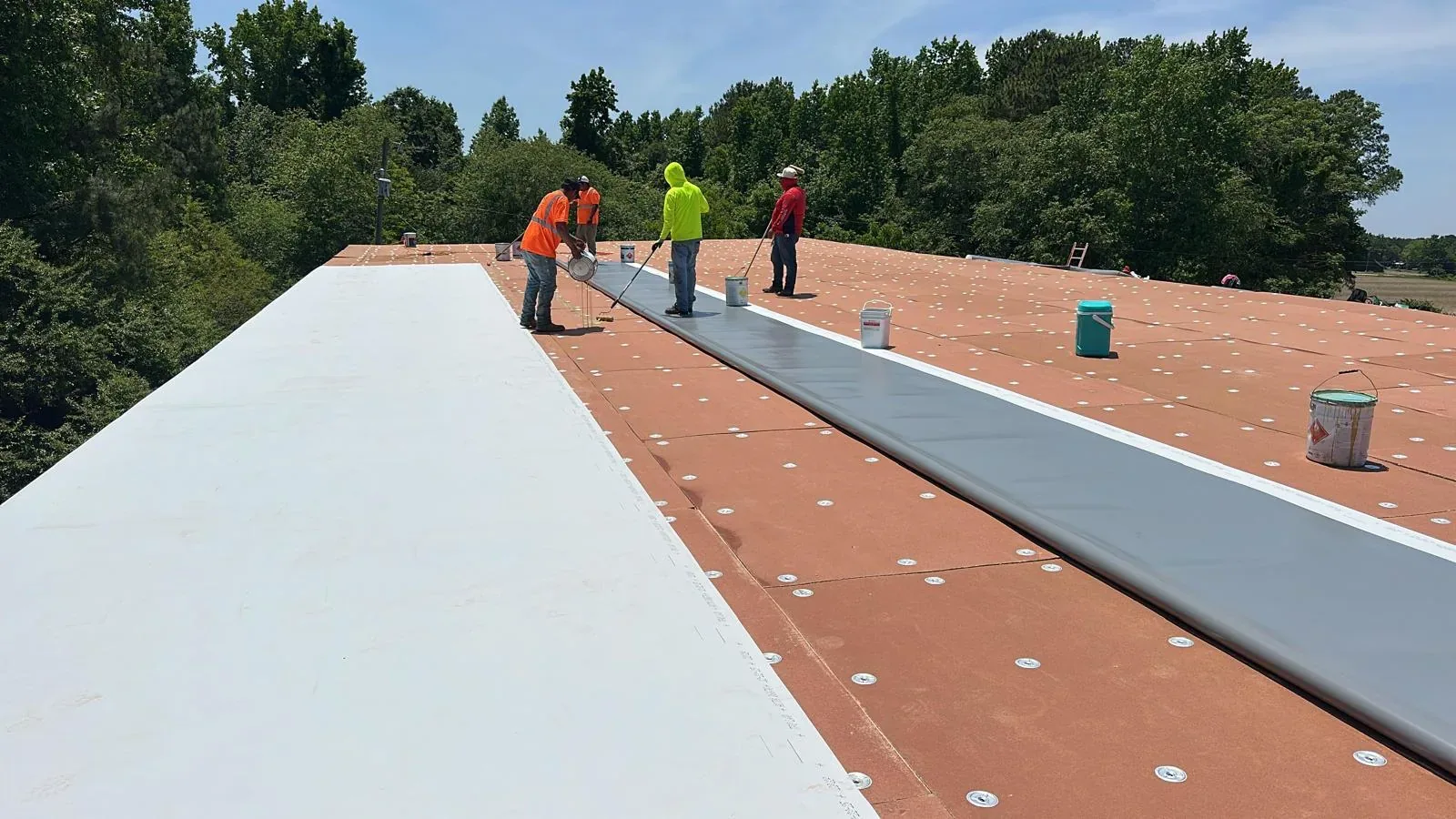
A cracked corner patch on a KEE roof needs a material and bond check before it is covered again. We inspect the sheet, seam, and flashing transition, then test whether the surface will accept a repair. In West Valley City, UT, a roof near the northern SR-201 industrial corridor may require lift and delivery coordination. At Fairbourne Station, a mixed-use setting can make access and occupant timing the first planning question.

KEE is a PVC-alloy membrane that includes a ketone ethylene ester modifier. It is supplied as a single-ply sheet with heat-welded seams. The material is not a substitute for sound attachment, clean preparation, or correct details. We verify the installed product, inspect its condition, and make a test weld where appropriate. That shows whether the repair can stay small or whether aging, moisture, or movement calls for a broader option.
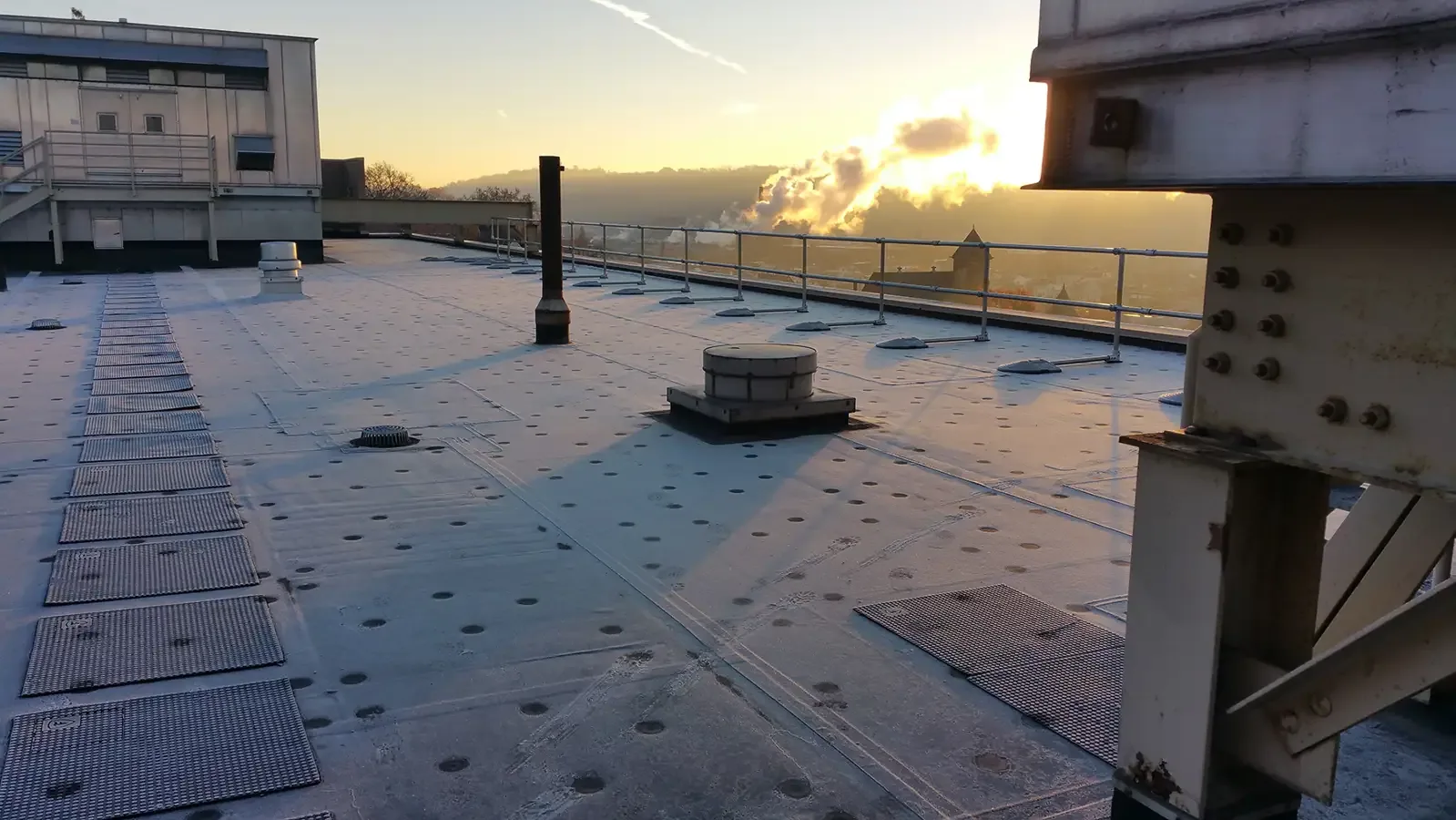
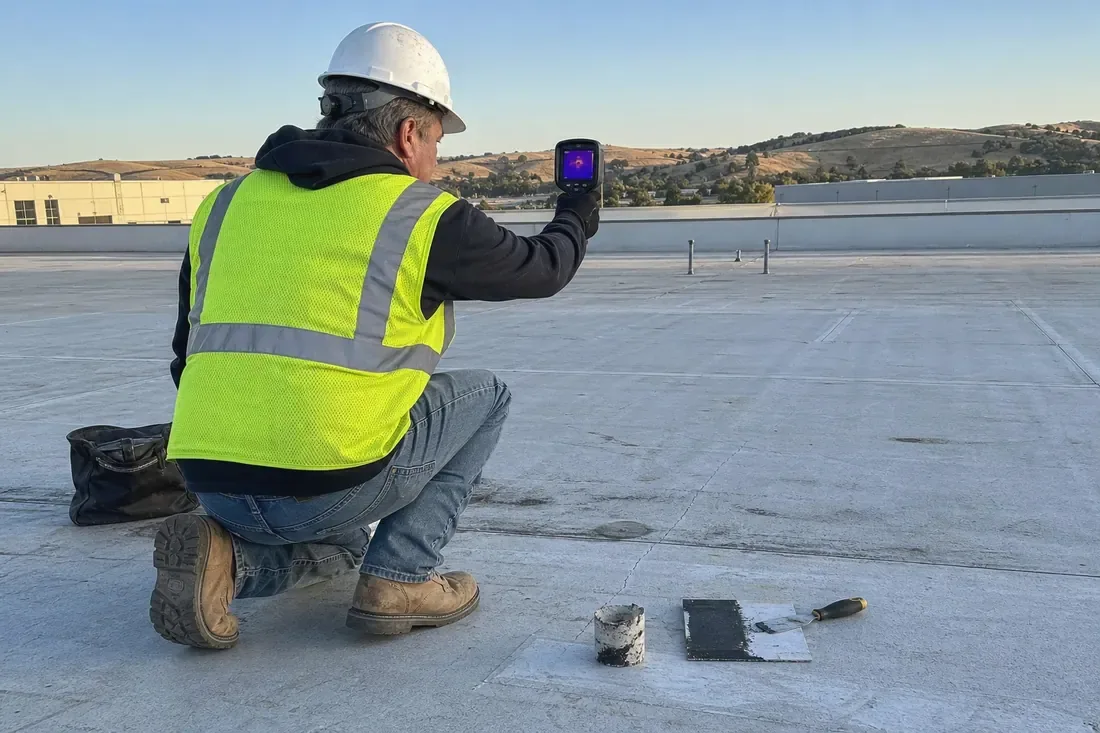
Color and surface texture do not confirm that a roof is KEE. We review available project records and look for labels or markings that identify the sheet. Then we check flexibility, reinforcement, seams, and prior patches. A compatibility assumption can lead to a repair that does not bond. If the product cannot be confirmed, we test a small prepared area before setting the permanent patch detail.

Heat-welded seams need clean surfaces and controlled temperature. A weld that is too cool may not fuse; excess heat can damage the sheet. We adjust the welder to current field conditions and test the bead before continuing. A probe after cooling checks the seam edge. For comparison, a PVC membrane system has a related thermoplastic seam process, but product requirements still govern preparation. The repair scope identifies the material assumption and any limits that remain.

KEE Roofing

Find where the bond gives way

KEE Roofing

A seam opening at one point may stop at the nearest sound weld, or continue under an older repair. We follow the lap, inspect the corners and T-joints, and probe the cooled seam. A blister or wrinkle near a curb can also indicate movement below the membrane. We mark the condition before removing material. The repair boundary follows the defect evidence, not the visible stain alone.

Membrane chalking, cracking, or loss of flexibility may change the repair decision. We examine the exposed surface, check how it responds to a prepared weld, and compare nearby areas. A test cut can show whether the insulation is wet or compressed. If the issue extends into the base, the patch alone will not restore support. A hands-on inspection can map test locations and record layers found before work is priced.

Rebuild the transition, not just the field

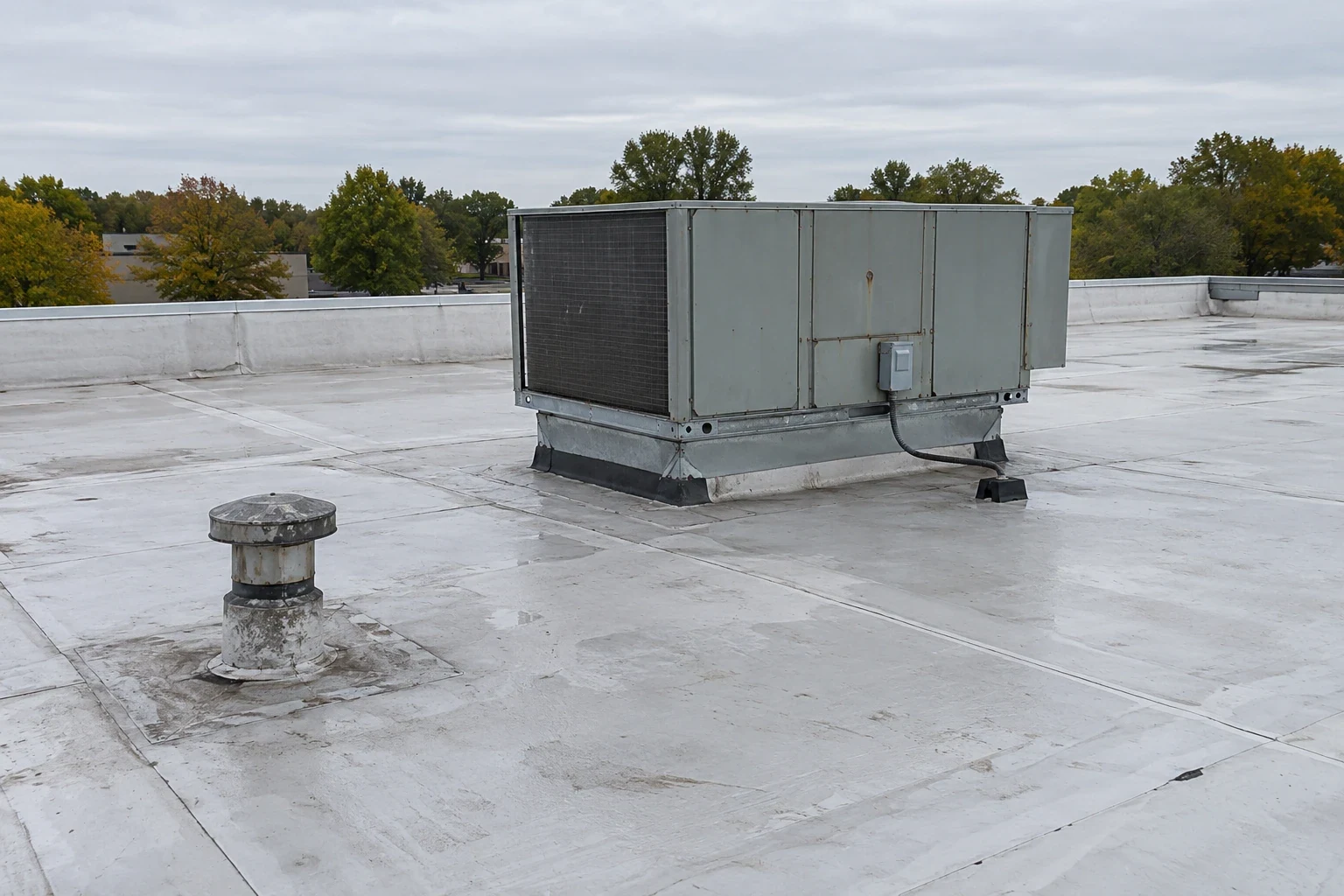
Curbs, pipes, drains, and parapets create changes in plane that need their own flashing detail. We check the membrane turn-up, corner welds, metal termination, and available flashing height. A short curb may not leave enough room for a reliable transition after another roof layer is added. We measure the detail and record whether metal, insulation, or a curb extension belongs in the scope.

Drain bowls and scuppers need to remain clear after repairs. We inspect the sump and nearby low point for debris, settlement, or a blocked path. A new sheet follows the existing slope unless drainage work changes the assembly. If water remains around a detail, we identify that condition before attributing the issue to KEE. For an isolated opening, a flashing failure repair can be compared with a wider field repair. Each item stays tied to its location.

KEE Roofing

Set the work area around access

Staging plans differ between a logistics property and a mixed-use district. West Valley City places trucking and distribution facilities along the northern SR-201 corridor, where access roads support active movement of freight. We coordinate lift location, delivery timing, and a daily dry-in limit with the site contact. The sequence protects the open work area and keeps material handling away from the operating path.

The city’s plan for Fairbourne Station lists public space, medical offices, retail, lodging, offices, and multifamily housing. For a building in that district, we confirm shared entrances, tenant hours, roof access, and any equipment that cannot be shut down. We schedule welding and removal in sections that fit those constraints. Salt Lake City International Airport's 1991-2020 normal annual precipitation is 15.52 inches. We check the roof and current weather before opening the first seam.

Compare a patch with a larger scope

Repair cost changes with seam length, flashing count, surface preparation, and equipment access. A short field patch does not carry the same work as replacing a curb wrap or removing wet insulation. We identify the known quantities and mark each test area. If concealed damage extends beyond the opening, we document it and revise the boundary for approval rather than stretching the original allowance.

Multiple leaks, widespread seam release, or brittle sheet can support a replacement comparison. The proposal can separate field membrane, edge metal, drainage, and substrate work. A replacement assembly may also allow a new insulation layout if design and deck conditions permit. We compare that path with localized repair and, where appropriate, a TPO assembly. The chosen material follows exposure, attachment, details, and project requirements rather than a surface preference.

Keep the repair evidence together

A good closeout record shows the affected seam, the repair limits, and the details finished. We include photos of the test weld, prepared surface, flashed transitions, and any insulation replaced. Exclusions are listed by location so later inspections can tell what was observed and what remains unknown. Those records give a maintenance team a practical reference for the next walk.

For recurring roof reviews, a condition report can group photographs and repair details by building section. We record access conditions that shaped the work. Near the North SR-201 industrial corridor, freight activity may set a lift window; at Fairbourne Station, shared routes can affect entry. The closeout ties the KEE repair to those operating limits without implying that unvisited areas were inspected.

KEE Roofing

Common questions

How do you confirm that an existing roof is KEE?

We review records, membrane markings, and visible material characteristics. A product identification check matters because cleaning and repair procedures differ. If the sheet cannot be confirmed, we make a small test weld or ask for product documentation before selecting a permanent repair detail. We state any remaining uncertainty in the scope.

Can a failed KEE seam be welded again?

A repair weld can work when the sheet remains suitable and the surfaces can be prepared. We remove loose material, test the weld, allow it to cool, and probe the edge. If the membrane has become brittle or the opening runs into other failed details, the repair may need a broader boundary. We show the test result before expanding the line.

What should be checked around rooftop equipment?

We look at curb height, corner welds, flashing movement, service clearance, and the path water takes around the unit. Maintenance work can disturb a membrane or leave tools and debris at the transition. We record the specific condition and coordinate access with the equipment service contact before choosing a repair method.

Can KEE go over an existing roof?

A recover depends on layer count, moisture, attachment, drainage, and the height of curbs and edges. We inspect and test the base before recommending another layer. Wet or loose areas may need removal first. The estimate identifies what is confirmed and what cannot be priced until a test opening is approved.

How do you keep the roof watertight during KEE work?

We limit how much membrane is opened and set a dry-in point for each shift. The work area, forecast, access equipment, and operating schedule determine the sequence. Before leaving, the crew checks completed welds, drains, and temporary protection. We record any area that remains open or needs follow-up at the next access window.

Define the KEE repair scope

ServicesRoof SystemsIndustriesProperty TypesService AreasDamage RepairCapabilitiesManufacturersContactAboutRequest a Roof Assessment555-555-5555
Call555-555-5555