TPO Roofing in West Valley City, UT

Review TPO seam condition, insulation, drainage, and perimeter details for a commercial roof in West Valley City before repair or replacement is priced.

Set the TPO repair boundary

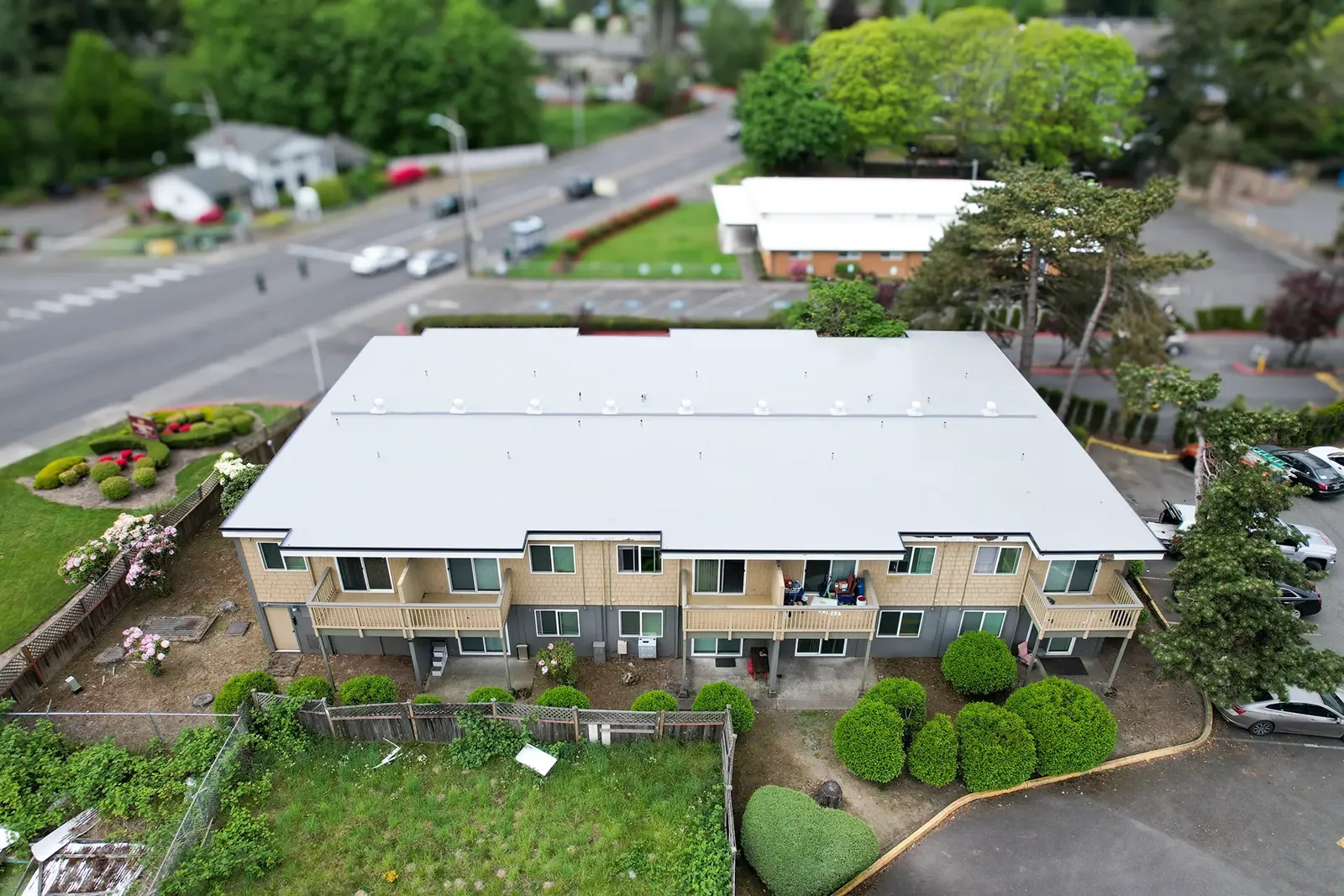
A lifted TPO corner beside a curb can be a detail failure or a sign that the sheet has pulled under stress. We check the weld, flashing height, attachment, and nearby insulation before setting the repair boundary. In West Valley City, UT, the work plan can differ between a distribution building near the northern SR-201 corridor and an occupied office at Fairbourne Station. Roof use changes access and the order of inspection.

TPO is a thermoplastic single-ply membrane with heat-welded seams. A clean weld can hold when the surfaces are prepared and the seam receives the correct heat and pressure. Dirt, moisture, old repair material, or changing membrane condition can leave a weak bond. We inspect the existing sheet and details first. Then we tell you whether localized repair, a larger restoration, or replacement deserves a price comparison.
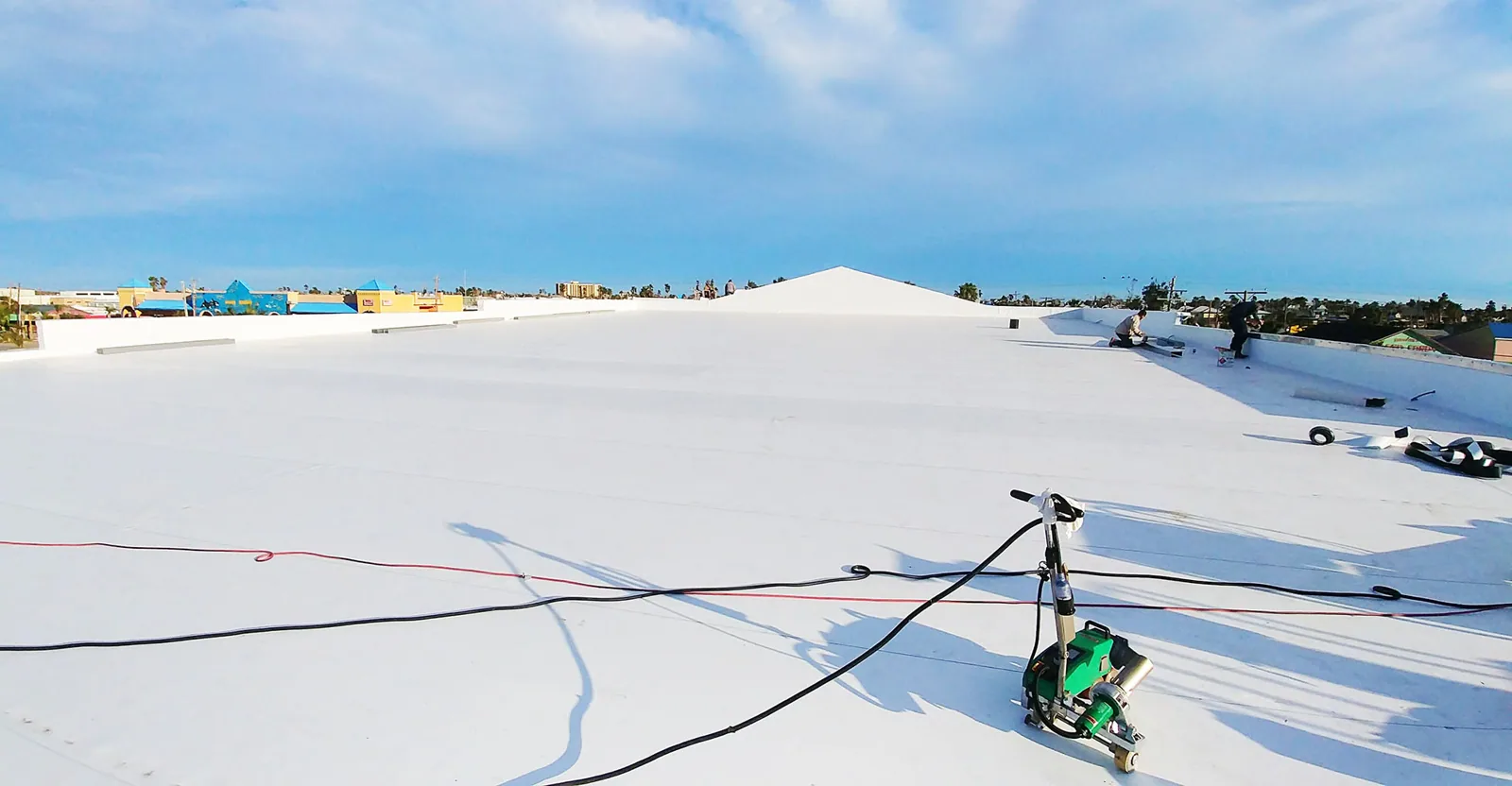
A seam that opens at one point needs a closer look on both sides of the split. We probe the weld, check for wrinkles, and follow the sheet to the nearest stable bond. A narrow opening may stay local if the membrane remains flexible and the substrate is dry. If separation continues under the sheet or several nearby welds release, we mark a wider area for testing before pricing repair.

Corner patches, T-joints, curb transitions, and field laps each need a different repair detail. We remove incompatible repair material where needed, clean the membrane, and prepare a test weld before committing to a longer seam. The probe test checks the result after cooling. For a recurring separation, our seam failure repair scope records the opening, adjacent bond, and corrective work. We photograph the finished line before it is covered or returned to service.

TPO Roofing

Test the base before choosing attachment

TPO Roofing

A membrane can look intact while the insulation beneath it has softened or separated. We inspect for movement, crushed board, wet cores, and uneven support at the suspect area. A test cut answers whether moisture is isolated or extends farther than the visible defect. We mark each opening and record the layers found. The result decides whether a patch can remain a surface repair or must include insulation replacement.

Attachment also affects how a replacement assembly behaves. Fasteners, adhesive, or another approved method must suit the deck, insulation, and project design. We inspect existing attachment where it can be verified and note where a cut or drawing is needed. When replacement is on the table, we compare TPO with an EPDM rubber membrane only where the building and design support that selection. We keep concealed substrate work separate until testing confirms its extent.

Keep water and edges in the scope

A membrane repair can hold while a low drain continues to keep water at the same seam. We clear the drain bowl and look at the sump, slope, scupper, and nearby insulation. Ponding may trace to a blocked outlet, a settled deck, or a depression in the assembly. Each cause calls for a different fix. We show whether the TPO work stops at the membrane or includes a drainage correction.

Perimeter details carry the sheet into walls, curbs, and edge metal. We check termination bars, corners, coping, and fasteners for movement or corrosion. A loose edge can allow wind pressure to work farther into the assembly, so the repair line must reach a sound attachment. If the base remains dry and attached, a silicone roof coating may merit a separate compatibility check. We list drain, curb, and perimeter corrections apart from field membrane quantities.

TPO Roofing

Set a workable access window

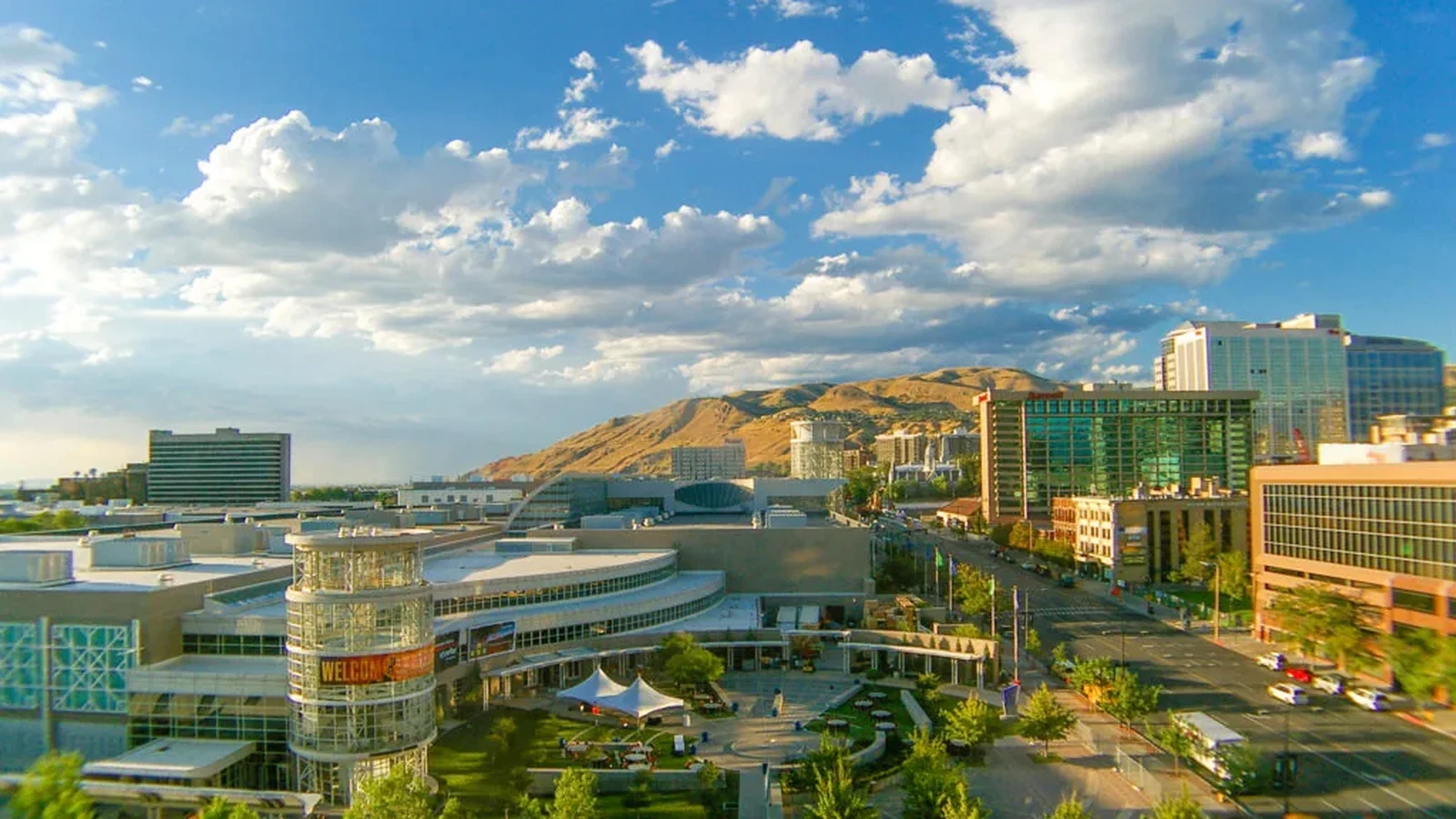
Delivery schedules can constrain where material is lifted and how a roof section is reached. West Valley City identifies trucking and distribution uses along the northern SR-201 corridor. At a facility in that setting, we coordinate with the site contact on loading activity, crane position, pedestrian routes, and a daily dry-in line. Those steps affect the sequence, not the membrane specification. We confirm the access window before a crew opens a larger area.

Fairbourne Station has office, hotel, medical, retail, multifamily, and public-space uses in its planned mix. For an occupied property, we ask which entrances, rooftop units, or tenant areas need quiet or uninterrupted service. We schedule noisy preparation around those limits and keep drains and walk paths clear. Regional station normals also show seasonal conditions worth checking: July highs average 94 degrees Fahrenheit and winter lows fall below freezing in January and December. The roof temperature and product limits still get checked at the building.

Price the repair boundary

Repair cost follows the defect area, access, preparation, and detail count. A single field seam may need a short weld and surface preparation. A curb with failed flashing can require removal, new membrane, and metal work. If test cuts find wet insulation, the repair boundary moves to dry material. We mark those quantities on the roof plan instead of extending a patch allowance across untested areas.

Repeated leaks, broad shrinkage, or widespread seam failure may justify comparison with commercial roof replacement. A sound, compatible assembly may instead support targeted roof repair. We identify the condition that separates those choices, along with work that remains outside each price. If a recover is under consideration, we check layers, drainage, and curb height before adding material. The estimate can then show the repair and broader option on comparable boundaries.

Record the finished welds

Closeout should make it possible to find the repaired seam later. We mark its location, photograph the completed weld and flashing, and note any test cut or insulation replacement. The record also lists areas that could not be opened or inspected. An owner can use that baseline during maintenance and compare changes without treating a new stain as proof that the same defect returned.

For a larger roof, a roof condition report organizes photos and observations by section. We can also note access limits that shaped the work. Along the North SR-201 industrial corridor, loading access may set the work window; at Fairbourne Station, tenant movement can affect staging. The final record connects the membrane work to the operating conditions that mattered on site.

TPO Roofing

Common questions

When does a TPO seam need replacement instead of another weld?

We inspect how far the bond has released and whether adjacent sheet remains flexible. A clean, isolated opening may accept a prepared repair weld. Brittle material, repeated separation, or movement that continues beyond the visible split can call for a wider repair or system comparison. We test the proposed weld and mark its boundary before pricing the work.

Can you weld a patch over an older TPO repair?

Old material has to be identified and checked for bond and compatibility first. We remove loose or unsuitable layers, prepare the surrounding membrane, and make a test weld where needed. If the old patch hides damage or prevents a sound connection, we extend removal to stable material. The proposal identifies those conditions instead of assuming every prior repair can stay.

What can make TPO repair pricing change after testing?

Moisture below the sheet, soft insulation, loose attachment, or a curb detail that cannot be reused may add work. We choose test locations to resolve a specific scope question. If the core shows dry, stable layers, the repair can stay smaller. If wet material continues outward, we document the new boundary and obtain approval before expanding the work.

Does TPO work need to stop during cold weather?

The roof surface, membrane condition, and product installation limits control that decision. We check actual temperatures and wind at the building, then confirm that the sheet can be cleaned and welded as required. The Salt Lake City International Airport station's summer normals include daily highs of 94°F in July and 91.7°F in August. At the building, we check roof temperature directly. We schedule the work when the field conditions support a dependable weld.

How do you protect building operations during TPO work?

We set the daily work area around access, deliveries, rooftop equipment, and the dry-in line. The site contact identifies restricted entrances and operating periods. At a distribution property, crane and loading routes can matter; at an occupied mixed-use property, pedestrian paths and tenant hours may control preparation. We confirm those limits before staging materials or opening the membrane.

Set the TPO repair boundary

ServicesRoof SystemsIndustriesProperty TypesService AreasDamage RepairCapabilitiesManufacturersContactAboutRequest a Roof Assessment555-555-5555
Call555-555-5555