Commercial Roof Seam Failure Repair in West Valley City, UT

Repair split or open commercial roof seams in West Valley City, UT. We inspect the lap, substrate, and nearby details before defining the repair area.

Trace and repair the open roof seam

An open lap beside a drain can admit water while the rest of the membrane remains bonded. The repair depends on the seam type, the condition of the material on both sides, and whether moisture has moved below the sheet. We inspect the opening, check nearby laps, and mark where the weld or adhesive can meet sound roof. In West Valley City, UT, that boundary determines whether a seam repair stays narrow or becomes a larger cutback.

Seams can fail after poor adhesion, contamination, movement, or repeated stress at a transition. A bead of sealant over the top does not restore a weak bond. We clean and prepare the joint, test whether the existing material holds, and choose a compatible repair method. If a test cut shows wet insulation, the scope includes that layer only after it is documented and approved.
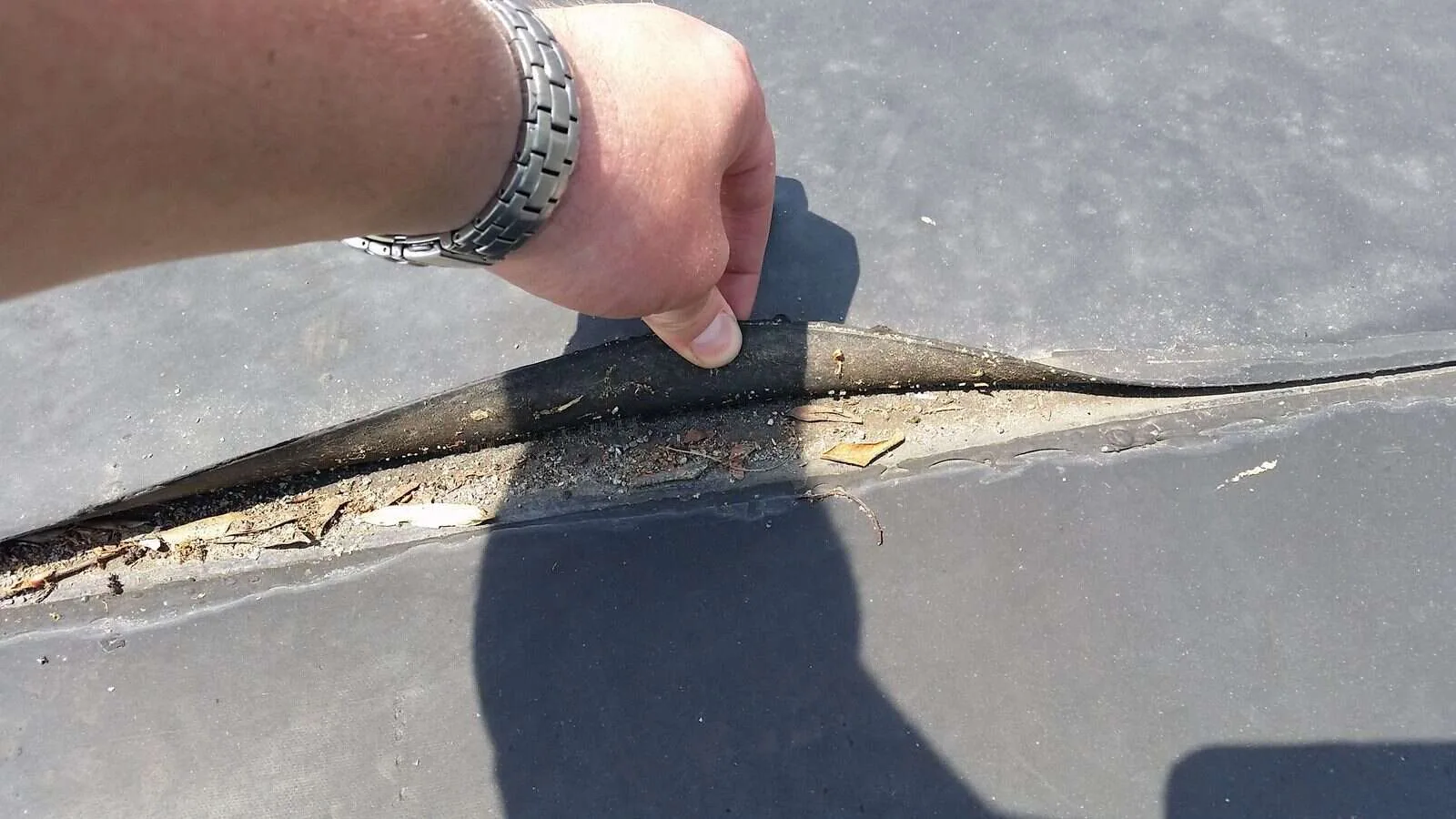
We inspect the full split, not just the point where it first opened. The lap is checked for contamination, fishmouths, cold welds, adhesive separation, and movement at the edge. A probe or field test can show whether the bond continues to hold beside the visible gap. If the seam is sound beyond a short failure, a local repair may work. If the separation continues, the repair must extend to a stable bond line.

At the Salt Lake City International Airport station, the 1991-2020 normal includes 20.6 January days and 7.9 December days with minimums at or below 32°F. Seasonal cold makes water at an open lap a reason to check for trapped moisture. A roof inspection can record the seam, nearby drains, and test locations before removal.

Commercial Roof Seam Failure Repair

Check the details that pull on the lap

Commercial Roof Seam Failure Repair

A seam can separate where a sheet turns at a curb, wall, drain, or edge. We check whether the adjoining material has lifted, whether fasteners are backing out, and whether the substrate has softened. A seam that fails again beside an unsupported transition needs more than another surface weld. We identify the related flashing or attachment condition and coordinate any equipment work with the trade responsible for that system.

The city’s Fairbourne planning area combines civic uses, shops, offices, hotels, and multifamily housing. If a seam repair is above an occupied area, the site contact identifies interior protection, roof access, and a work window that fits the building. A flashing failure repair may be needed where the lap meets a curb or wall. For an open drain connection, ponding water roof repair can address drainage contributing to repeated wetting.

Prepare the surface for a lasting tie-in

The new material needs a clean, dry, and stable surface. We remove loose membrane and failed sealant within the approved scope, then examine the substrate and surrounding sheet. A hot-air weld, adhesive patch, or cover strip is selected to match the existing system. The repair includes the seam width, end laps, and terminations needed to stop water from running beneath the patch. We leave the finished edge available for inspection.

If the existing seam can be reopened and rewelded, that may preserve more of the roof than cutting out a broad section. When the membrane is brittle, contaminated, or no longer bonds, a wider replacement strip may be needed. A TPO seam repair uses compatible membrane and heat-welded detail, while an adhered assembly needs a different preparation. We identify the system before choosing material and do not assume every lap uses the same method.

Commercial Roof Seam Failure Repair

Verify what sits below the opening

A dry-looking seam does not show whether insulation below it has taken on water. We look for soft spots, displaced boards, staining at the deck, and changes in roof level. Once approved, we open a small test area to see the assembly beneath the membrane. We document moisture, thickness, and material condition, then restore the opening with a compatible detail. The result applies to the location tested and may not describe a separate roof section.

West Valley City’s northern SR-201 corridor is planned for trucking, distribution, and light-industrial uses. At a warehouse or service property, a leak over stored material can make interior protection and delivery access part of the repair sequence. We coordinate where a lift or repair crew can stage and keep the wet-area report tied to the affected roof zone. A phased occupied-building repair can keep other sections in service while the seam is rebuilt.

Compare seam repair with replacement

A limited split with a strong bond nearby can support a local repair. Several open seams, widespread adhesive release, or wet layers under multiple sheets may point to broader work. We show the number and location of failures, test findings, and any areas not opened. That makes the option clear: repair the defined joints, remove and replace a larger strip, or plan a recover or replacement if the assembly no longer supports a reliable tie-in.

Scope cost changes with seam length, access, membrane type, interior protection, and the quantity of wet material. We identify each item and separate known work from concealed damage. For a broader assembly issue, a commercial roof replacement can include tear-off and dry-in in controlled sections. If ponding is stressing the same joint, a drain and scupper repair may need to be completed with the seam work.

Record the seam and finished weld

Closeout photos show the original opening, prepared lap, completed repair, and end points where new material ties into the old. We record test cuts, any moisture found, and seams left outside the authorized area. If another trade needs access to a curb or rooftop unit, the handoff states which roof work is complete and what remains. A marked roof-zone reference lets staff locate the repair without relying on a remembered leak path.

West Valley City’s transportation plan identifies 3500 South and 4700 South as major arterials serving commercial activity. A project near either corridor may need a different delivery or parking window, which the site contact confirms before mobilization. A roof repair near 4700 South still begins with the specific seam and roof assembly. A roof condition report can preserve seam locations and future repair priorities.

Commercial Roof Seam Failure Repair

Common questions

Can you repair one open seam without replacing the roof?

Yes, when the membrane and substrate hold beside the failure and the repair can tie into a sound bond. We inspect the full joint and test the material at the edges. If the separation extends or concealed layers are wet, the repair boundary may need to widen before a price is final.

Why would a seam open again after it was patched?

A repeat opening can point to poor bond beyond the original patch, movement at a curb or edge, contamination, or material that no longer accepts a weld. We inspect the full lap and adjoining details before choosing another method. The repair should address the condition that keeps pulling the seam apart.

Do you need to cut the roof to repair an open lap?

Not always. If the surface and bond are sound, a compatible strip or reweld may be enough. A test cut is useful when insulation or deck condition changes whether a narrow repair is appropriate. We request approval and restore the opening after recording the exposed layers.

What affects the cost of seam repair?

Length and access matter, as do membrane type, interior protection, and any wet layers discovered. We measure the open joint and identify how much sound material is needed for a tie-in. If testing expands the area, added removal and dry-in are shown as separate work before proceeding.

How can facilities staff verify the repaired seam later?

The closeout names the roof section and photographs the prepared lap, finished strip, and end points. We also record test locations and any nearby seam that was not included. Staff can compare a future leak report with those references during the next inspection.

Trace and repair the open roof seam

ServicesRoof SystemsIndustriesProperty TypesService AreasDamage RepairCapabilitiesManufacturersContactAboutRequest a Roof Assessment555-555-5555
Call555-555-5555