Commercial Roof Drains and Scuppers in West Valley City, UT

Clear, repair, and improve commercial roof drainage in West Valley City with drain, scupper, cricket, and ponding findings tied to a clear scope.

Trace the drainage failure

A scupper with a rusted throat can hold water at the parapet even when the roof drain is clear. We trace the drainage path from the field to the outlet, then check the drain bowl, strainer, flashing, and discharge point. In West Valley City, UT, a distribution roof near the northern SR-201 corridor may need access coordinated with dock activity; a building in the Southwest Opportunity Area may have a different roof layout and access route. The correction depends on where water stops moving.

Routine clearing is different from repairing a failed drain or correcting persistent ponding. We note debris and blocked outlets, inspect nearby membrane and metal, and identify whether a cricket or tapered section is directing water properly. If ponding appears tied to a structural concern, we document the condition and recommend the appropriate engineering review. The owner receives a defined drainage scope rather than a surface patch with no outlet check.
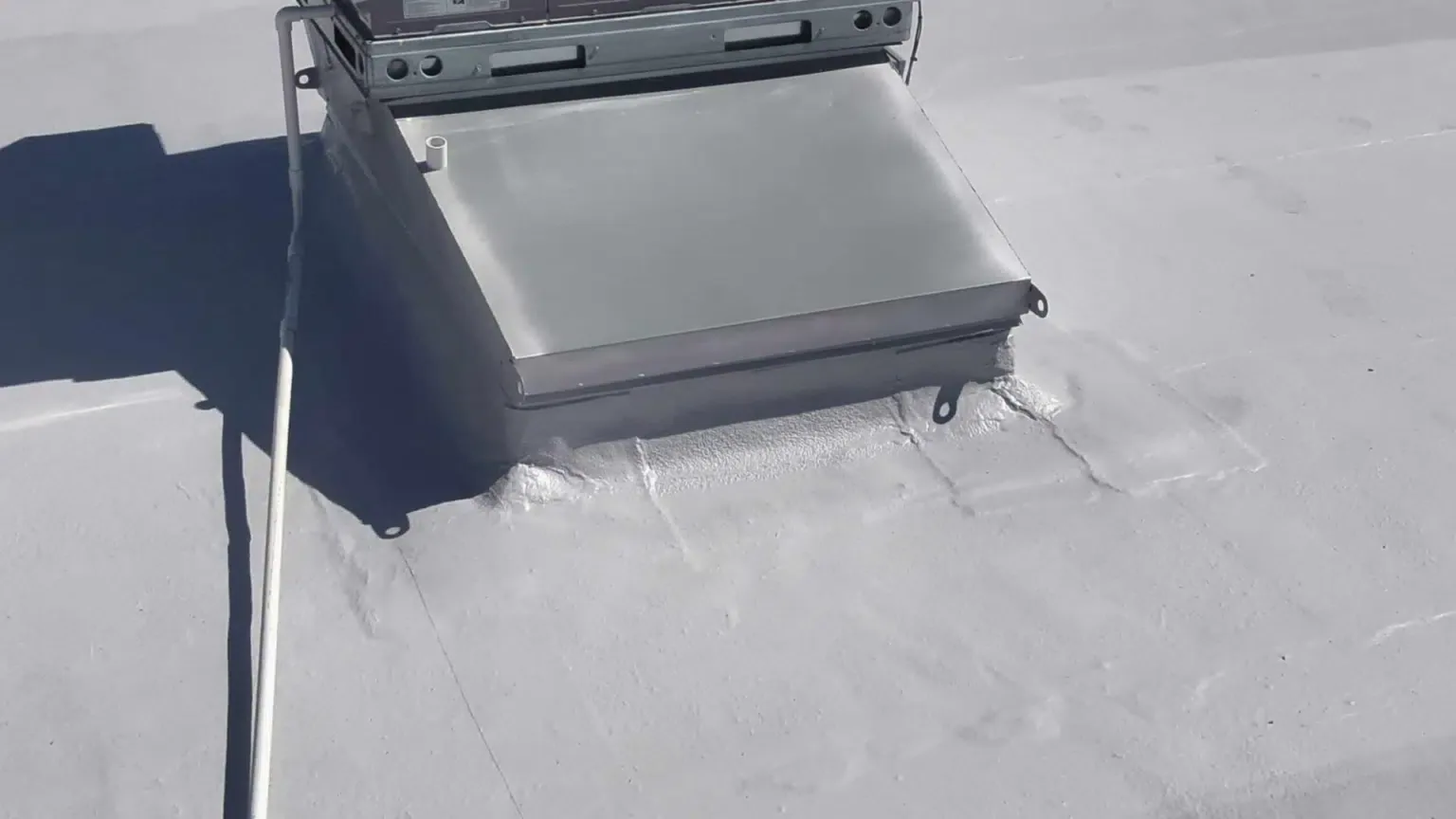
A drain can appear clear at the grate while sediment or a restriction remains below it. We inspect the strainer, drain bowl, clamping ring, flashing, and surrounding membrane. We look for debris lines, mineral deposits, lifted edges, and repeated wetting around the throat. Where access allows, we confirm that the outlet path is open and coordinate with plumbing staff if the restriction continues below the roof connection.

Water that backs up around a drain can stress seams and create a recurring leak path. We record the extent and whether the condition is isolated or repeated at other low points. A roof inspection can check nearby details and document the field slope. If the drain body, ring, or flashing has failed, a commercial roof repair can replace the damaged detail while keeping the repair boundary tied to sound material.

Commercial Roof Drains and Scuppers

Check scuppers and parapet transitions

Commercial Roof Drains and Scuppers

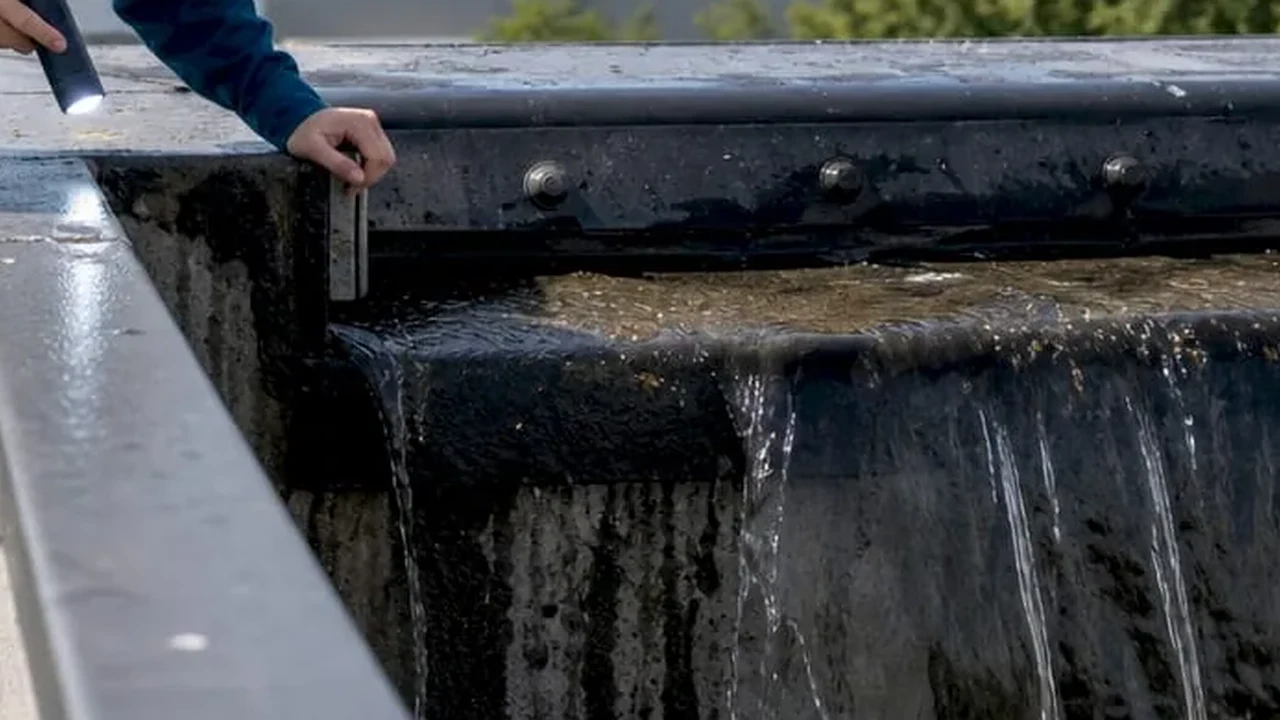
A scupper opening needs a clear throat and a watertight connection through the wall. We inspect its metal, interior flashing, sealant, and the roof membrane where each material meets. Rust, a loose edge, or a split corner can let water into the wall assembly. We also check whether debris or a downstream leader is restricting the outlet. A repair that seals only the visible lip may leave the failed transition untouched.

Parapet height and nearby roof slope affect how water reaches a scupper. We look for ponding marks and confirm whether the low point actually drains toward the opening. If the roof has a secondary overflow, we check that it remains open and that the surrounding flashing is secure. A coping and gutter repair may be needed where the drainage issue reaches perimeter metal. We photograph each outlet and mark the area included in the work.

Find why water remains after the outlet clears

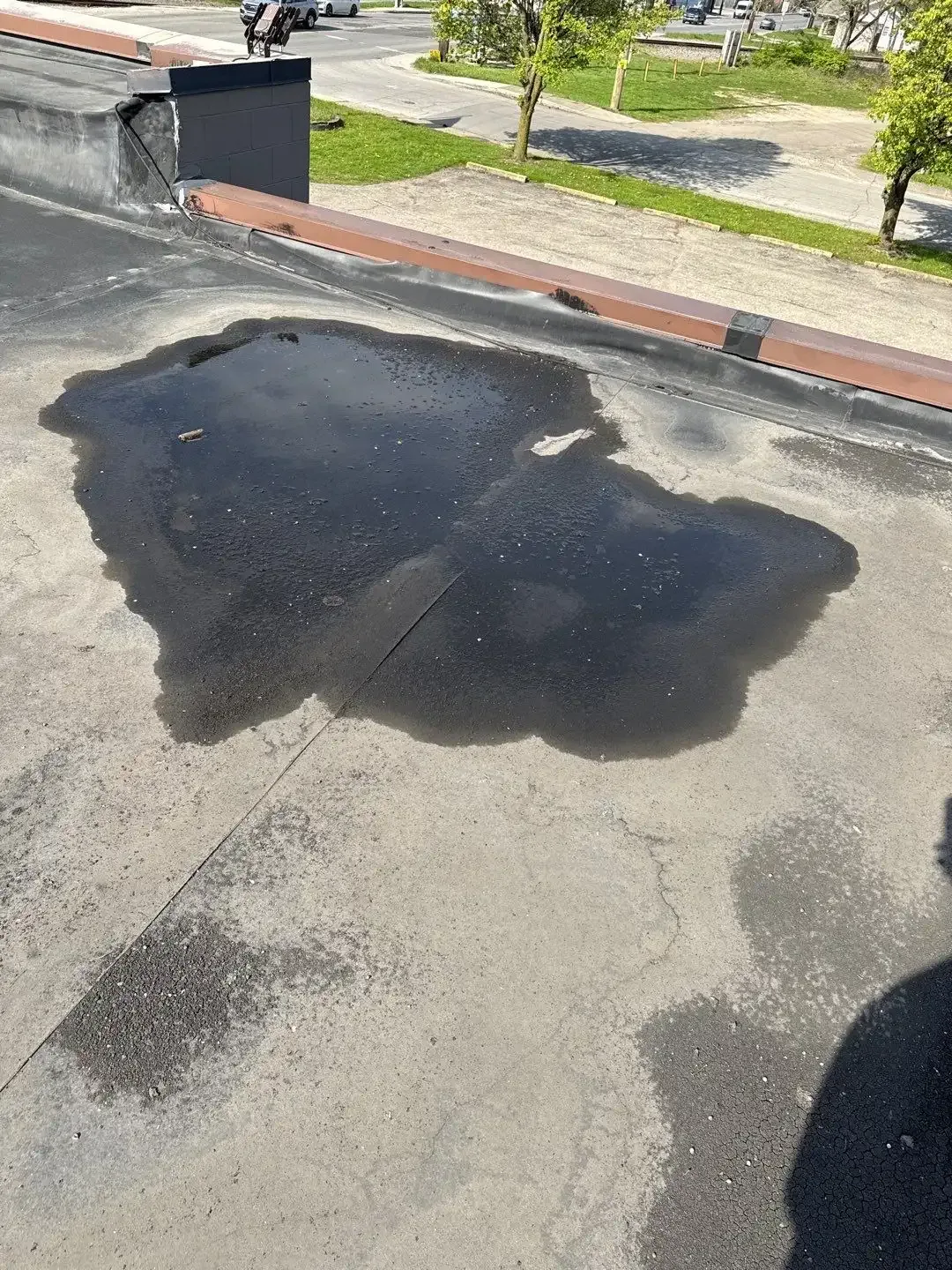
A shallow puddle can persist because a drain is blocked, a roof section has settled, a cricket is missing, or an existing slope does not reach the outlet. We measure and photograph the affected area, check for debris and surface damage, and compare the wet footprint with seams and nearby drains. Water depth or duration alone does not identify the cause. If the pattern suggests movement or deflection, we recommend an engineer’s review before changing the roof build-up.

Salt Lake City International Airport station normals record 15.52 inches of annual precipitation for 1991 to 2020. We inspect roof slope, outlet capacity, and the actual drainage path before choosing a correction. A new cricket or tapered assembly can direct flow, but the scope must consider roof height, flashing transitions, and available drain capacity. A ponding water repair can address a confirmed roof-level failure or route water toward a functioning outlet.

Commercial Roof Drains and Scuppers

Plan drainage work around the building

Trucking and distribution activity runs along the northern SR-201 corridor, while Bangerter Highway and I-215 provide access to the city's industrial areas. For drain work, arrival and material staging need to fit the building’s actual loading path. We confirm where a lift or debris container can sit, which doors remain in use, and whether interior protection is needed beneath the outlet. Those details affect access time and the sequence for opening the roof.

The Southwest Opportunity Area includes major manufacturing uses and large parcels. We follow each drainage run to its outlet and map the actual roof before choosing a repair. On a warehouse, inventory and dock constraints can shape staging; North SR-201 service planning can coordinate the access window with facility operations.

Match the correction to the failure

Clearing debris may restore flow when the drain and surrounding details are intact. A damaged bowl, loose clamping ring, failed scupper, or open flashing needs repair at the connection. If water remains because the roof plane does not reach the outlet, a tapered correction may be considered after the cause and transitions are reviewed. We identify which work is included, which requires plumbing or engineering support, and what parts remain outside the roof scope.

Drainage improvements can involve membrane, insulation, cover board, metal, and interior protection. The roof must be dry and sound where the new detail bonds. We compare a local correction with broader tapered insulation or cover-board work when the slope change affects more than one area. For repeated failures across multiple outlets, a condition report can keep each location, repair, and follow-up check tied together.

Confirm the water path after repair

We photograph the drain or scupper before and after work, including the bowl, flashing, membrane edge, and nearby low point. The closeout records debris removed, components replaced, and any restriction that remains beyond the roof connection. Where conditions allow, we confirm that the repaired route can accept water and that the outlet area is clear. A later inspection may be needed if the correction changes roof slope or if the problem appears during another weather event.

The record also identifies any low area that remains under observation. A preventive maintenance visit can recheck outlets and clear debris on a planned schedule. If water entry continues near the repaired outlet, leak tracing can follow the path to a seam or transition. We give the building team the repaired location and the next check so the issue does not disappear into a general work order.

Commercial Roof Drains and Scuppers

Common questions

Why does water remain after the roof drain is cleaned?

A clear grate does not confirm that the outlet below is open or that the roof slopes toward it. We inspect the bowl, connection, membrane, and low point, then check for a settled area or missing cricket. If the pattern points to structural movement, we document it and recommend engineering review before changing the slope.

Can you replace a drain without replacing the roof?

Often a drain can be repaired locally when the surrounding membrane and substrate are sound. We check the bowl, ring, flashing, and nearby insulation, then set the work limit. If wet material or widespread deterioration appears, the repair boundary may need to expand and will be shown before the added work begins.

When does a scupper need more than sealant?

A split throat, loose metal, failed wall transition, or damaged membrane can require a new flashing detail rather than a surface bead. We inspect the connection through the parapet and the path to the exterior. If the outlet or leader is restricted beyond the roof, we identify the plumbing coordination needed.

Can a cricket fix recurring ponding?

A cricket can direct water when its placement and height match the roof geometry and outlet. We first map the low areas and inspect drainage, then confirm the transition and flashing limits. A cricket will not correct a structural deflection or a blocked outlet, so the scope states what condition it addresses.

What is included in the drainage closeout?

The record identifies the drain or scupper repaired, components changed, adjacent roof conditions, and any restriction that remains. Photos show the outlet and surrounding membrane. We also note whether water flow was checked during the visit or whether a later observation is needed under operating conditions.

Trace the drainage failure

ServicesRoof SystemsIndustriesProperty TypesService AreasDamage RepairCapabilitiesManufacturersContactAboutRequest a Roof Assessment555-555-5555
Call555-555-5555