Self-Storage Roofing in West Valley City, UT

Maintain self-storage roofs in West Valley City with leak tracing, unit and access coordination, drain checks, and repair limits documented by section.

Set a storage roof inspection window

A water mark over one storage unit can put customer property at risk before the manager can locate the roof entry. We check the roof section above the affected row, inspect nearby seams and drains, and plan interior access with the site contact. West Valley City, UT has planned business parks that group office, light-industrial, research, and support uses. A storage property near such a district still needs its own roof map, access route, and repair boundary.

We begin by identifying the leak location and what sits below it. Unit access, tenant notice, lift placement, and the dry-in limit affect how much roof can be opened in a day. A local patch may suit a stable assembly; wet insulation, loose attachment, or repeated seam failure may require a wider repair. We document each confirmed finding separately from conditions that remain concealed, then price added work only when a test or opening confirms it.
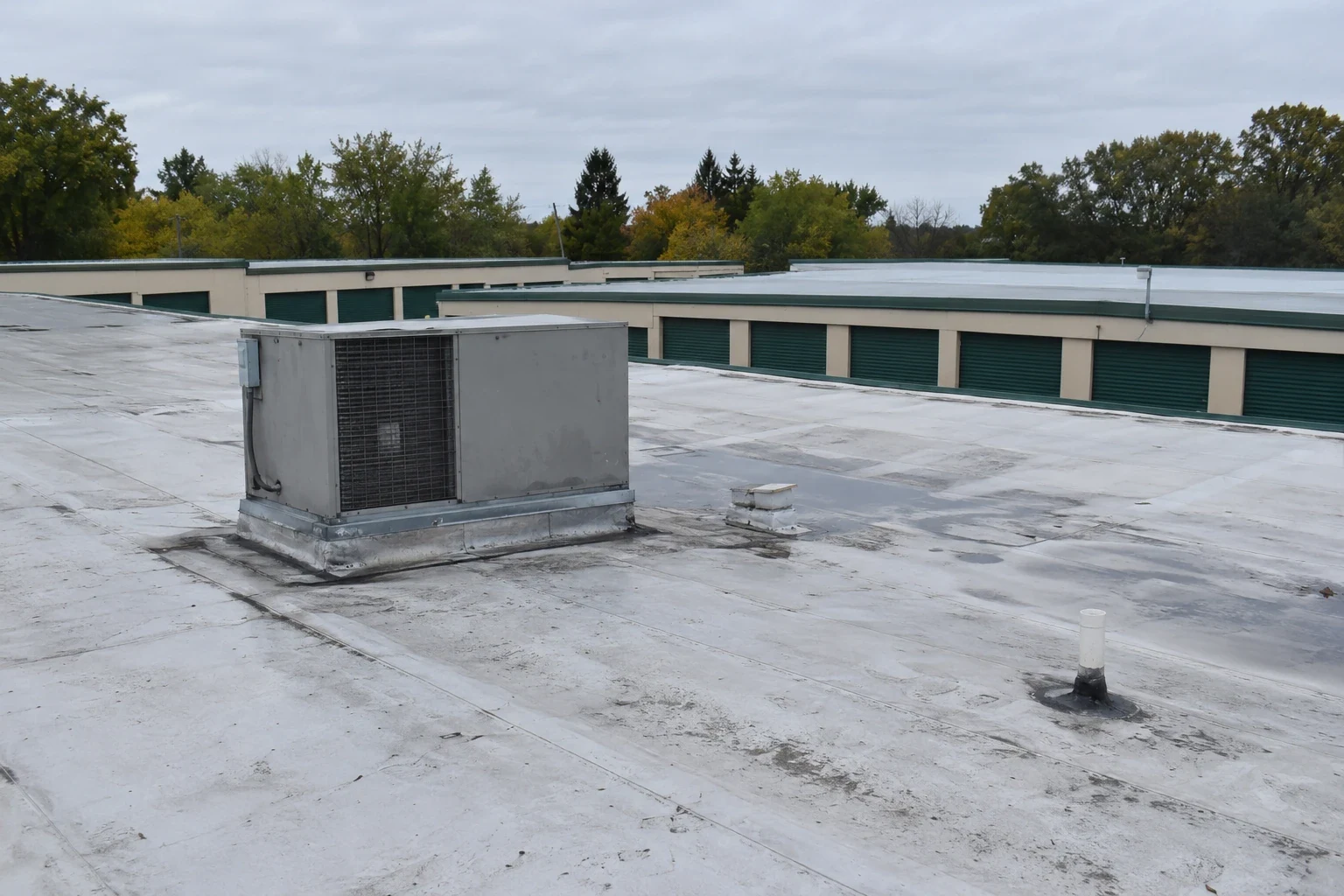
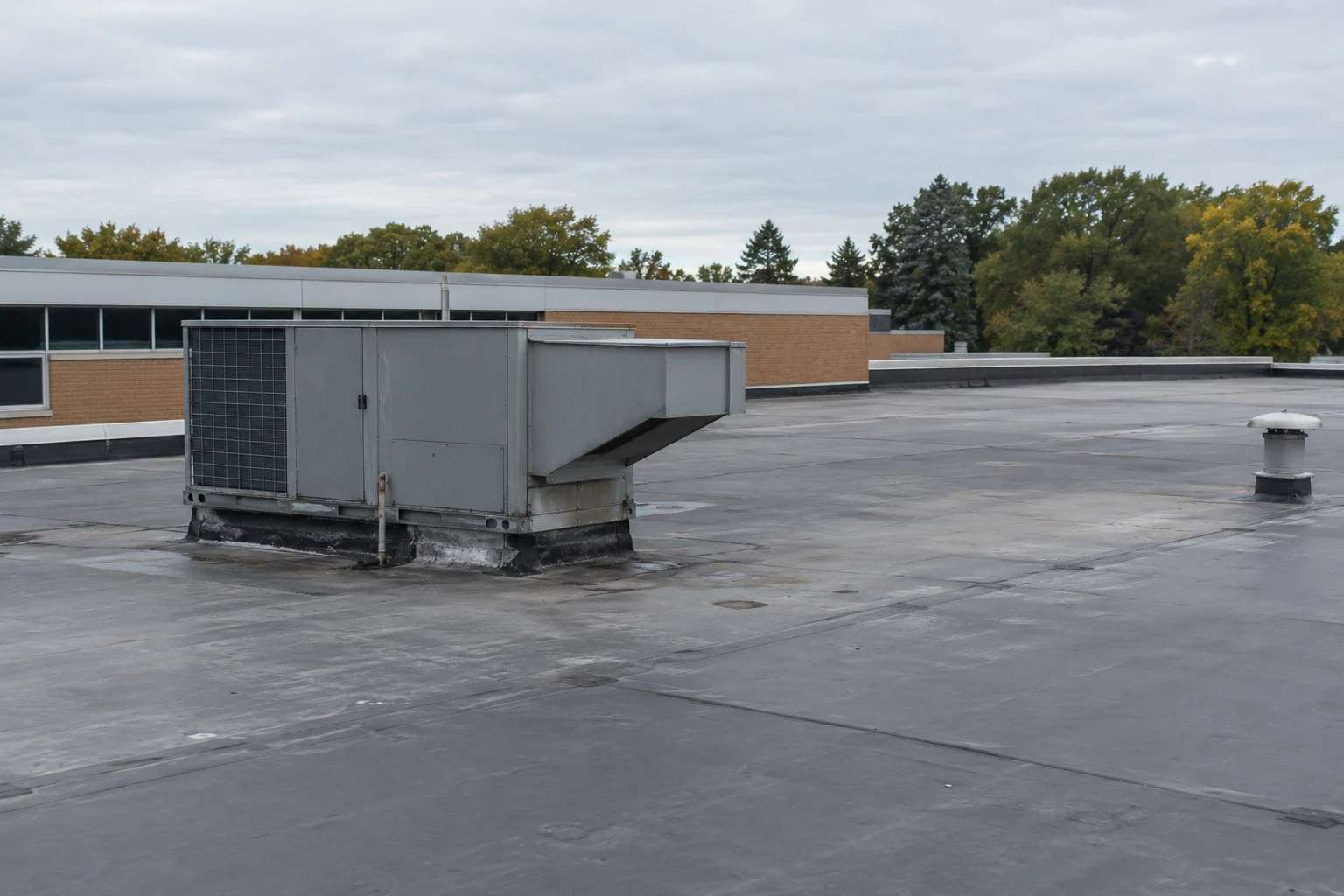
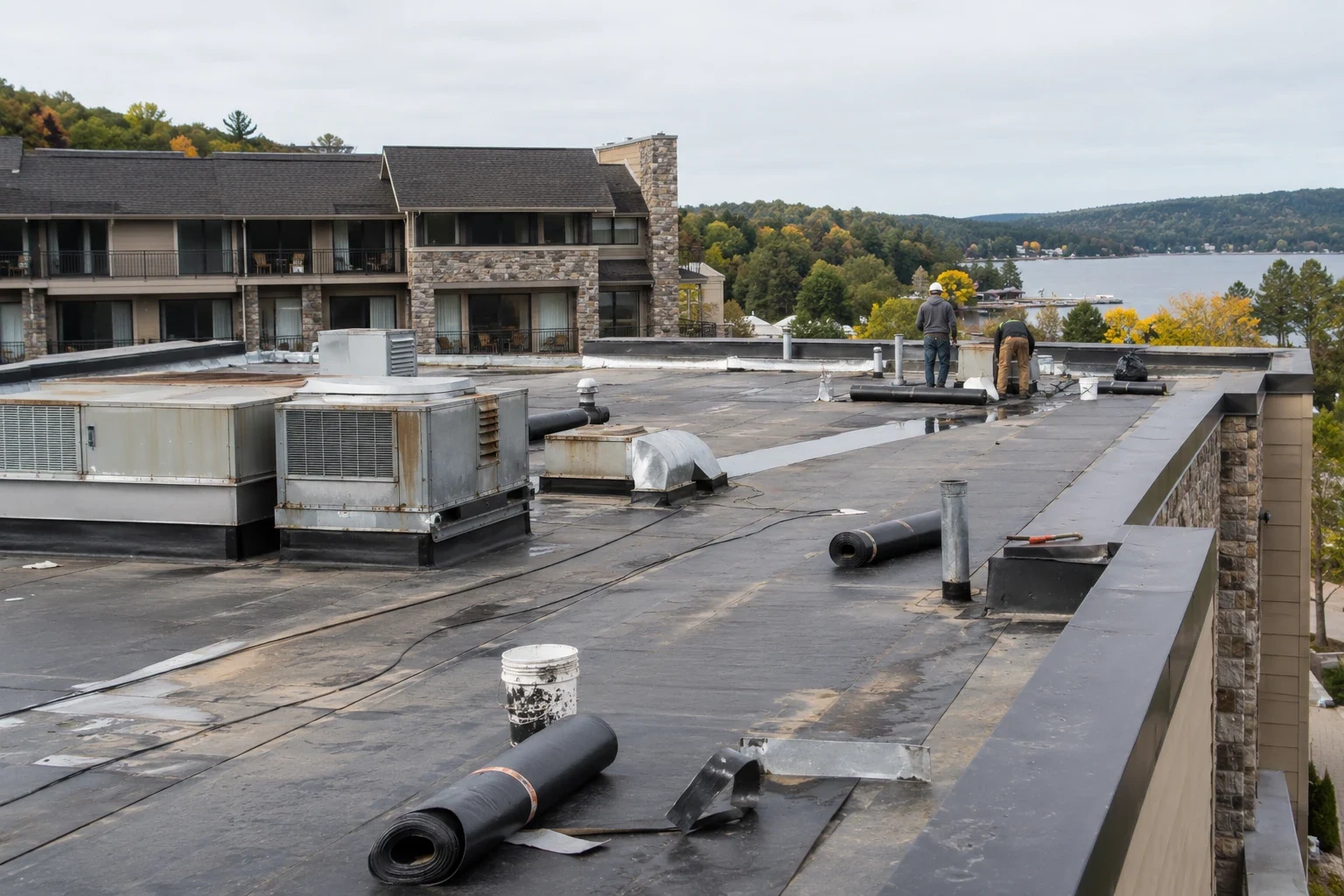
A roof repair over occupied units needs a clear plan for entry and protection. We ask the manager which doors are rented, whether contents can move, and how access notices are handled. If the leak reaches stored goods, staff may need time to relocate items before removal begins. We map the affected row and keep the roof opening inside the area the crew can protect and close before the shift ends.

Storage buildings can have long runs of doors, corridors, and separate roof bays. We do not assume that a stain at one unit identifies a defect directly overhead. The water may travel along insulation or framing before it appears. A roof inspection can map the reported interior location against seams, curbs, and drains. If water is active, leak repair can provide a defined response while the permanent repair scope is confirmed.

Self-Storage Roofing

Trace the path across adjoining roof bays

Self-Storage Roofing

We inspect the membrane seams, penetrations, wall edges, and prior patches near the reported leak. An open lap can admit water that moves sideways before reaching a ceiling or unit wall. We probe the seam, check whether the sheet is still attached, and compare it with the nearest stable material. If a repair has been made before, we inspect its perimeter to see whether failure begins at the same detail.

A test cut can reveal wet insulation or an extra roof layer that changes the scope. We take the opening only where the finding will affect removal, record what is exposed, and close the cut with compatible materials after approval. If the roof remains sound around a short seam defect, the repair can stay limited. For a wider failure, EPDM roof repair or a recover evaluation depends on the installed assembly and test results.

Keep water moving to the outlet

Debris at a drain or scupper can redirect runoff toward unit walls, roof edges, or a low seam. We check the bowl, strainer, sump, and visible slope, then note whether water remains after the outlet is clear. A settled area may need more than cleaning. We identify the cause and separate drainage correction from membrane repair so the manager can see which work changes the flow path.

The Salt Lake City International Airport normals put January minimums at or below 32°F on 20.6 days and December minimums at that threshold on 7.9 days. Those seasonal counts support checking drains and roof access before winter work. We inspect the roof before opening the membrane. We avoid opening a slick surface and schedule detail work when materials can bond. A drain and scupper repair can address a confirmed outlet problem before the next leak report.

Self-Storage Roofing

Schedule lifts around customer arrival

Customers arriving at different hours can make a single blocked aisle a problem across the property. We confirm gates, drive aisles, fire lanes, unit access, and delivery points before setting equipment. The manager identifies any hours when a lift cannot cross a route or a door must stay available. We position barriers and materials so the work zone is visible without creating an alternate hazard along the building.

The plan ties northern SR-201 to trucking and distribution and lists Bangerter Highway and I-215 among routes serving city industrial areas. That transportation context matters for arrival planning near industrial sites, but actual circulation is checked on the property. At a facility near the North SR-201 industrial corridor, we confirm the entry gate and staging location with staff before mobilizing. The route is added to the work notes.

Compare a repair with a larger roof plan

A contained repair cost depends on access, seam length, flashing detail, and any wet material within the confirmed boundary. Repeated leaks across separate bays may justify a broader inspection and phased work plan. We show each affected section, the condition found, and any test location still needed. This keeps an allowance from becoming a blanket replacement quantity before the roof is opened.

If the membrane is brittle, attachment has failed, or moisture runs beyond isolated areas, compare repairs with replacement. A replacement scope should list tear-off and daily dry-in limits. Multi-building operators may also benefit from warehouse roof coordination when one property contains several buildings, while flex industrial roofing can involve changing tenant uses. Every recommendation remains tied to the inspected structure.

Record the repair for the next manager

Closeout should identify the roof bay, affected unit row, repair materials, and the condition left outside scope. We photograph the completed detail and any test cut, then record whether wet insulation or damaged cover board was removed. If access was limited, we mark the area that could not be checked. That lets a later manager distinguish the repaired zone from a new leak elsewhere.

Near Fairbourne Station, planned civic, retail, office, hotel, and multifamily uses share a broader district setting. That context can affect traffic or delivery timing, but it does not establish a storage building's roof condition. We keep the site contact's gate and staging limits with the work record. A Fairbourne Station area visit can be coordinated around those limits. The closeout names the next check, not a generic maintenance interval.

Self-Storage Roofing

Common questions

How do you protect customers' belongings during a roof repair?

We coordinate the unit row and any needed contents move with the manager before opening the roof. Interior covers or temporary closures are set by the property team. We keep the roof opening within a dry-in area that can be secured that day. If removal finds more wet insulation, we stop and confirm the added boundary before extending above other units.

Can you identify the leak from the unit with the water mark?

The interior mark is a starting location, not proof of the roof entry. We compare it with seams, drains, curbs, and wall edges, then trace the likely path. A test cut may show whether moisture is moving through insulation. The work record maps the roof detail to the unit row and labels anything that remains unconfirmed.

What if the same building has several leak reports?

We map each report separately and inspect the nearest roof details before grouping them into one scope. Several locations can share a drain issue, or they can come from unrelated seams. Test findings determine whether a common repair boundary is supported. The proposal names the bays included and the ones that still need access or testing.

Can roof work proceed while customers use the property?

We plan lift placement, drive aisle restrictions, and unit access with the manager. A work zone may require a temporary route or a short closure around one row. Each shift has a defined stopping point and dry-in limit. If the property cannot keep access safe while the area is open, we change the sequence before removal begins.

When is replacement more practical than repeated patching?

Widespread moisture, brittle membrane, loose attachment, or failures that recur across many bays can shift the comparison toward replacement. We inspect and test representative areas, then compare the confirmed repair quantity with a defined tear-off scope. The estimate shows what each option leaves in place and what hidden work remains unpriced until exposed.

Set a storage roof inspection window

ServicesRoof SystemsIndustriesProperty TypesService AreasDamage RepairCapabilitiesManufacturersContactAboutRequest a Roof Assessment555-555-5555
Call555-555-5555