Commercial Roofing for Hospitality Groups in West Valley City, UT

Coordinate hotel roof inspections and phased repairs in West Valley City with guest access, equipment schedules, and property-level closeout records.

Set the hotel group roof sequence

A loose lap above a banquet room can remain hidden until water reaches a ceiling during a scheduled event. We inspect the membrane, nearby curbs, and drain path before setting the repair boundary. In West Valley City, UT, hospitality owners may manage several buildings with different guest routes and mechanical needs. We document each property separately, then align the work window with the rooms and services below the roof.

A regional operations team needs a clear view of which roof is leaking, what evidence supports the repair, and what might expand the scope. We map findings by building and phase. A commercial roof inspection can create that record before an owner compares a local repair with a planned project.
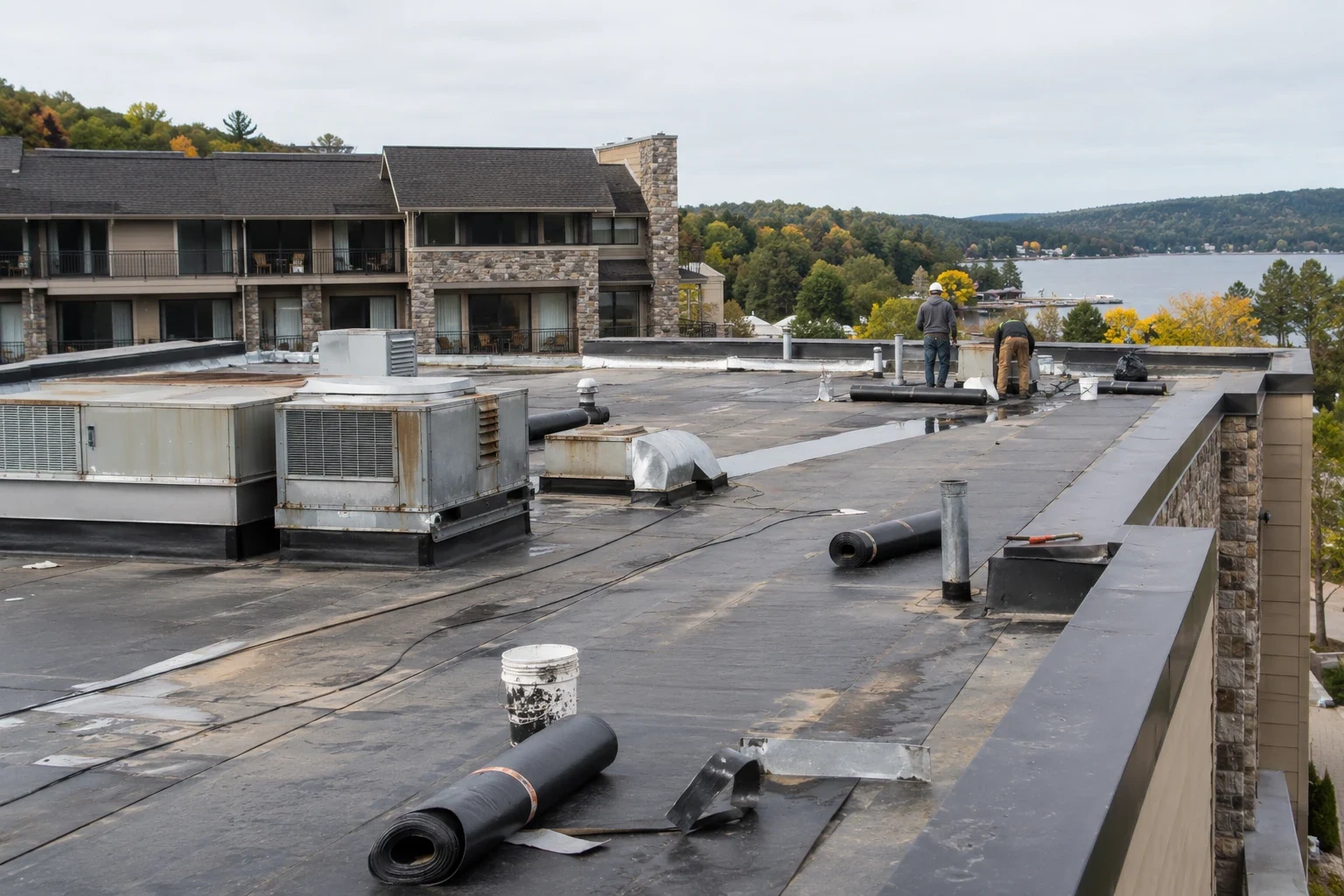
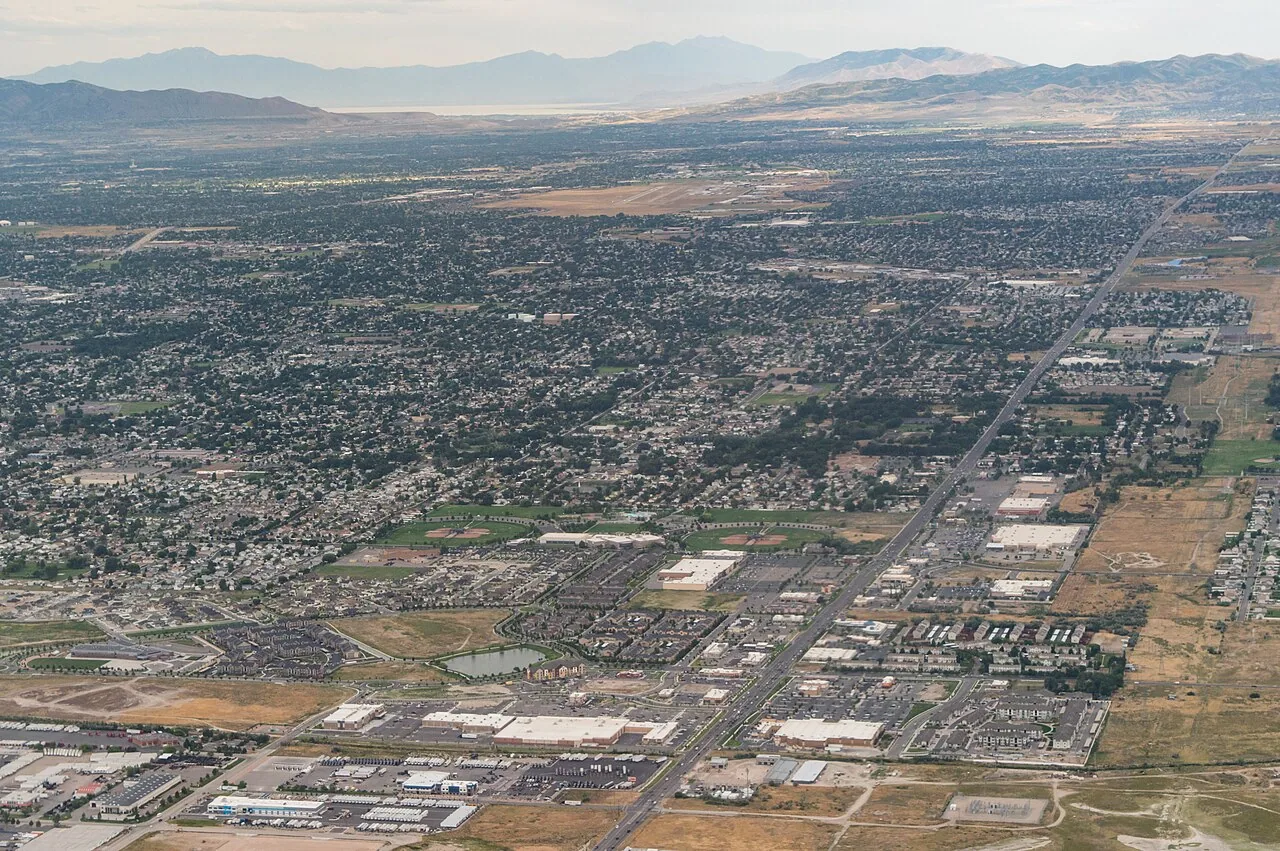
A lift near the porte-cochere or lobby can conflict with arrivals and luggage service. We identify guest entrances, accessible paths, meeting spaces, and loading routes before choosing a staging area. If the repair creates noise above an occupied room, management can provide a work window or move the sequence to another section. We keep the roof opening within a daily limit the crew can secure.

Fairbourne Station is a West Valley City transit-oriented district that includes a hotel with retail, office, civic, and multifamily uses. A hotel in this district may share routes with other active uses. We walk each property and confirm guest routes, service windows, and roof access with its contact. A hotel roof scope can record guest circulation and service details alongside the membrane findings.

Hospitality Groups

Coordinate equipment and roof openings

Hospitality Groups

Rooftop HVAC, exhaust fans, kitchen equipment, and pipe penetrations can cross the same roof zone. We check curb corners, sealant, counterflashing, and membrane laps for separation or movement. If insulation is wet under a unit, the repair may need a wider opening than a surface patch. We identify which mechanical systems can pause and who disconnects and restarts them before removal begins.

A group standard may set one approval path across properties, but a unit-specific shutdown still has to fit the hotel’s operating plan. We name the affected equipment, the roof transition, and the protection used while the curb is open. A curb and support repair can be coordinated with the hotel’s mechanical team. The closeout identifies when the unit and roof area were returned to service.

Check drains before setting a repair limit

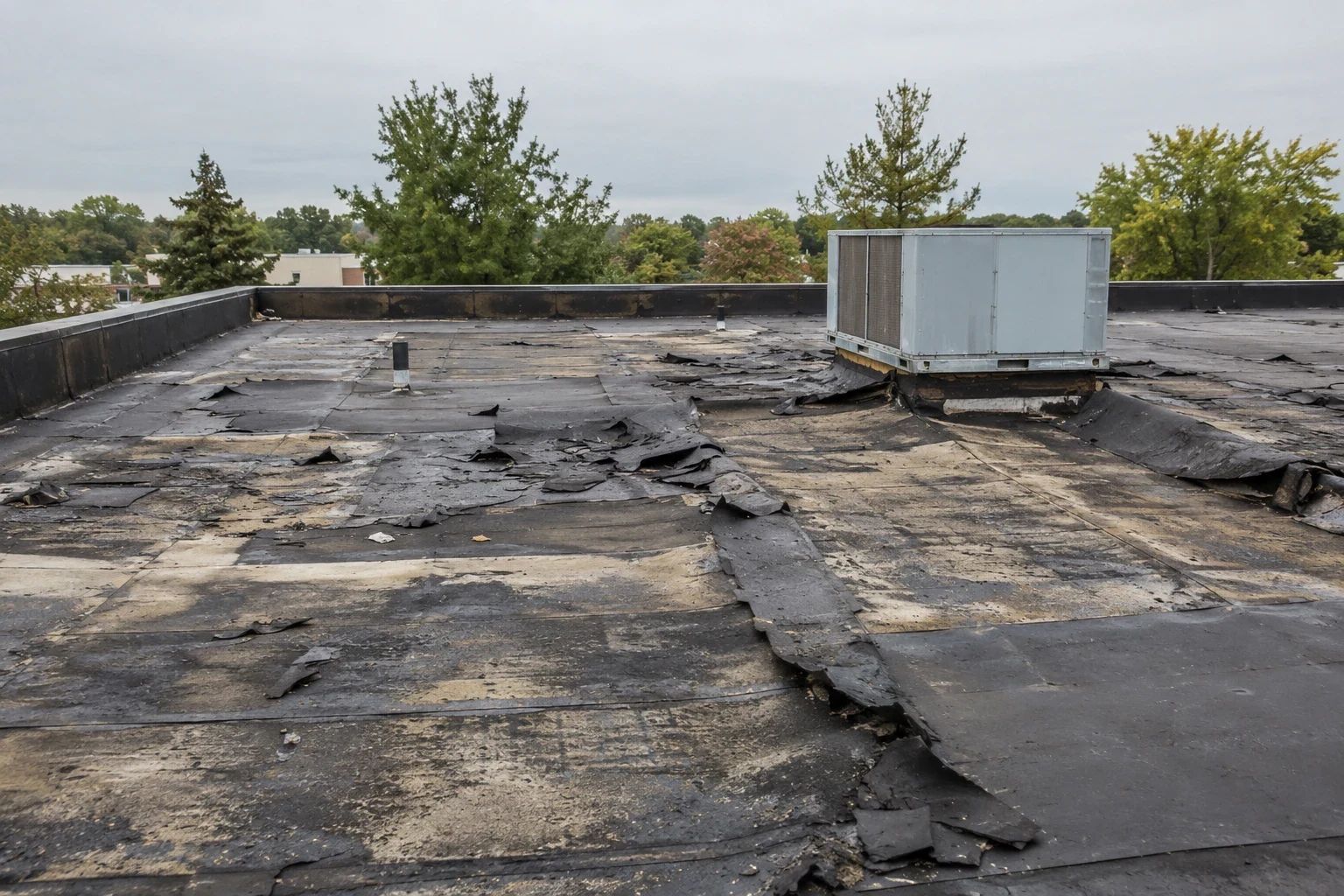
Water may collect at a low point because the drain is obstructed, the bowl connection has failed, or insulation has settled. We inspect the outlet, clamping ring, membrane edge, and nearby roof field. If the area feels soft, a test cut can confirm moisture. We mark the boundary where the substrate remains sound and keep any wider removal subject to review. The stain inside does not define the work area.

The city’s plan ties employment and activity centers to transit connections including the Green Line, UTA Intermodal Hub, and 3500 South. Those routes help frame staff movement across the market. The hotel’s loading door and roof hatch set material access for the job. We confirm lift reach and debris removal with management. A drain and scupper repair can address the outlet before a larger membrane area is closed.

Hospitality Groups

Sequence work across properties

When a group has more than one hotel, maintenance calls can arrive at the same time. We sort by active leakage, interior exposure, tested moisture, and access needs. A crew can then take the urgent repair first while another property remains on a planned inspection date. We do not transfer one building’s condition to another. Each estimate names the roof, defect, and decision that controls its scope.

Along 3500 South, the city identifies selected parcels for mixed commercial and residential use beside a major arterial. That area context can help coordinate delivery routes, while a hotel’s own receiving hours and event calendar govern the work sequence. We compare travel and staging needs without assuming equal roof assemblies. A multi-location retail roof register uses similar reporting discipline, with hospitality records also tracking guest access and room impact.

Plan roof work for heat and snow

The airport station's July normal high reaches ninety-four degrees; its August figure is ninety-one point seven. Before any adhesive or coating work, we measure the hotel's exposed membrane and substrate, then set the daily protected area to fit the selected system's limits and guest schedule.

For that airport station, a normal January brings twelve point seven inches of snow, out of a fifty-one point nine inch annual total. We plan hotel drain and perimeter inspections against the season and record the roof conditions found. A maintenance visit can schedule those checks before a leak interrupts an event or guest room.

Compare repair with a phased reroof

Repair cost depends on roof layers, wet insulation, curb details, drain correction, lift reach, and the number of spaces affected. We separate confirmed work from concealed conditions and state when another approval is required. If leaks recur across several zones, a broader project may reduce repeated access and protection costs. The estimate shows removal and daily dry-in limits as separate decisions.

Fairbourne’s planned district pairs a hotel and medical office with offices, multifamily housing, public space, and a plaza. Those property types bring different access needs, while the hotel roof survey determines the assembly and repair limit. An asset-level roof register can keep multiple properties distinct. A phased replacement scope can then show how work, guest access, and equipment coordination change by building.

Hospitality Groups

Common questions

How can a hotel group prioritize multiple roof calls?

We sort the properties by active leak, interior exposure, confirmed moisture, and access. Each site receives an independent finding and repair limit. A group can then schedule urgent work first while keeping other buildings on planned inspection or maintenance dates.

Can roof work avoid a hotel event or busy arrival period?

Management can provide event and check-in windows before we set lifts or noisy work. We identify the roof area above guest spaces and sequence another zone if the opening cannot be protected during that period. The plan also marks the guest route and loading entrance that stay available.

What should a hotel owner approve when a curb is leaking?

We inspect the curb base and nearby membrane, then test the insulation if concealed moisture may widen the repair. The proposal shows the confirmed flashing work and any additional removal that needs approval. Equipment shutdown and restart remain coordinated with the responsible trade.

How does a group keep repair records consistent?

Use common fields for property, roof zone, leak, material, photos, and deferred items, while preserving each building’s own condition. We can provide marked locations and work limits in a consistent closeout format. That allows regional comparison without assuming one hotel matches another.

When does a repair become a replacement project?

Several wet zones, repeated seam failures, or attachment problems across a wider area can support a larger scope. We compare those observations with repair history and the affected rooms or services. The estimate shows the removal boundary, phasing, and protection needed for a replacement option.

Set the hotel group roof sequence

ServicesRoof SystemsIndustriesProperty TypesService AreasDamage RepairCapabilitiesManufacturersContactAboutRequest a Roof Assessment555-555-5555
Call555-555-5555