Rooftop Equipment Curbs and Supports in West Valley City, UT

Rooftop curbs and supports in West Valley City need sound attachment, clear drainage, and service access. We inspect the details before setting scope.

Set the curb repair boundary

A split at the curb corner can send water under a sound-looking unit. We check the counterflashing, curb base, fasteners, and membrane before calling it a sealant repair. In West Valley City, UT, equipment work also has to fit the building's access window. Near the northern SR-201 corridor, trucking and distribution activity makes it useful to confirm each property’s vehicle route and lift position with its contact. The curb detail and staging plan both set the repair boundary.

Rooftop supports carry more than weight. They transfer vibration and wind forces into the roof assembly. A pipe stand, duct frame, or replacement unit can also block a drain path. We mark each support, check its base, and record clearances before proposing work. A hands-on roof inspection can establish which details need repair or redesign.
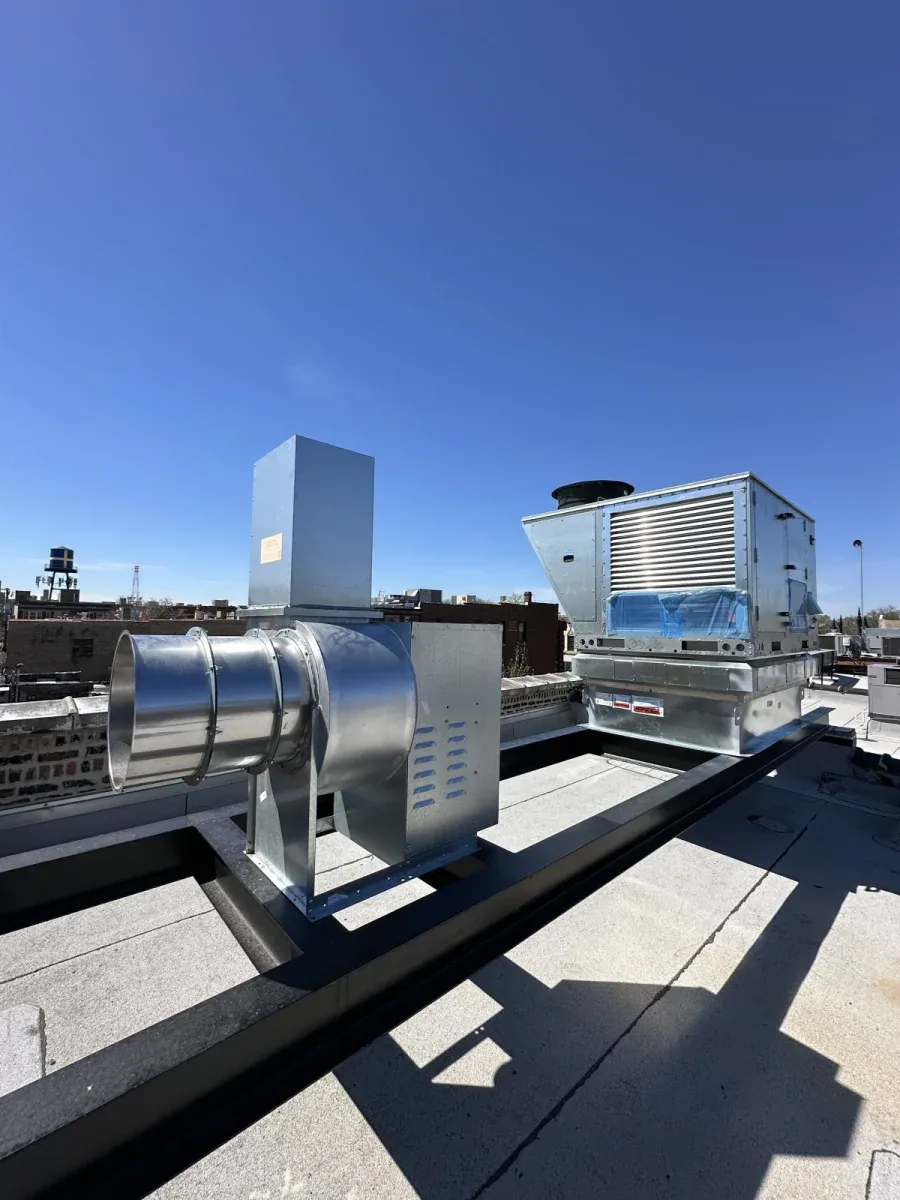
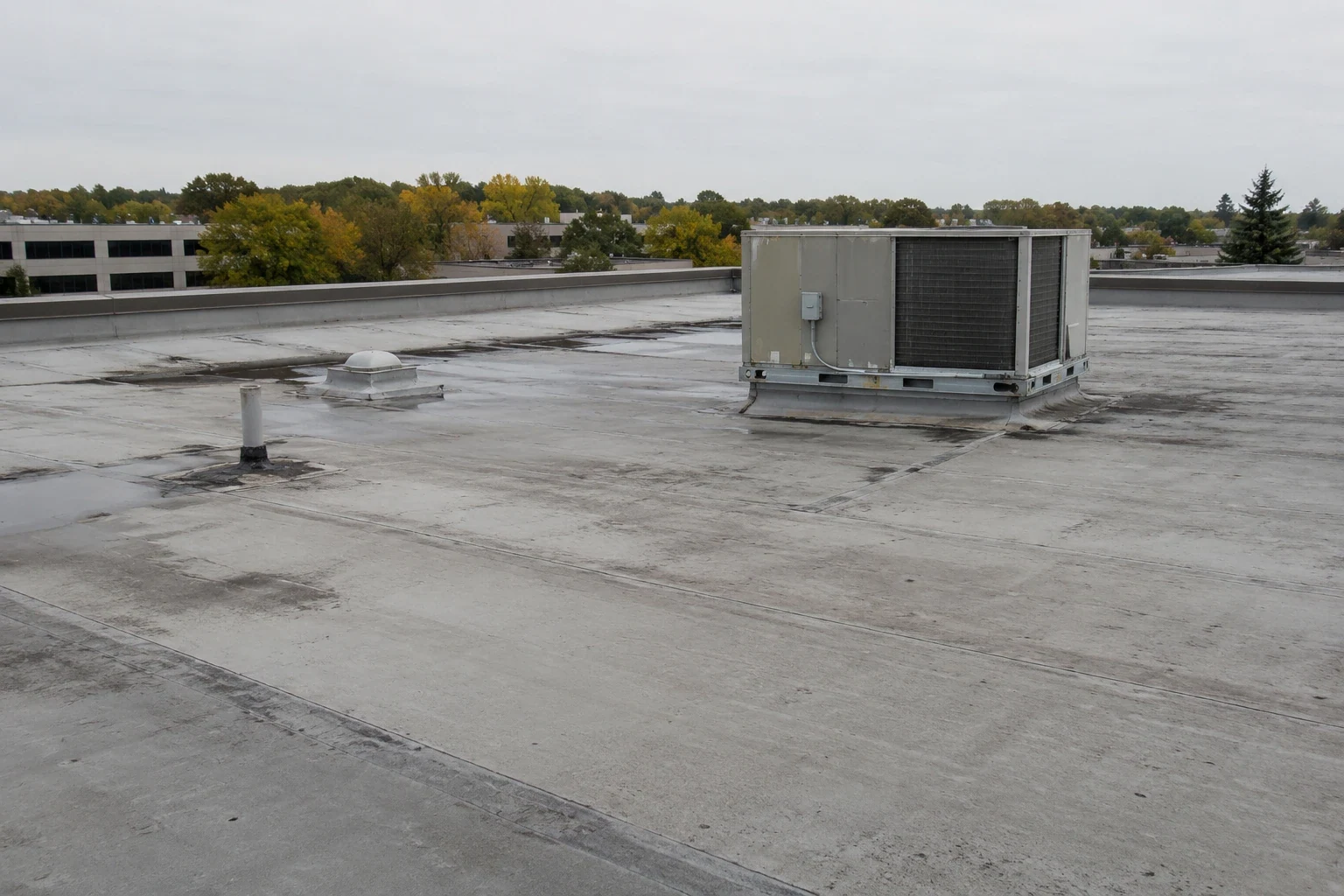
Water at a curb may enter at the upper corners, the base flashing, or a fastener line. We check the membrane transition and look for loose metal, split sealant, rust, and movement. A test cut can show whether insulation below the base is damp. We mark the wet area before opening material. That keeps a local curb repair from expanding without a roof finding.

Before lifting equipment or materials, we confirm the active loading schedule with the property contact and mark a service path that stays clear. We also check the drain bowls and scuppers near the curb. A support that redirects runoff can leave water against a seam or low flashing. We check whether runoff crosses that seam before opening the roof.

Rooftop Equipment Curbs and Supports

Check how the support carries load

Rooftop Equipment Curbs and Supports

A support must bear on a sound surface and transfer force into an approved structure. We inspect the base plate, attachment, blocking, and surrounding insulation. Loose fasteners or a soft curb can let equipment shift. Vibration may then open a seam or strain connected piping. The repair needs to address the load path, not just the visible gap around the post.

We identify the equipment served, whether it needs to remain active, and which trade can isolate it. Then we confirm where a lift can reach the roof. If the unit must move, the scope includes temporary protection and a safe return to service. The cover board and insulation around a support also need a firm, level bearing surface. The mechanical schedule can control how long the opening stays exposed.

Raise the flashing above the roof line

A curb that ends too close to the finished roof can leave little room for flashing. Added insulation or a recover can reduce that clearance further. We measure the finished height, corner geometry, and equipment service space before selecting a detail. The scope may call for an extension, new counterflashing, or a rebuilt base. Each choice needs a clean transition to the field membrane.

Fairbourne Station is planned with civic, retail, office, hotel, and multifamily development. For a property in that district, we confirm which rooms and entrances need protection before equipment work begins. A TPO assembly can use compatible curb flashing details when the existing system and design support that choice.

Rooftop Equipment Curbs and Supports

Price the equipment access separately

Cost changes with unit size, curb height, number of connected lines, and the condition beneath the base. Crane reach, rigging, shutdown time, and the need for a mechanical trade also affect the work. We separate roof repair from equipment handling when those scopes have different approvals. That lets the owner see whether the price covers flashing, support changes, lift time, or all three.

Access planning can be the schedule driver. Northern SR-201 roads serve trucking and distribution uses, so delivery and trailer movement may limit where a lift sets up. We confirm routes and barriers with the site contact. A distribution center may need a short work window between loading peaks. We set the open-roof limit before removing curb metal or membrane.

Set the base before resealing

We protect the roof, expose the curb detail, and remove only material inside the agreed limit. The crew checks deck condition and support movement before rebuilding the base. New metal must shed water onto the roof, not behind the flashing. We install compatible membrane transitions and secure terminations at the curb. A final check covers fasteners, corners, sealant joints, and nearby drainage.

Pipe and conduit stands need clearance for movement and maintenance. A rigid seal around a moving line can split as the pipe shifts. We use a support detail that carries the line without pinching the membrane. Where equipment remains in operation, we coordinate noise and access with the facility manager. Any hidden deck or insulation repair is documented and approved before the opening grows. We check the new flashing at each corner and termination. Water must shed onto the roof surface, and no fastener or line support should interrupt the tie-in.

Record every supported unit

Closeout records should identify each curb, pipe stand, and equipment support that changed. Photos show the base, flashing transition, and finished termination. We note which units stayed in place and which required handling. That makes the next inspection more useful when a new leak appears near a rooftop line. A roof condition report can keep those observations with the building file.

Snow and freeze-thaw exposure can test edge details and drainage during winter. On the airport's 1991-2020 record, average yearly snowfall is 51.9 inches; the January mean is 12.70 inches. Before winter, we inspect curbs, drains, and loose metal, then record water paths or movement that needs follow-up.

Rooftop Equipment Curbs and Supports

Common questions

When does a rooftop curb need rebuilding instead of resealing?

A split corner with firm metal and a sound base may take a local repair. Movement, rust, low curb height, or wet insulation changes the decision. We inspect the attachment and test beneath the base when needed. Then we mark the repair limit and show whether the scope needs new flashing, an extension, or structural support work.

Can a new unit go on the existing curb?

The equipment dimensions, curb opening, attachment, and service clearances have to line up. We compare the new unit with the existing base and inspect its bearing surface. A mismatch may require an adapter or curb modification. Mechanical and roofing scopes should be coordinated before removal so the opening stays protected and the replacement equipment can be secured properly.

What can cause a leak around rooftop pipe supports?

Water may enter through a split boot, loose base, failed sealant, or membrane damage near a moving line. We check the pipe movement and the support beneath it. If the stand presses into insulation or blocks drainage, resealing alone will not correct the detail. We identify the leak path and price the support and membrane work together.

How do you plan a lift over an operating building?

We confirm roof access, crane reach, staging space, pedestrian routes, and the work window with the facility contact. In a distribution area near SR-201, trailer traffic may shape the lift route. The plan sets barriers and a dry-in point before the curb opens. Equipment shutdowns and restart checks stay with the mechanical scope.

What should the closeout record show?

The record should tie each repaired curb or support to a location and photograph. We note materials, attachment changes, concealed conditions, and any excluded work. If a unit moved, the file should show its return position and the completed flashing. That gives future maintenance a baseline for checking seams, bases, and drainage around the equipment.

Set the curb repair boundary

ServicesRoof SystemsIndustriesProperty TypesService AreasDamage RepairCapabilitiesManufacturersContactAboutRequest a Roof Assessment555-555-5555
Call555-555-5555