Big-Box Retail Roofing in West Valley City, UT

Roof a West Valley City big-box store with clear work zones, loading access, drain checks, and a repair scope tied to verified field conditions.

Set the store's roof work limit

A shallow pond beside a rooftop unit can cover a seam before a store manager sees water inside. We trace the drain path, check the membrane, and inspect the insulation around the equipment. In West Valley City, UT, a large retail roof also has to leave loading and customer routes open. The repair limit follows what the roof shows. The work window follows the store's operating plan.

Big-box roofs often combine long membrane runs, multiple units, skylights, and perimeter details. A leak report at one end may connect to a lap or drain farther away. We map the field and mark each repair zone before discussing recovery or replacement. A commercial roof inspection can establish where testing will change the scope.
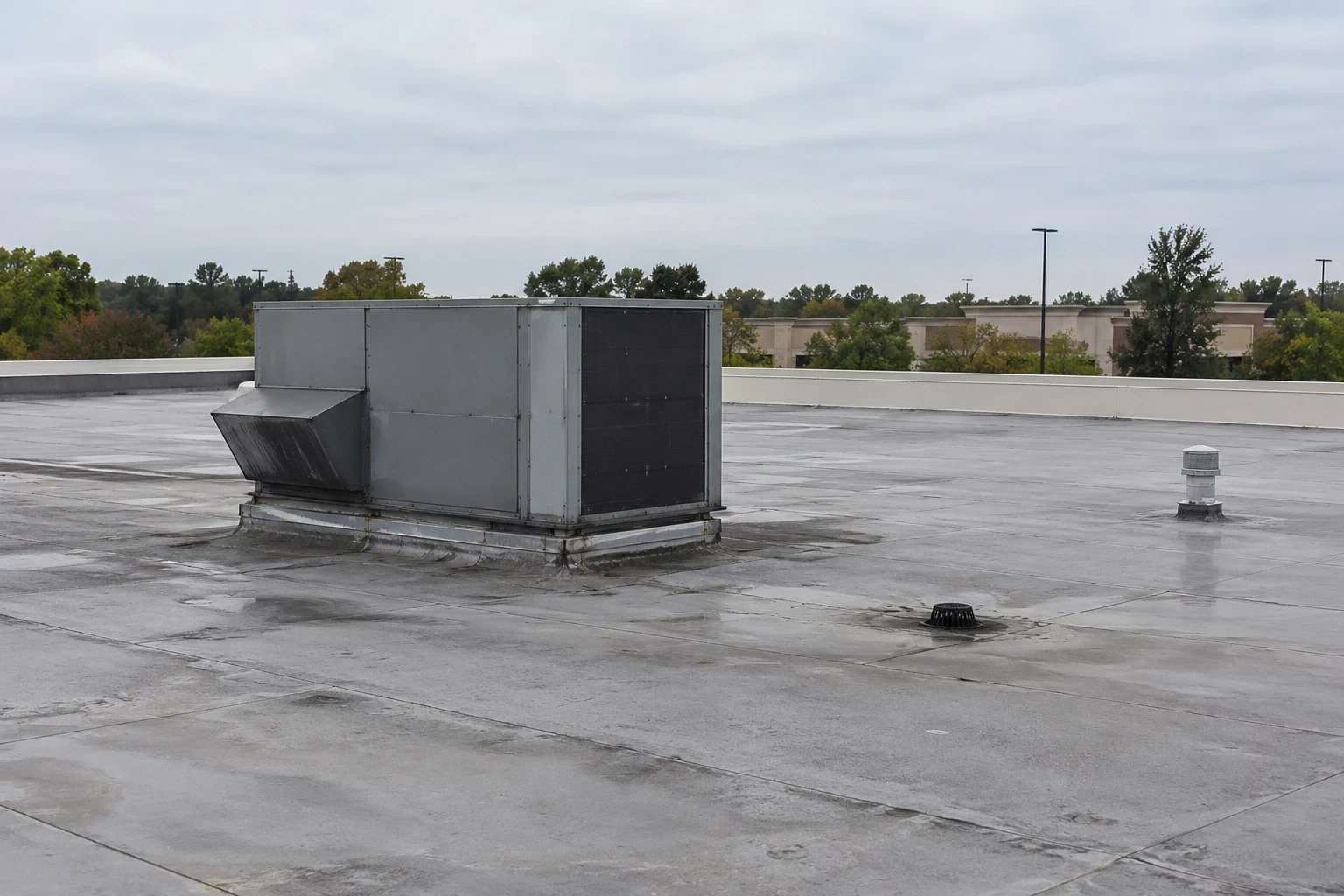
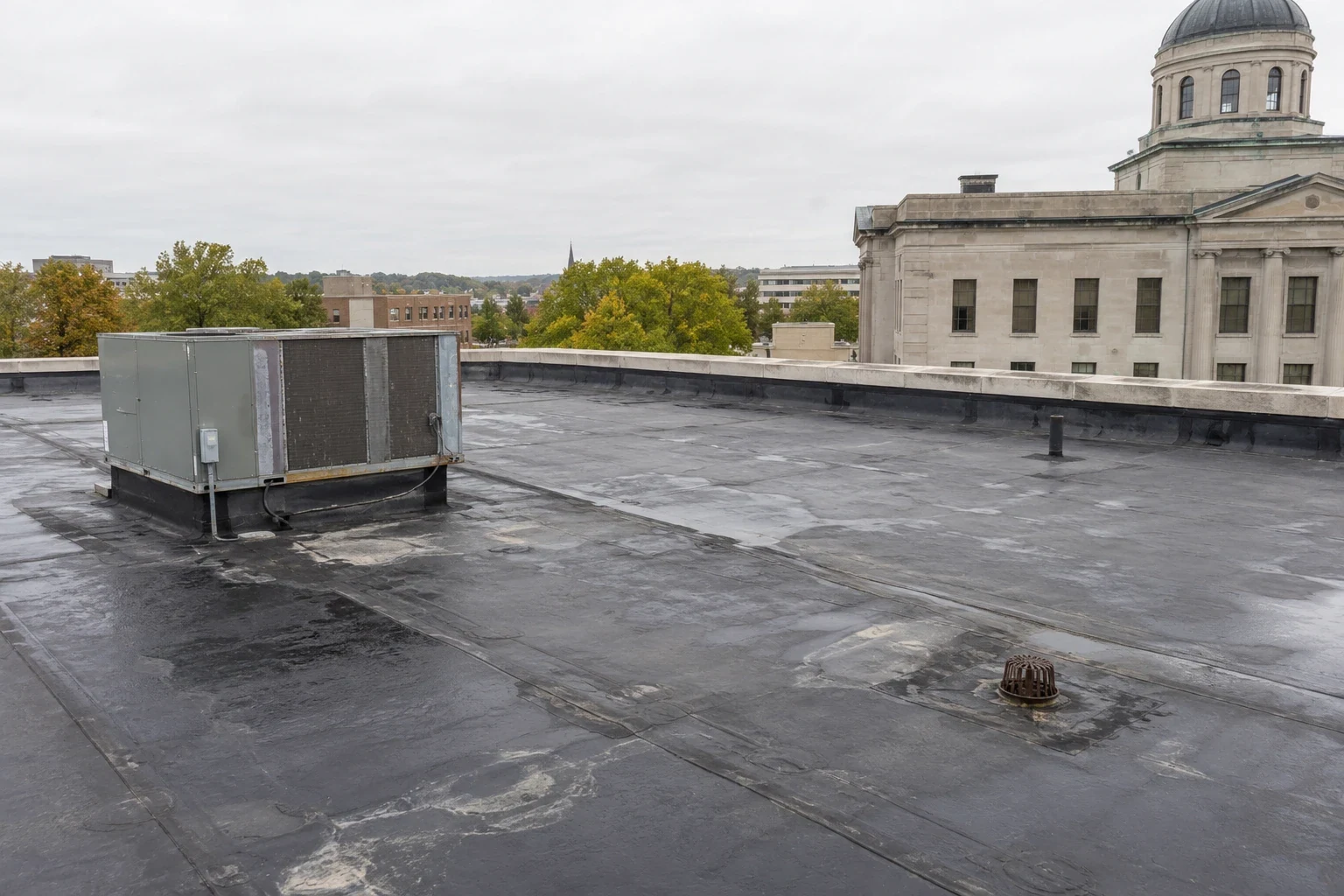
Water can move beneath a membrane and appear far from the entry point. We inspect seams, penetrations, drain sumps, and earlier patches before cutting. A moisture reading may guide a test cut, but the roof layers decide the repair limit. We mark findings on a roof plan and compare them with interior leak reports. That separates the field problem from a failed curb or edge.

West Valley City's northern SR-201 edge serves trucking and distribution businesses. A retail property near those routes may receive freight and roofing deliveries through the same service area. We confirm the loading schedule and crane position with store management. The North SR-201 industrial corridor context helps plan access, while the actual site sets the staging location.

Big-Box Retail Roofing

Keep the loading side accessible

Big-Box Retail Roofing

Loading doors may stay active while a crew works above them. We map truck paths, fire lanes, pedestrian entrances, and material lifts before setting barriers. The work zone should not send debris across a delivery route. If a lift needs part of the yard, the manager confirms when that area can close and which dock remains available. We identify where pallets can wait without narrowing a turning radius or blocking a fire connection. A spotter can guide deliveries, but the store decides which entrances remain open. Work limits and closures belong on the daily plan before materials arrive.

City plans identify SR-201, Bangerter Highway, and I-215 as routes serving industrial areas. Those roads support regional movement, but the store's dock schedule controls its own delivery window. We coordinate arrival and disposal with the site contact. A distribution-center roof plan has similar freight concerns, though retail traffic and customer entrances add separate controls here. At the building, we check truck turning space and the path from staging to the roof. If a crane must set up near a customer lane, the site contact can schedule the lift away from peak arrival periods. These details connect roof sequencing to the ground operation.

Repair curbs before seams open again

Rooftop units, exhausts, and skylights interrupt the membrane and create points that need inspection. We check curb corners, counterflashing, fasteners, and nearby insulation. Vibration can work a weak transition loose. If equipment needs to move, we coordinate that work with the mechanical trade before removing the curb flashing. The roof opening stays inside the agreed dry-in limit.

Retail operators may have refrigeration or ventilation systems that need a planned shutdown. We identify the affected units and the party responsible for restart. A drain and scupper repair can be combined with curb work when the same roof zone needs correction. Each scope item stays visible so the owner can compare repair, replacement, or equipment-handling costs.

Big-Box Retail Roofing

Price access and repair separately

Cost depends on roof layers, insulation condition, membrane attachment, edge details, and lift reach. We identify confirmed repair areas and mark concealed conditions as unpriced until exposed. That prevents a long roof field from becoming a single allowance with no location. The estimate separates membrane, drains, curbs, and staging into visible scope items. It also notes where removal may reveal conditions that cannot be priced from the surface. Owners can compare a contained repair with a larger project when the boundaries and assumptions are clear. If protection, lift time, or disposal changes by phase, those items remain identifiable rather than disappearing in one allowance.

The city plan places retail alongside civic, office, hotel, and multifamily uses in the planned Fairbourne Station district. Those uses can call for different ground-access arrangements during roof work. A big-box store still needs a site-specific plan for traffic and loading. A shopping-center roof scope may involve multiple tenants, while a single-store building follows its own dock and customer schedule.

Set a weather-ready work sequence

Hot weather changes surface conditions and can affect adhesive handling. At the Salt Lake City International Airport station, July daily highs average 94 degrees Fahrenheit. August's normal is 91.7 degrees. We use those airport station normals to frame the season, then check roof temperature, substrate, and product limits before application and set the day's stop point. On a large store, that limit may vary between a sunny field and shaded equipment. The crew protects each day's exposed edge, then records where work ended so a later shift can resume. Product instructions and observed conditions govern installation; the airport averages provide broad seasonal perspective.

Winter checks focus on drains, low areas, and loose perimeter metal. The station records a 51.9-inch normal annual snowfall and a January mean of 12.70 inches. We use those readings as seasonal context, then inspect the actual roof before selecting a maintenance window. The replacement schedule needs time for removal, deck review, and a secure dry-in before the store opens again. A manager may prefer phased work to preserve entrances or loading capacity. We outline the sequence, daily boundary, and weather-sensitive steps before mobilization. If conditions make the roof unsafe to leave open, the crew shifts to protection and documents the decision for the next planning conversation.

Give the manager a usable closeout

We record completed zones, material changes, drain conditions, and any area left outside the work. Photos show seams, curbs, penetrations, and edge metal before lifts leave the site. That record helps maintenance staff connect a new leak with prior repairs. A roof condition report can keep those observations available for future budgeting.

Fairbourne Station includes pedestrian and public areas in its planned mix. Store projects may have different entrance needs, but the same roof work should leave a clear access handoff. We list the staging point, equipment routes, and follow-up items for the manager. For a property near Fairbourne Station, tenant and pedestrian movements remain part of the ground plan while roofing stays tied to verified roof conditions.

Big-Box Retail Roofing

Common questions

How do you locate a leak on a large retail roof?

We compare interior reports with seams, drains, curbs, and prior repairs on the roof. Water may travel beneath the membrane before it appears inside. Testing helps identify the wet boundary and whether insulation needs removal. We mark the affected zone so the owner can see what supports the repair scope.

Can the store keep receiving deliveries during roof work?

We coordinate lift placement, material arrival, debris removal, and truck routes with store management. If a dock needs temporary closure, the plan identifies when it opens again and which route remains available. Each shift has a protected roof limit. Customer access and emergency lanes stay in the staging plan.

What makes rooftop equipment a repeat leak point?

Movement, vibration, aging sealant, and poor curb clearance can strain the flashing. We inspect the curb base, corners, fasteners, and nearby membrane. If the unit must move, we coordinate a mechanical shutdown and a protected opening. The repair addresses the support and the roof transition together.

How do you compare a repair with replacing the full roof?

A replacement decision weighs repair history, wet insulation, seam condition, attachment, and the extent of affected zones. Local damage may support a bounded repair. Widespread moisture or failing attachment can make replacement the better scope. The estimate separates field membrane, drainage, curbs, and access work so management can compare options.

What should the store manager keep after reroofing?

Keep marked roof zones, photos, installed material details, drain findings, and any work deferred for a later phase. We identify access routes and staging points used during construction. Those records help a future inspection begin with the actual roof plan, rather than a store-wide assumption.

Set the store's roof work limit

ServicesRoof SystemsIndustriesProperty TypesService AreasDamage RepairCapabilitiesManufacturersContactAboutRequest a Roof Assessment555-555-5555
Call555-555-5555