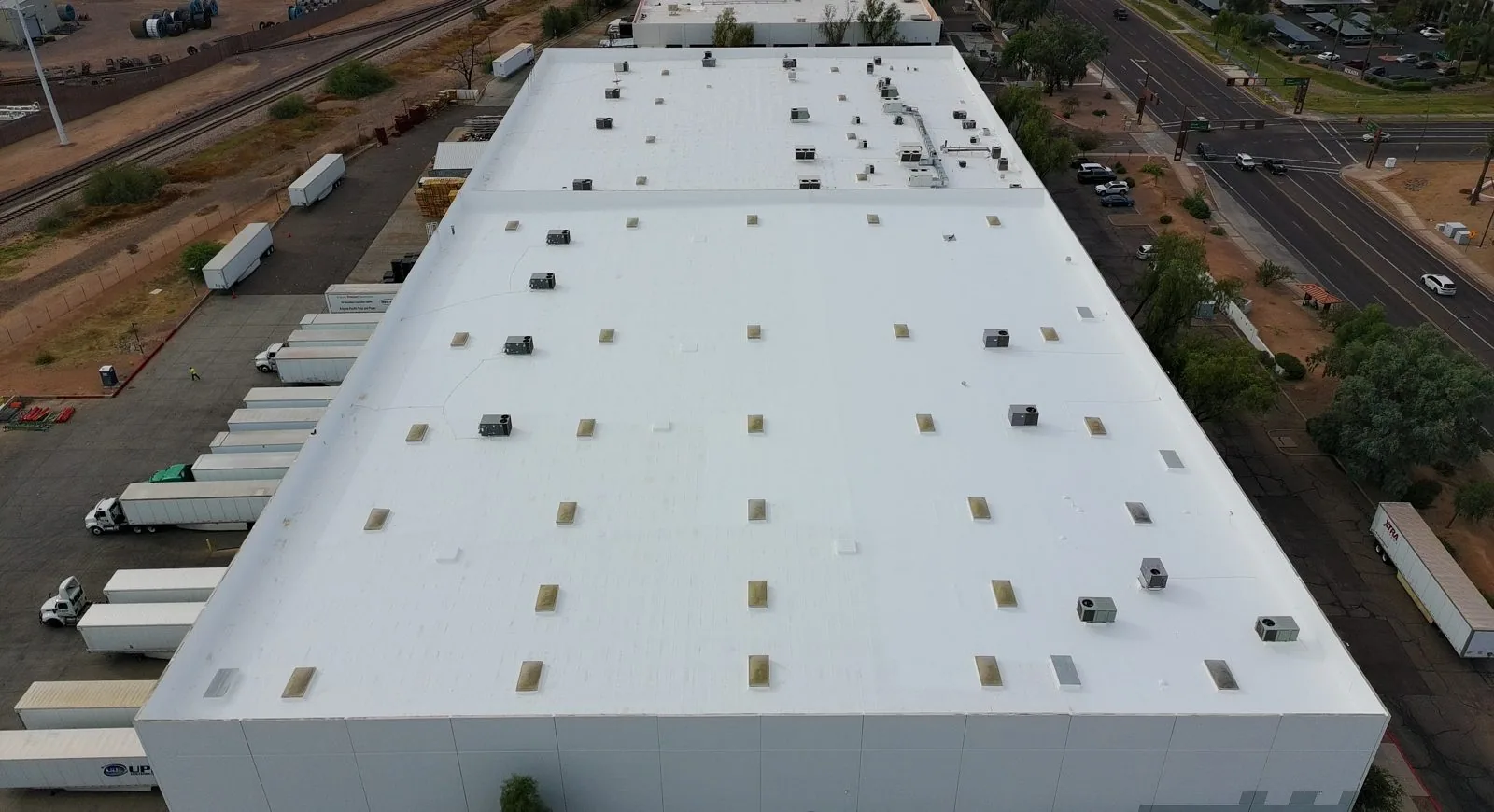
Government Building Roofing in West Valley City, UT

Plan municipal and public-building roof work in West Valley City with controlled access, documented repair limits, and a schedule tied to building use.

Set a public-building roof scope

A drip over a public counter can disrupt service before the roof defect is visible from below. We inspect the membrane, perimeter, and nearby drains, then tie the finding to a specific room and roof section. In West Valley City, UT, Fairbourne Station is planned as a mixed-use district that includes civic uses alongside retail, office, hotel, and multifamily buildings. A public facility in an active area may need clear entry routes and a defined work window while the roof is inspected.

Public buildings can have restricted rooms, records, service counters, assembly spaces, and equipment that cannot be moved without approval. We coordinate with the facilities contact on access, notices, and any shutdown before opening the roof. A confirmed defect may need a patch or detail rebuild; broader wet insulation or repeated failures can change the scope. We document what the inspection can establish and separate any concealed work until testing or removal confirms the condition.
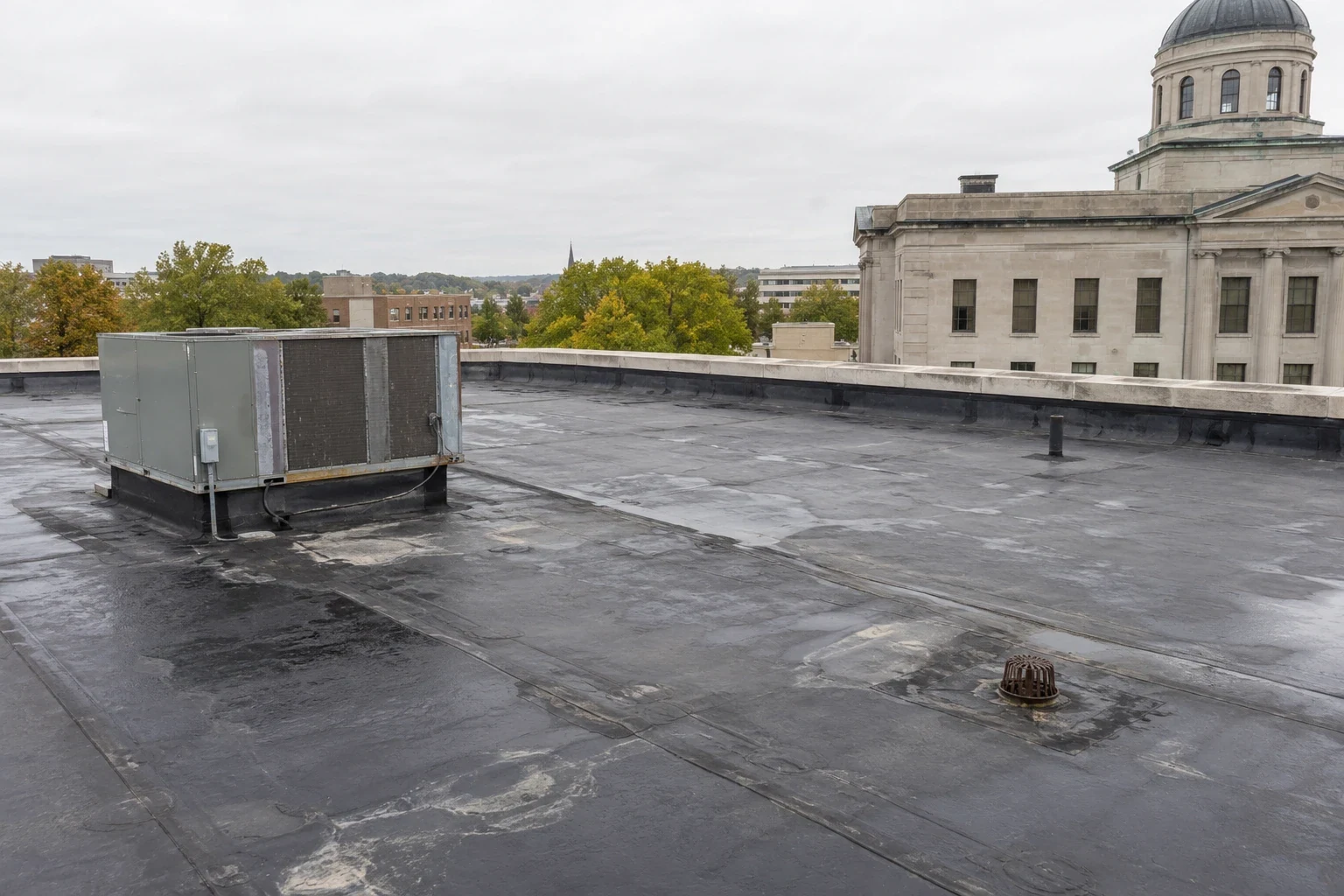
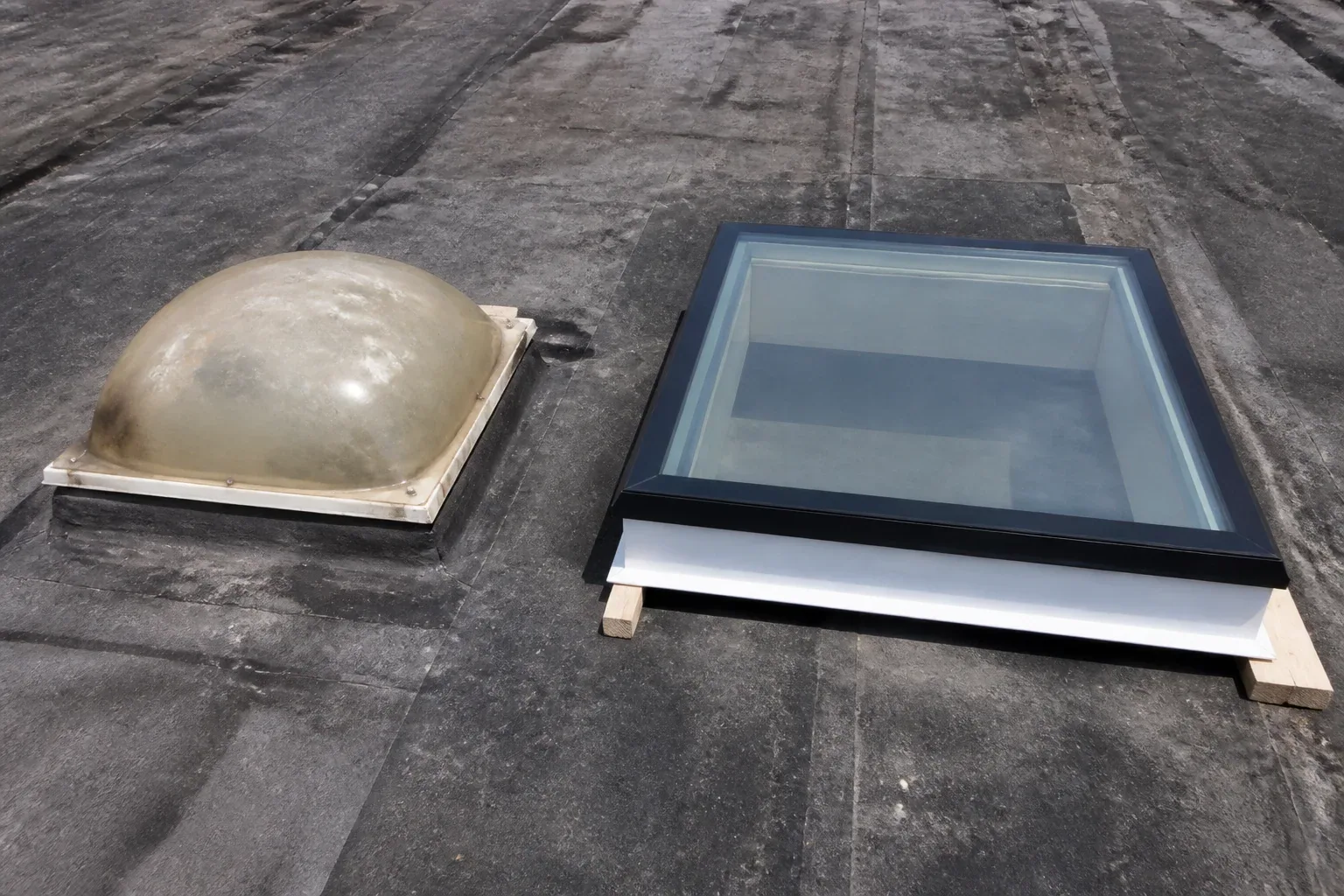
Public traffic changes where a lift, dumpster, or material pallet can sit. We walk the entry path with the building contact and mark doors, accessible routes, emergency lanes, and areas that cannot be blocked. Any escort, key control, or restricted-room access is agreed before the crew arrives. The staging plan includes how residents or staff can reach the service counter while work proceeds overhead.

Roof access may pass through a secured interior door or a mechanical room. We identify who can grant entry and what tools or equipment must be cleared from the route. A phased occupied-building reroof can divide work by section and access window. If the facility includes a public assembly room, school roof coordination can offer a separate operating context, while the actual project sequence stays specific to the building.

Government Building Roofing

Map roof findings to the building record

Government Building Roofing

A ceiling mark can sit below a failed curb, open lap, drain, or wall transition. We compare the reported location with the roof layout and inspect the likely water path before removing material. The findings are labeled by roof section and room where possible. If one test cut exposes wet insulation, we photograph the layers, measure the affected boundary, and confirm the added work before opening another area.

Public agencies may need a clear record for review, maintenance planning, and scope approval. We distinguish observed defects from conditions that remain concealed. A roof condition report can preserve photos, test locations, and work limits. For immediate leaks, leak tracing and repair can establish the entry point and temporary protection while a longer-term repair is scoped. The owner sees which decision depends on a test result.

Use the right window for roof work

Freeze or snow can make a roof unsafe to inspect and hide a drain or membrane seam. The Salt Lake City airport station averages twelve point seven inches of snowfall in January, within a fifty-one point nine inch annual normal. Before opening a public roof, we verify surface, access, and material conditions against the planned work window.

The daily plan also has to fit public operations. We group noisy removal and deliveries into approved periods, then close each section within a safe dry-in limit. On a facility near 3500 South, arterial traffic may affect arrival and staging; the city lists the street as a major arterial. We confirm the actual entry and work route with the site contact. A time-sensitive roof repair still needs a safe and documented closure before the building resumes normal use.

Government Building Roofing

Separate confirmed repairs from allowances

Repair cost depends on the number of details, access equipment, protection below, and the area of membrane or substrate that needs removal. A one-seam repair differs from several wet sections around mechanical curbs. We show the confirmed scope and identify where further testing could change quantities. The estimate does not treat a concealed deck or insulation condition as established work before it is exposed.

If defects repeat across a roof or the assembly has lost attachment, replacement may be the more direct comparison. A commercial roof replacement scope should define tear-off limits, daily dry-in, access controls, and any allowance for concealed material. For facilities with classrooms or public programs, occupied gathering-space roof work has related access concerns; TPO roofing may be considered only when the design and existing conditions support it. We base the comparison on observed conditions.

Close with photos and approval boundaries

The closeout file identifies the affected section, repair detail, photos, and any excluded area. If a test opening exposed additional damage, the record ties the change to that location and the approved scope. We record temporary protection or a remaining follow-up item so facility staff can see what is complete. A later inspection can then compare the same drain, seam, or curb rather than starting from an unclear work order.

Fairbourne Station includes civic and other active uses in one district. When work occurs in that context, we preserve delivery and access limits as part of the record, without treating the district's other buildings as part of the project. The facilities team receives the final repair boundary and the evidence used to set it. The record supports budget planning and keeps the next decision tied to the actual roof condition. We confirm each listed item before closing the work order. We also retain the approved public entrance and any temporary route change for that work window, so staff can confirm the site is returned to its normal path.

Common questions

Can public services remain open during roof work?

We plan by roof section and coordinate public routes, restricted rooms, notices, and noisy tasks with the facility contact. The daily opening must fit a safe dry-in window. If a service counter or accessible route cannot move, staging changes before the work begins. The agency contact approves any room closure or temporary path change.

What information do you provide for a public roof repair?

The scope identifies the observed defect, test locations, repair boundary, access limits, and photos. If concealed material changes the work, we document what was exposed and seek approval before expanding. That gives facility and procurement staff a defined basis for reviewing confirmed work separately from an allowance. We can label each change by roof section, room below, and approval point, so the record remains useful after the project team has moved on.

How do you prevent a small leak from becoming a broad replacement recommendation?

We trace the water route and test the roof at a location that can distinguish a local flashing failure from wet material below. The recommendation follows the findings. Sound membrane around a contained defect can keep repair local; repeated failures or widespread moisture can justify a broader comparison. Each added area is tied to evidence.

Can work be scheduled around public meetings or service hours?

The facility identifies the dates, times, and rooms that cannot be disturbed. We build the roof sequence around those limits where weather and material requirements permit. Delivery, lift placement, and interior protection are included in the schedule. If removal uncovers a condition that changes the day's closeout, we confirm a revised plan with the contact.

What makes the price change after roof removal starts?

Wet insulation, damaged deck, extra layers, or failed attachment can add removal and replacement. We identify likely test areas before work and photograph confirmed conditions as they are opened. Added quantities are presented for approval and linked to the affected section. The proposal keeps untested areas outside the base price until evidence is available.

Set a public-building roof scope

ServicesRoof SystemsIndustriesProperty TypesService AreasDamage RepairCapabilitiesManufacturersContactAboutRequest a Roof Assessment555-555-5555
Call555-555-5555