Infrared Roof Moisture Surveys in West Valley City, UT

Find roof areas that warrant moisture confirmation with infrared screening and targeted core cuts in West Valley City, then use the results to define repairs.

Confirm suspected roof moisture

A ceiling stain does not show how far moisture has moved inside a roof. An infrared moisture survey screens a broad roof for thermal patterns that deserve closer investigation. In West Valley City, UT, it may help prioritize areas near the North SR-201 industrial corridor or distinguish sections near Fairbourne Station. Infrared is screening, not proof of wet insulation. We verify selected locations with test cuts or another agreed method before defining the affected area.

Survey quality depends on roof construction, surface conditions, timing, and repair history. We review the roof type, reported leaks, access, and known assembly changes. Then we identify areas where temperature patterns can be read alongside visible conditions. Findings are mapped and separated into confirmed, suspected, and inconclusive observations. That distinction helps the owner decide what needs opening, repair, monitoring, or no action.
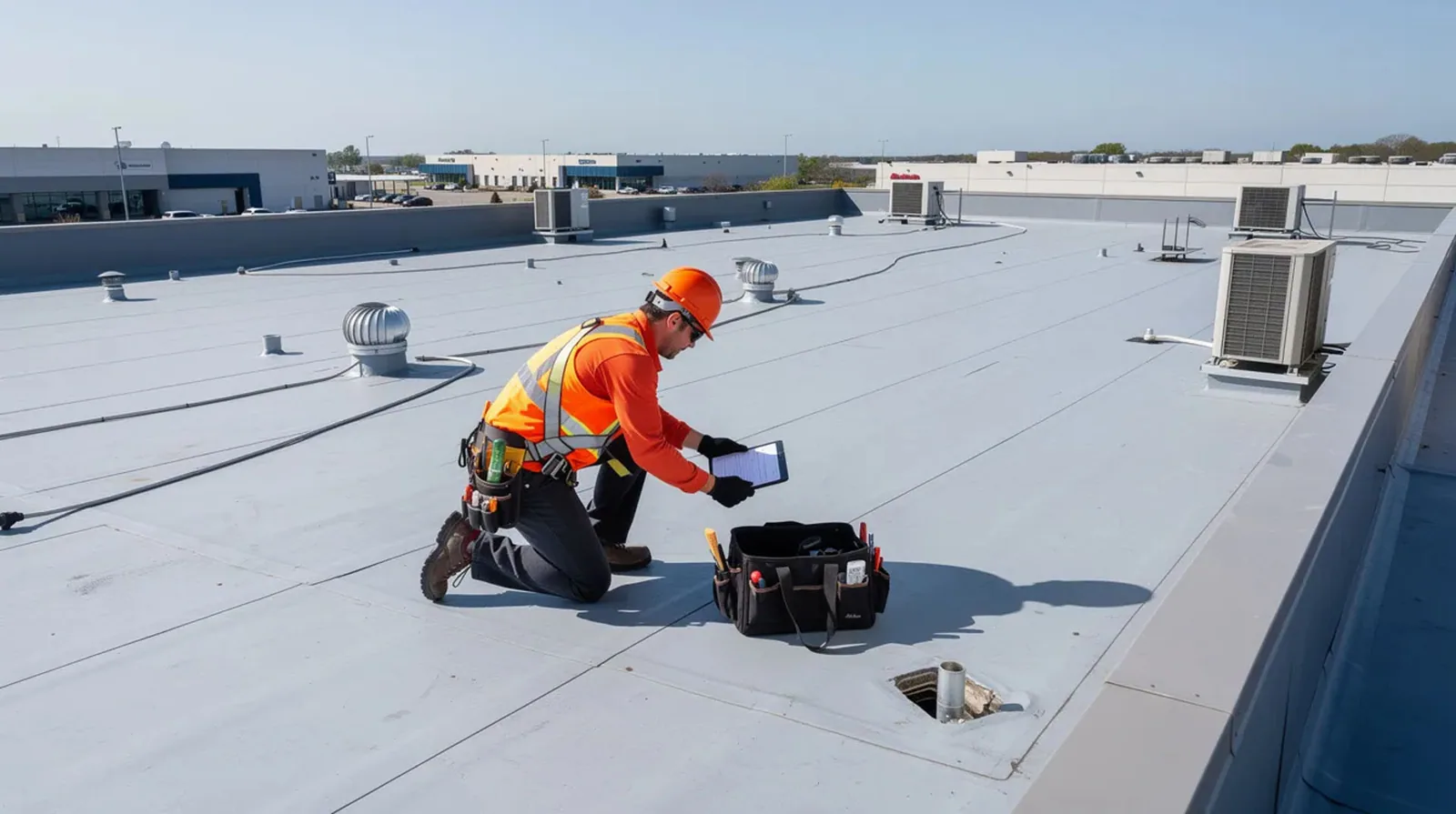
Before surveying, we confirm roof sections, access rules, equipment restrictions, and the decision the results should support. A leak investigation may focus on reported areas; a capital review may compare several sections. We ask about membrane type, insulation changes, overlays, repair history, and known deck conditions. These details affect how a thermal pattern should be read. Roofs with several assemblies may need separate mapping.

Weather and surface conditions determine whether capture is useful. We review the forecast and roof before proceeding. At the Salt Lake City International Airport station, the 1991-2020 annual precipitation normal is 15.52 inches. We also check the roof for recent wetting, standing water, shade, and conditions that can mask or mimic a thermal difference.

Infrared Roof Moisture Surveys

Screen for patterns, not conclusions

Infrared Roof Moisture Surveys

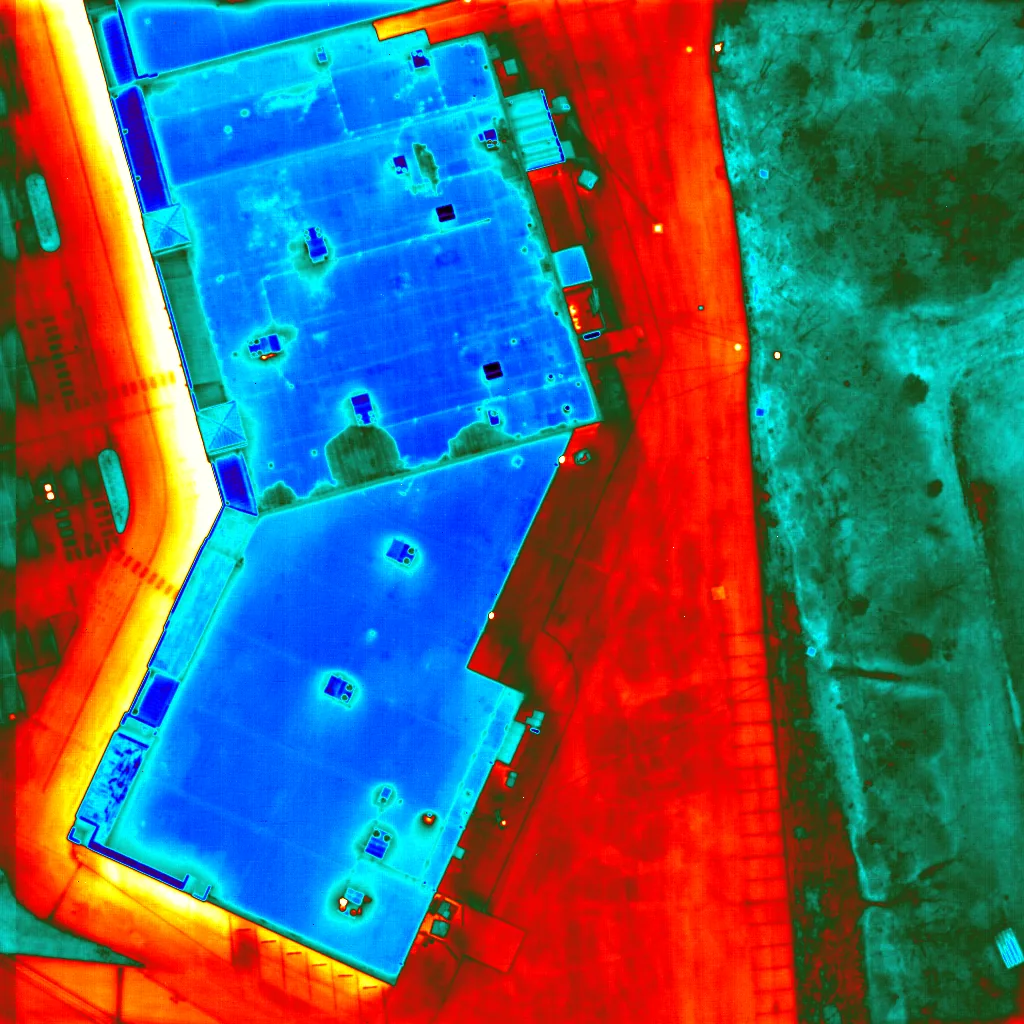
Infrared equipment records surface temperature differences. Under suitable conditions, a warmer or cooler area may reflect a change in the roof assembly, but many factors can create a similar pattern. Surface color, rooftop equipment, shade, air movement, stored heat, and repairs can affect the image. We compare thermal views with visual observations and roof layout, then mark only the areas that merit confirmation. A color band on a screen is not labeled as wet insulation without supporting evidence.

We record the date, roof sections covered, visible limitations, and the locations that appear different from surrounding areas. The map should help a crew return to the same location without confusing one building or roof section with another. Where imagery is used on a large facility, drone roof imaging can help orient broad areas, while infrared observations remain tied to the thermal survey method. If conditions do not support a clear reading, we explain that limit rather than expand the survey result beyond what it shows.

Use test cuts to verify selected areas

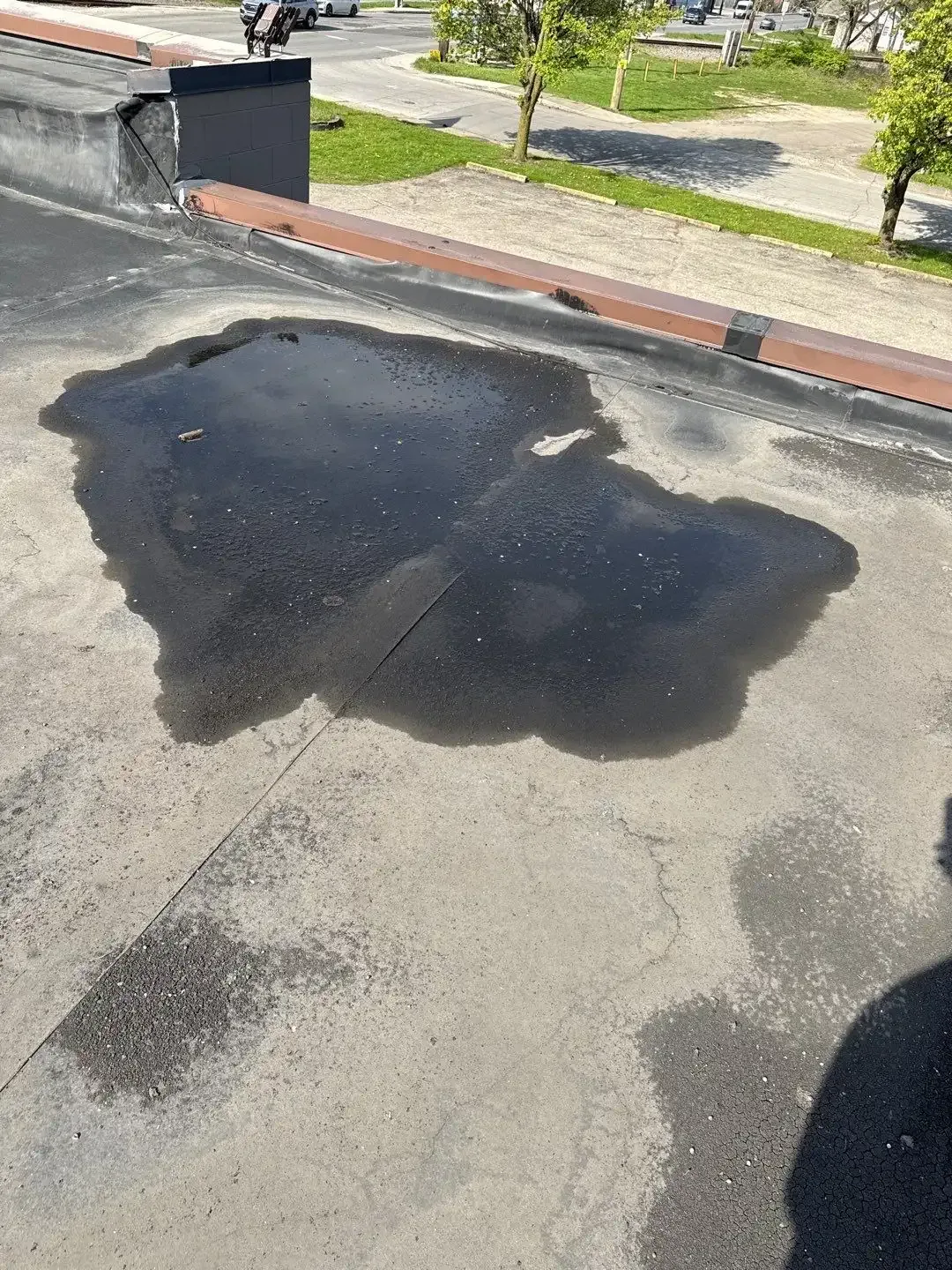
A test cut provides direct information about the layers at a selected point. With owner approval, we open a small area, inspect insulation and substrate, document what is present, and close the opening with a compatible repair detail. The cut location is chosen to answer a specific question, such as whether an infrared anomaly corresponds to wet insulation. One test point does not prove that every nearby square foot has the same condition, so the report records the exact location and observed layers.

We coordinate the cut location and repair approach before opening the roof. If the assembly includes several layers or an existing overlay, we note the sequence and any uncertainty that remains. Wet material, damaged substrate, or a detail that cannot be safely restored may change the next scope and require additional approval. A hands-on roof inspection can document adjacent seams and flashing, while a leak repair evaluation can address active water entry. Each step has its own purpose and limit.

Infrared Roof Moisture Surveys

Map results to building use and access

At a distribution building near northern SR-201, staging may need to work around truck paths and loading operations. We ask how the roof is divided, where interior reports originate, and which access route avoids disruption. West Valley City identifies trucking and distribution uses there. That context helps coordinate the visit; it does not tell us the membrane or insulation on a particular building.

Fairbourne Station combines civic, retail, office, hotel, and multifamily uses. An occupied roof may require shared-access and tenant coordination. We identify roof sections and interior references so staff can connect a finding with the right space. Near North SR-201 or Fairbourne Station, we confirm the access plan with the property contact before setup.

Separate confirmed moisture from thermal anomalies

The final interpretation combines thermal images, visual inspection, roof history, and any verification cuts. Each area is described as confirmed wet, suspected, dry at the test location, or unresolved, based on the evidence collected. We do not apply one test result to a broad roof zone without support. The report may recommend more test cuts where conditions vary or where the selected point did not answer the question. Owners can then choose whether more investigation is worth the cost.

A confirmed wet area can inform a repair boundary, but adjacent material and attachment still need evaluation. If moisture is limited, a targeted repair may be practical. If wet material extends beneath multiple layers, the owner may compare repair with replacement planning. We can connect the findings to roof condition reports or a broader roof capital plan, keeping test evidence distinct from assumptions about untested areas.

Deliver a map the repair team can use

The closeout identifies areas surveyed, capture conditions, mapped anomalies, and verification-cut results. Photos and location references help the next crew find each spot. We note sections omitted or obscured by access, equipment, shade, or unsuitable conditions. A clear record prevents a suspected anomaly from later being repeated as confirmed moisture.

The owner receives next steps and the reason for each one: targeted repair, more confirmation, monitoring, or no immediate action. If wet insulation is to be replaced, we identify proven material limits and remaining uncertainty. At the planned multi-building Mountain View corridor, building labels help tie findings to each roof. The survey ends with a decision path, not just colored images.

Infrared Roof Moisture Surveys

Common questions

Does infrared confirm that roof insulation is wet?

No. Infrared identifies thermal patterns that may warrant further investigation. Surface conditions and assembly details can create similar patterns, so selected locations need verification by test cut or another agreed method. We label what was observed and what was confirmed separately, including a dry test point where that is the result.

How do you choose test-cut locations?

We select locations to answer a specific question about an anomaly, leak history, or suspected assembly condition. The owner approves the opening and repair approach before work starts. Each cut is photographed, mapped, and closed with an appropriate detail, and the finding is limited to the materials visible at that point.

Can a survey cover several buildings?

Yes, when access and conditions support the work. We map each building and roof section independently so one thermal pattern or test result is not assigned to another roof. A facility contact can help coordinate equipment access, operating windows, and interior references for multiple buildings.

What if weather or roof conditions are unsuitable?

We may reschedule or limit the interpretation if conditions make the thermal patterns unreliable. Recent wetting, standing water, shade, and surface changes can affect what the equipment records. The report notes the conditions and coverage so the owner understands whether the results support a decision or another visit is needed.

Will the survey provide a repair price?

The survey establishes mapped observations and verification findings. Once the affected materials and limits are clear, we can scope repair options and price the confirmed work. If a test cut reveals broader damage or an uncertain edge, we identify the added investigation or scope before proceeding beyond the approved work.

Confirm suspected roof moisture

ServicesRoof SystemsIndustriesProperty TypesService AreasDamage RepairCapabilitiesManufacturersContactAboutRequest a Roof Assessment555-555-5555
Call555-555-5555