Roof Due Diligence Surveys in West Valley City, UT

Review a West Valley City property's roof for acquisition or refinancing with mapped findings, photos, test limits, and repair questions for the next decision.

Set a transaction roof review

A soft deck found after closing is harder to price than a test question raised before the transaction. We inspect accessible roof areas, trace visible defects, and identify where opening the assembly could change repair or replacement quantities. In West Valley City, UT, 201 Mountain View Park is a planned multi-building industrial and logistics development. A transaction involving several structures needs findings separated by building, not one condition assigned across the parcel.

A due-diligence survey gives the buyer, lender, or owner a snapshot of roof condition and near-term questions. We record the membrane or metal system visible, prior repairs, drains, edges, and penetrations. Photos locate the observed defects. We also mark areas that access, weather, or concealed layers kept from view. The survey supports a decision; it does not make an unknown layer a confirmed repair quantity.
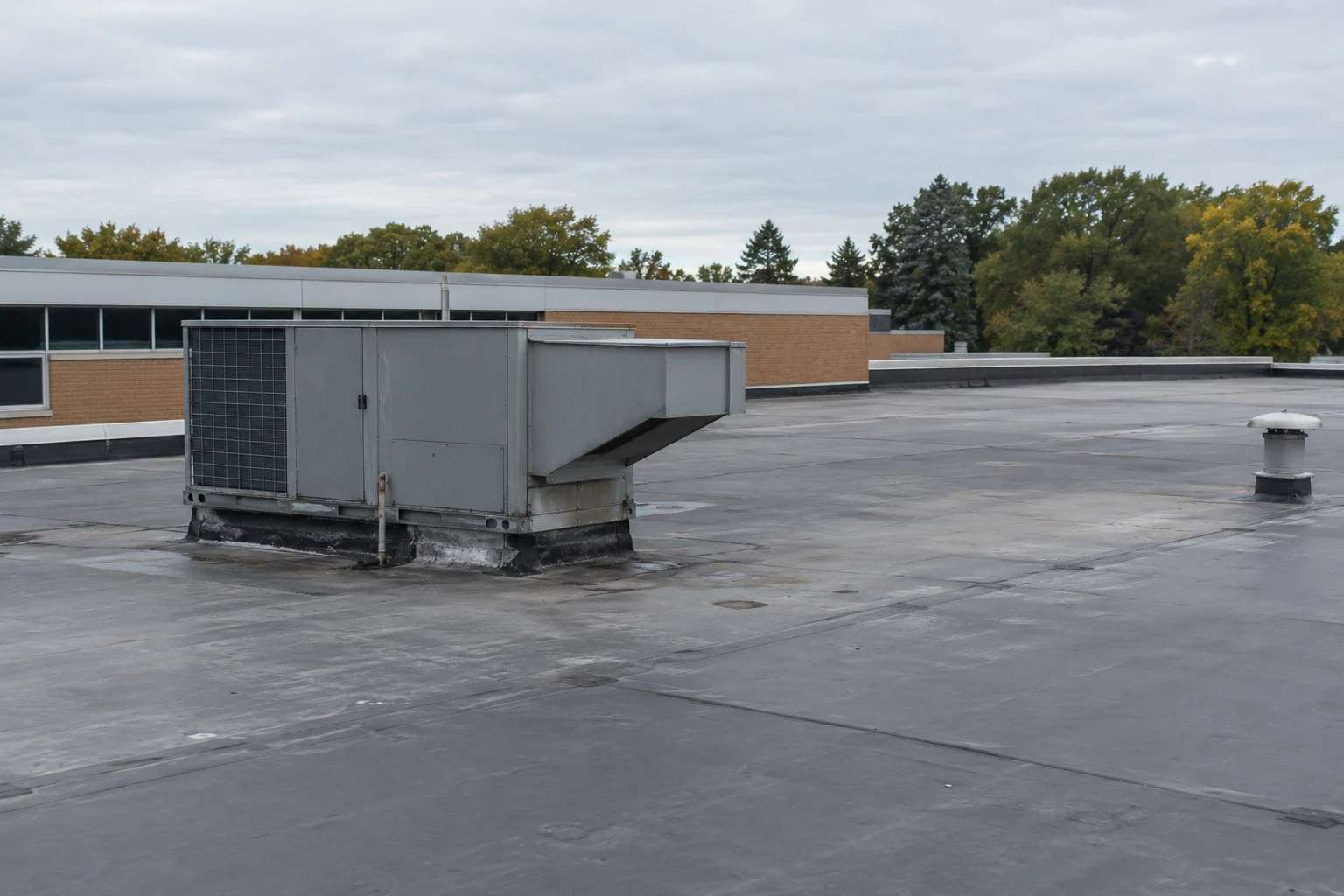
A transaction schedule can leave little time for roof access. We confirm which buildings are included, available keys or escorts, roof hatches, and any areas that cannot be entered. Plans, prior inspections, repair invoices, and warranty documents help orient the visit. If they do not match the roof, we record the difference instead of assuming the drawings describe current conditions.

West Valley City identifies trucking and distribution uses along northern SR-201 and links industrial access with Bangerter Highway and I-215. A property in that corridor may need a loading or lift window coordinated with its operator. We record the access route and the section reached. A photo-based roof report can show the visit limits, while roof inventory records can help distinguish buildings in a larger acquisition.

Roof Due Diligence Surveys

Inspect details that move the repair boundary

Roof Due Diligence Surveys

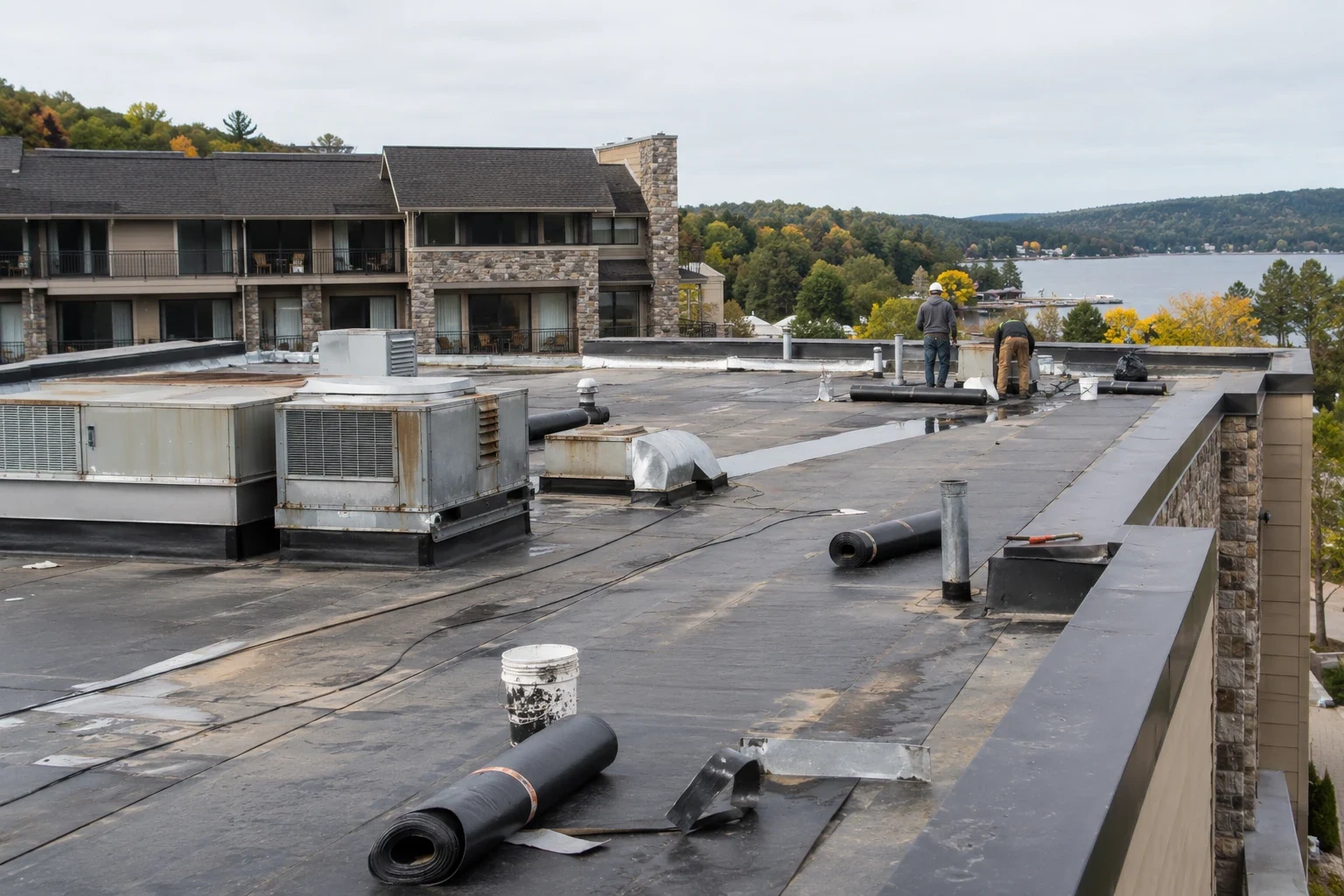
An open lap, failed curb, loose termination, or blocked drain can affect the scope beyond the visible stain. We inspect field seams, flashings, penetrations, perimeter metal, and water routes around low points. The report identifies active leakage, prior patches, and visible deterioration by roof section. If the surface suggests concealed moisture, we state where a test cut would answer the question and whether that opening was authorized.

One test point does not define every roof section. We photograph exposed layers, identify what was confirmed, and distinguish it from areas that remain concealed. An infrared moisture survey can help prioritize possible test locations, but direct testing may still be needed to confirm insulation. We keep the survey's observation and any follow-up test as separate steps so a buyer can decide what to request before the transaction closes.

Translate findings into repair questions

Repair cost depends on defect area, flashing count, access, material compatibility, and whether insulation or deck needs removal. We do not estimate concealed quantities as confirmed work. Instead, the survey identifies the test or opening that would resolve the exposure. The buyer can then compare a defined allowance with a repair authorized after the assembly is opened.

If defects repeat across multiple sections, the survey can compare a local repair with broader replacement planning. We list tear-off limits, dry-in needs, and major assumptions that affect a bid. A capital forecast can carry those findings into a post-close budget, and a follow-up inspection can resolve a condition that was inaccessible during due diligence. Each recommendation remains tied to the inspected building.

Roof Due Diligence Surveys

Fit the survey to the property's setting

Fairbourne’s planned transit district brings together civic space, shops, offices, lodging, and multifamily housing. A property near this area may have shared entries or active pedestrian paths that limit lift placement. We confirm the actual route with the building contact and include any section that could not be reached. The district plan helps frame access discussion, but the roof condition is established only at the property inspected.

For industrial properties, truck movement and staging can affect the survey window. We ask which gate remains open and whether loading activity restricts equipment placement. A survey near North SR-201 can include those route limits in its Diligence Notes. The state code update takes effect July 1, 2026: Utah adopts the 2024 IBC and IECC, subject to state and local changes; the reviewing authority determines project application.

Separate observed conditions from future scope

The final findings list what was inspected, where photos were taken, and which visible defects need attention. We identify any test cut, moisture check, or drawing review that remains open. If the transaction team has a response deadline, we can prioritize the questions that may change immediate repair costs or access planning. The report does not assign a roof age unless reliable records establish it.

We identify project code questions for the design team and permitting authority to resolve before an assembly is selected. We note where a proposed project may require code review rather than assume the existing roof or a future assembly is automatically compliant. A warranty record review can organize documents that may affect maintenance or planned alteration. A survey makes the current facts visible for the transaction's next decision.

Give the transaction team a usable file

We organize photos, roof-section labels, test locations, access limits, and recommendations in a format the owner can revisit after closing. A buyer can see which correction has a defined quantity and which item still depends on opening the assembly. If the property includes separate structures, each gets its own findings and closeout notes. That avoids merging one roof's condition with another building that was not tested.

After the transaction, the new owner can use the survey as a starting record, then update it after repairs or further inspection. We identify the next action and the evidence needed to close each open item. That handoff keeps the survey useful beyond the negotiation period and ties future work to the condition seen during the visit, not to an unstated assumption.

Roof Due Diligence Surveys

Common questions

What can a roof due-diligence survey confirm?

It can document accessible roof conditions, visible defects, repair history provided to us, and test results that are authorized during the visit. We label areas not reached and identify where concealed layers may need confirmation. The report ties each finding to a building and roof section rather than assigning one condition to all structures.

Can you determine a roof's remaining life from one visit?

We describe observed wear, defects, repairs, and the evidence available, then identify questions that need more testing or records. A single access-limited survey does not establish hidden layers or future performance. The buyer receives the condition basis, near-term repairs, and unknowns that could change a longer-term replacement decision.

What if the seller does not allow test cuts?

We complete the accessible visual review and list the areas where a test could change scope. Those conditions remain unconfirmed in the report. The transaction team can decide whether to request testing, carry an allowance, or accept that uncertainty. We do not write a concealed repair quantity as though the material had been opened.

Can a survey cover several buildings before a purchase?

Yes, if each building and roof section is identified in the access plan. We keep observations, photos, and test points separate by structure. A finding at one property does not transfer to the others without inspection. The final file summarizes common themes while preserving individual repair boundaries.

How quickly can you complete a transaction roof survey?

Timing depends on the number of buildings, access, weather, records available, and whether testing is approved. We confirm the required decision date and prioritize roof areas that could materially change the repair scope. Any inaccessible section or test that cannot be completed within the window is identified in the handoff.

Set a transaction roof review

ServicesRoof SystemsIndustriesProperty TypesService AreasDamage RepairCapabilitiesManufacturersContactAboutRequest a Roof Assessment555-555-5555
Call555-555-5555