Commercial Roof Membrane Puncture Repair in West Valley City, UT

Repair punctures and foot-traffic damage on commercial roofs in West Valley City, UT. We inspect the substrate and tie-in before setting scope.

Inspect the puncture before sealing it

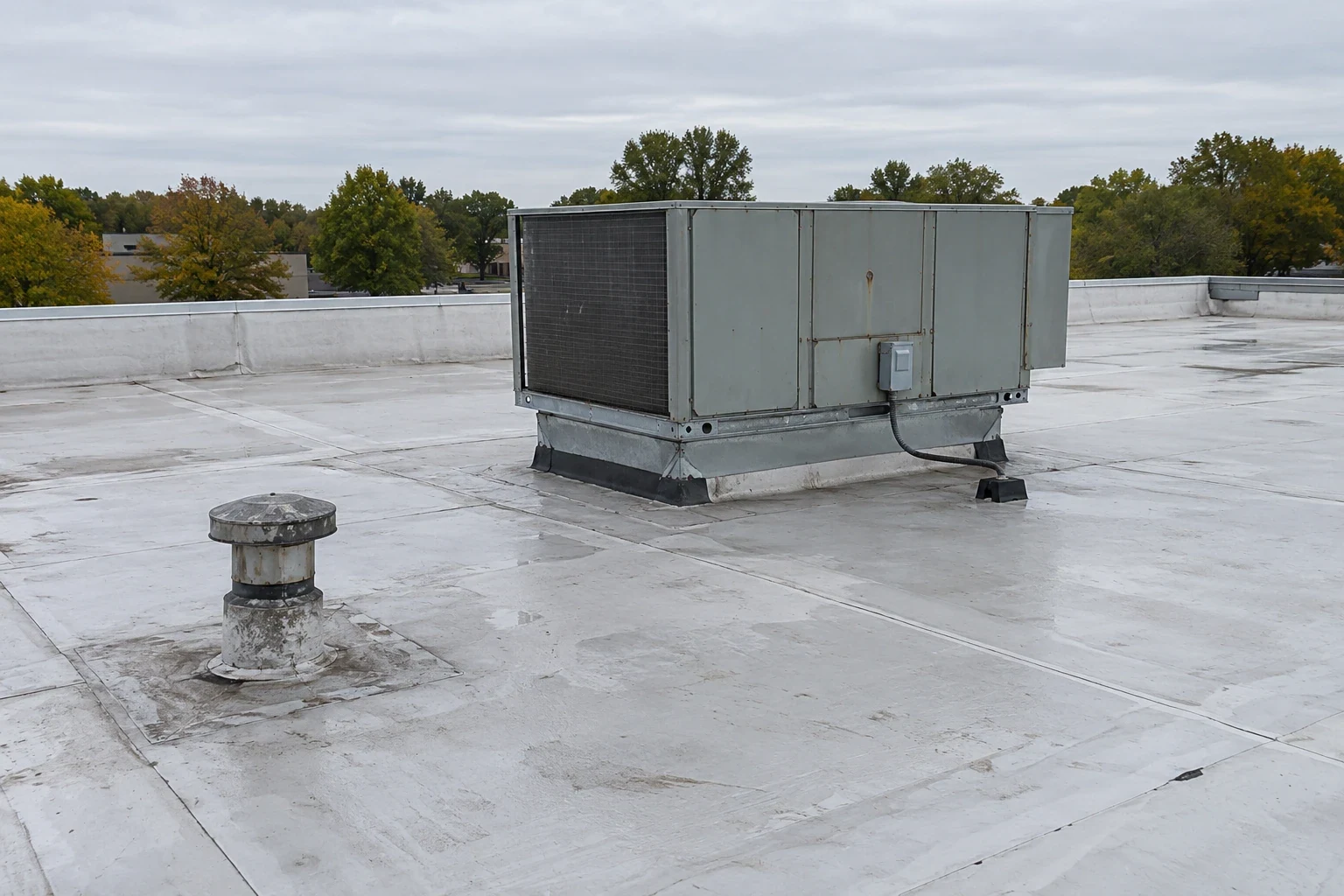
A tool puncture at a service curb can carry water under the sheet before an interior leak appears. We check the opening, the material around it, and the route people or equipment use to reach the unit. In West Valley City, UT, the repair depends on whether the puncture stops at the sheet or continues into wet insulation and cover board. We document the edge of sound material before closing the roof.

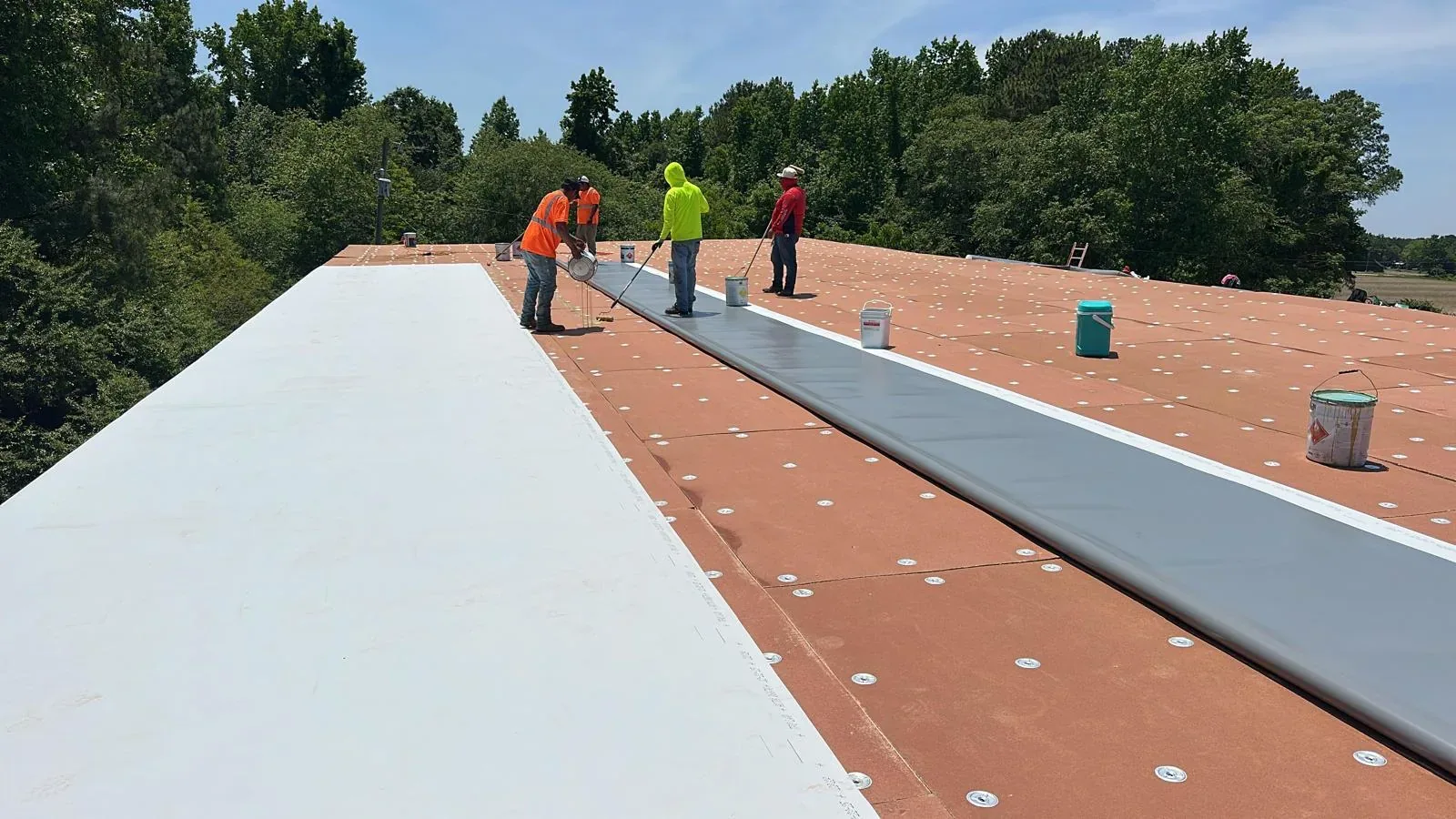
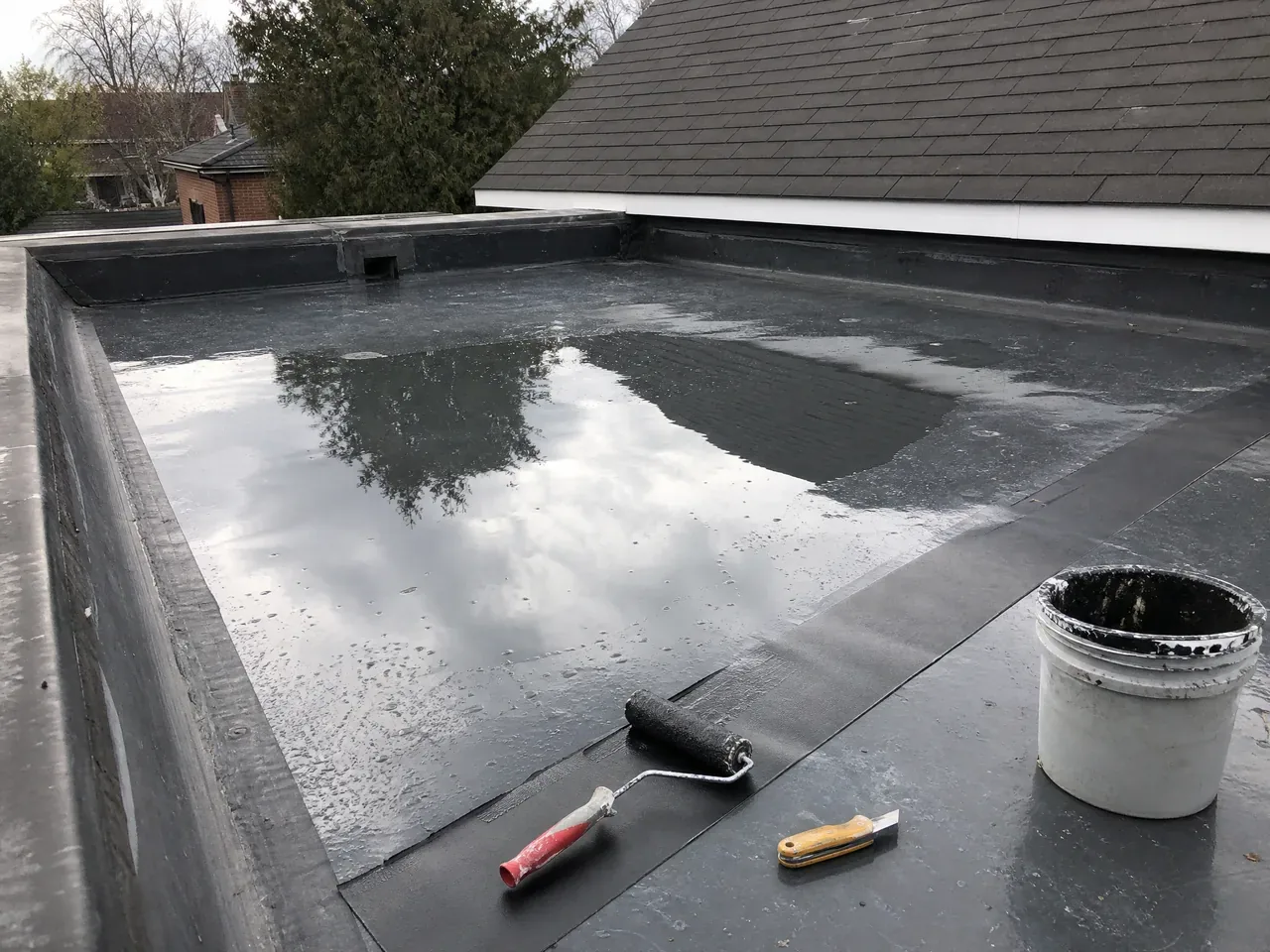
Foot traffic, dropped tools, sharp debris, or a fastener can damage a membrane. A patch placed over loose or dirty material can separate at its edges. We remove compromised material within the approved boundary, inspect the substrate, and install a compatible repair. If more than one puncture appears along a service path, we inspect the full route and separate confirmed damage from wear that has not opened the roof.
A puncture next to a curb can be from service work, while a line of scuffs or cuts may follow a route between equipment. We look for the pattern, measure the damaged areas, and check whether existing walk pads are loose, split, or missing. The facility contact identifies who uses the roof and what maintenance route needs protection. A walkway should guide access without covering a defect that still needs repair.

West Valley City has a concentration of distribution and manufacturing properties, including the planned multi-building industrial and logistics park at 201 Mountain View Park. At an industrial property near the northern SR-201 industrial corridor, the facility contact identifies the approved gate, material drop point, and loading route that must remain clear. We then coordinate the repair window and inspect the full service path for related membrane damage.

Commercial Roof Membrane Puncture Repair

Check the layers beneath the puncture

Commercial Roof Membrane Puncture Repair

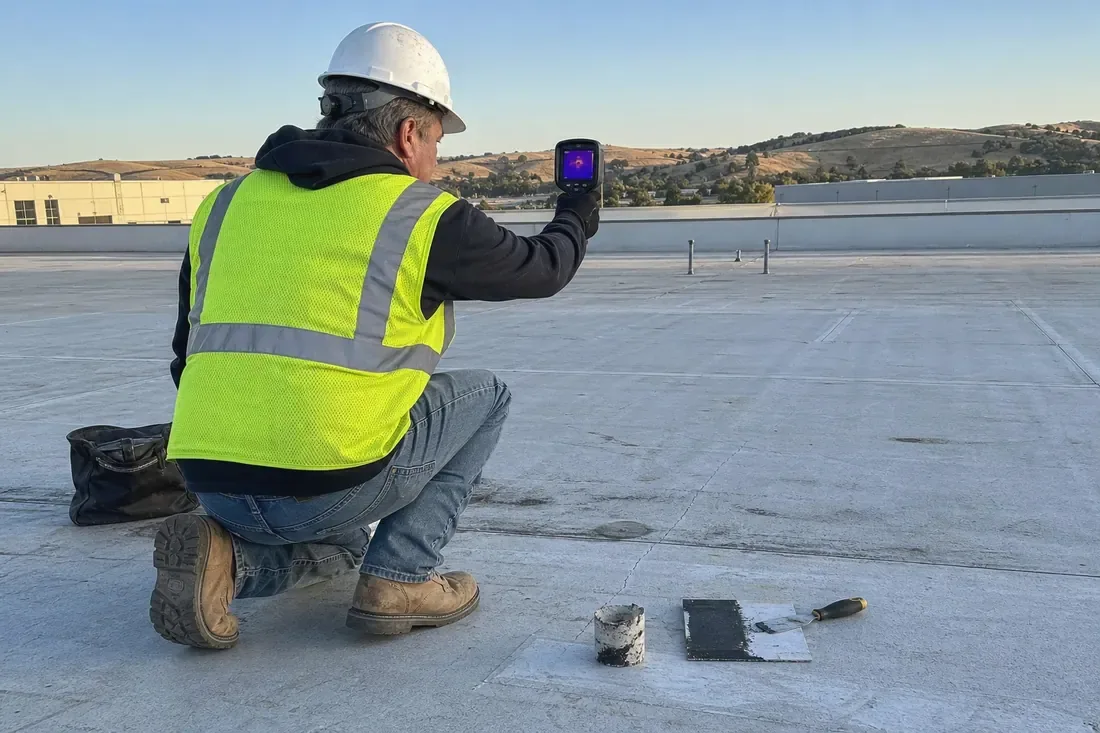
We inspect the membrane, cover board, insulation, and deck where accessible. Softness, water staining, or a depression can signal that the opening has affected more than the surface sheet. If the layer condition changes the repair decision, an approved test cut can expose the assembly at a selected point. We photograph each layer and restore the opening after the inspection. The test result applies to that point, not to every nearby mark.

A roof puncture near a seam or curb can connect to another weak detail. We compare the surrounding sheet for lifted laps, stressed flashing, and trapped water. For damage near a lap, roof seam repair may be part of the scope. A hands-on roof inspection can record other penetrations and traffic paths that were accessible during the visit.

Match the patch to the existing membrane

A repair must bond or weld to the existing roof system. We identify membrane type, thickness where visible, surface condition, and whether the field can accept a new patch. Loose granules, aged coating, contamination, or moisture can interfere with adhesion. The prepared surface needs enough sound material around the opening to make a continuous tie-in. If the sheet is brittle or has multiple nearby cuts, a broader section may be needed.

Fairbourne Station is planned with civic, retail, office, hotel, and multifamily uses. At a property visit in the district, we confirm occupied areas and the access window with its contact. A phased roof repair in an occupied building can limit the active work zone. For a puncture over active interior space, emergency roof response can protect the area while permanent material is prepared.

Commercial Roof Membrane Puncture Repair

Protect the repaired area from repeat contact

After a patch is installed, the access path should not cross an exposed seam or unsupported edge. We identify equipment that needs routine service and coordinate a walk-pad or protection detail where appropriate for the roof system. If another trade is expected to work nearby, the repair location is marked in the closeout record. A new puncture after service work needs its own inspection; the earlier patch does not establish that every mark came from the same source.

The 1991-2020 record for Salt Lake City International Airport shows a 94°F July normal high and below-freezing minimums in winter. We check the repair surface and substrate temperature before work so the selected material can be installed within its limits. A cover-board repair can address damaged substrate, while a wind damage repair may be needed if a puncture follows displaced edge material.

Keep added damage outside the assumed quantity

A single puncture with dry, stable layers often supports a narrow patch. Multiple openings, wet insulation, or a soft deck may require removal of a larger area. We show the confirmed repair boundary and state what still needs testing. Cost changes with membrane type, access, interior protection, and the amount of concealed material exposed. If a larger section is required, the additional quantity is documented before it is added to the scope.

Repeated damage along a service route may justify a broader maintenance or replacement review, but the recommendation follows inspection. A commercial roof repair can include related surface defects when the surrounding assembly is sound. If punctures and open seams appear across separate zones, commercial roof replacement can be compared with targeted repairs. We record which areas support each option instead of treating all wear as a leak.

Mark the puncture and protect the next visit

Closeout photos show the opening before work, prepared area, installed patch, and nearby access path. We record the membrane system when it can be identified, the limits of removal, and any layers that were not exposed. If walk pads or protection need adjustment by another trade, the record says where. Facilities staff can use the same roof reference when planning the next service visit.

The northern SR-201 corridor includes planned light-industrial, trucking, and distribution activity. For properties there, a recurring roof route should account for how often equipment is serviced and who controls access. A written roof condition report can keep photos and open items together. The location still needs a site contact to approve the route, work window, and staging area.

Commercial Roof Membrane Puncture Repair

Common questions

How do you know whether a puncture damaged insulation?

We inspect the surface and nearby roof layers, then recommend an approved test cut if concealed condition would change the repair. The exposed material is photographed and the opening is restored. A single test shows the layers at that spot, so other areas may need separate review if conditions differ.

Can you patch a hole around an HVAC unit?

Yes, if the substrate is stable and the membrane around the opening can accept a compatible tie-in. We coordinate equipment access with the responsible trade and inspect the curb or support nearby. If the damage reaches the curb flashing, the repair includes that transition rather than only covering the sheet opening.

Should walk pads be installed after a puncture repair?

A protection path can reduce repeat contact where staff routinely reach rooftop equipment. We check the roof system and traffic route before proposing a detail, so pads do not cover open seams or block drainage. The facility team identifies which service path needs protection.

What if there are several cuts along the same route?

We map each mark and look for a shared access path, nearby equipment, and damage to walk pads. A repeating pattern may need a wider repair and a protection adjustment. We price confirmed openings separately from scuffs that have not breached the membrane.

What is included in the puncture repair closeout?

Photos show the original opening, prepared substrate, completed patch, and nearby protection. We note any test cut, layers found, and limits on the repair. The roof-zone reference helps facilities staff connect a later report with the exact area that was patched.

Inspect the puncture before sealing it

ServicesRoof SystemsIndustriesProperty TypesService AreasDamage RepairCapabilitiesManufacturersContactAboutRequest a Roof Assessment555-555-5555
Call555-555-5555