Wind Damage Roof Repair in West Valley City, UT

Repair wind-lifted seams, edge metal, and rooftop details in West Valley City, UT. We document damage, set a dry-in limit, and plan permanent work.

Set the wind damage repair boundary

A bent coping splice can admit wind-driven rain before the membrane field shows an opening. We check the perimeter, corners, seams, and nearby penetrations before pricing the repair. In West Valley City, UT, the decision is whether the damage ends at a fastener line or continues into wet insulation and deck. The work area, dry-in limit, and next inspection point belong in the scope.

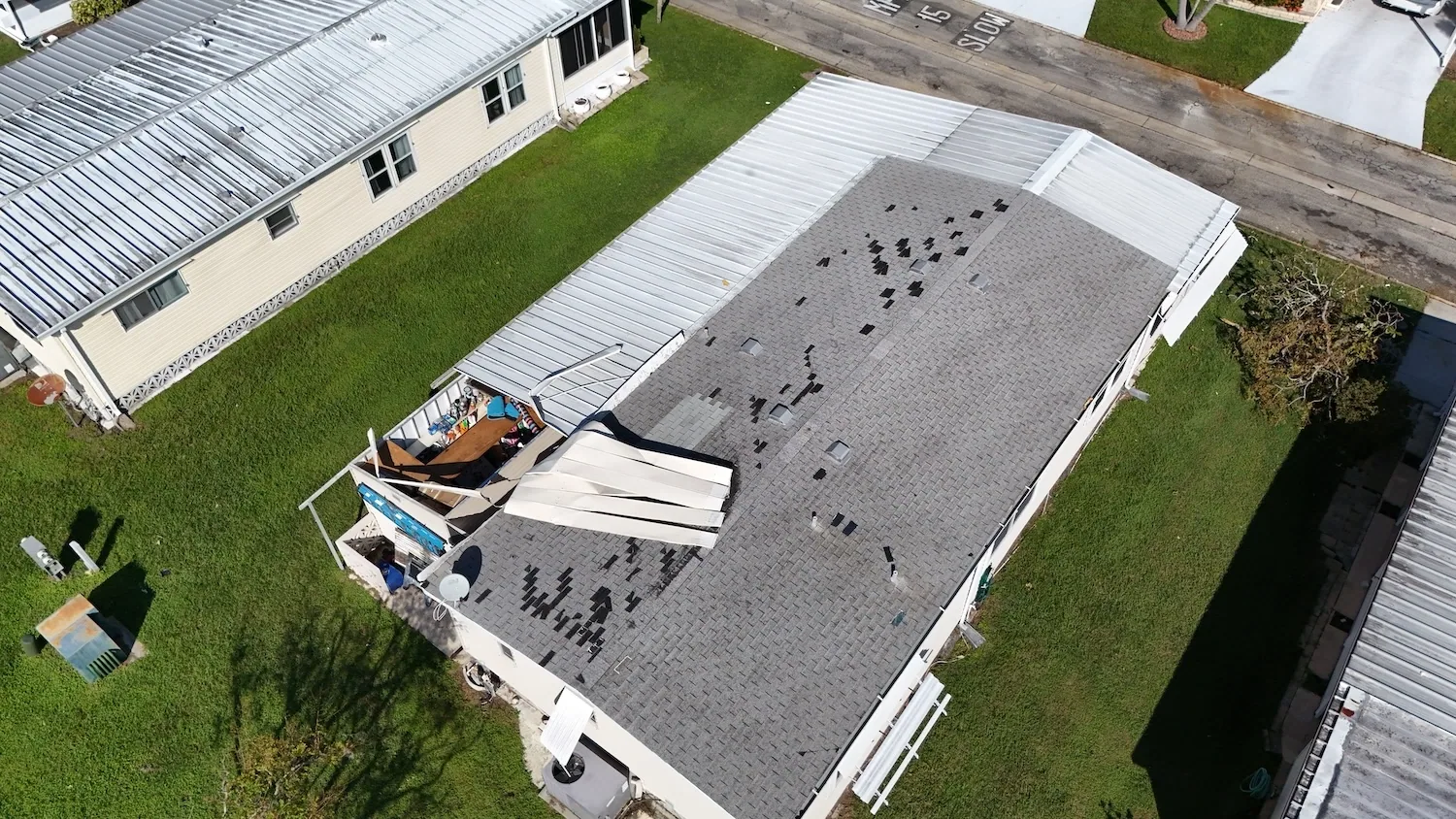
Wind can flex a roof edge, loosen fasteners, peel a lap, or move a rooftop accessory. A displaced piece can also leave an opening that admits water after the weather clears. We photograph the affected area, compare it with sound material, and separate emergency protection from permanent repair. If a test cut shows hidden moisture, the boundary expands only after the added layers and quantity are documented.
Roof perimeters take pressure changes differently from the field. We check coping, edge metal, termination bars, fastener rows, and the membrane tie-in at corners. A loose cleat or pulled fastener can leave the metal able to move again after a quick sealant patch. The repair must restore attachment and continuity, then leave the edge ready for inspection before the next section is closed.

Commercial buildings along West Valley City’s northern SR-201 industrial corridor include trucking and distribution uses. At an occupied loading building, a temporary dry-in line must keep dock routes and deliveries workable while the permanent edge repair is prepared. The building contact confirms the roof and route before mobilization. We set barriers and disposal timing around the access window.

Fairbourne Station’s plan includes civic, retail, office, hotel, and multifamily development. At a specific building there, the property contact sets staging and access. If a delivery door sits below the damaged edge, we keep carts and trucks away from loose material until the perimeter is secured. This separates roof protection from ordinary movement below.

Wind Damage Roof Repair

Trace water beyond the visible tear

Wind Damage Roof Repair

A ceiling mark below a wind-damaged roof does not identify the entry point. Water can travel across insulation or follow a deck flute before appearing indoors. We compare the report with the roof slope, drains, wall transitions, and displaced details. If the membrane is punctured, we inspect the surrounding sheet for stress or loosened attachment. The patch boundary follows the sound material found in the field.

When a visual review cannot confirm whether insulation is wet, an approved test cut can show the layers at that location. We photograph the exposed material and restore the opening with a compatible repair. A hands-on roof inspection can document related areas outside the first opening. For a confirmed tear, membrane puncture repair can address the damaged sheet after the substrate and tie-in are checked.

Secure the roof before permanent work

An open lap or missing edge component can leave the assembly exposed to the next shower. We install temporary protection where needed, record its limit, and set the follow-up window for permanent repair. The roof must be dry enough for the selected materials, and the temporary measure cannot replace a failed fastening detail. If the site remains occupied, we also protect the area below and keep the repair zone clear of routine access.

Salt Lake City International Airport's 1991-2020 normal lows fall below freezing in January and December. We schedule a follow-up for temporary protection that remains through those cold periods. Before permanent repair, we verify that the surface and substrate are dry enough for the selected materials. For urgent exposure, emergency roof response can limit active water entry while the full repair is prepared.

Wind Damage Roof Repair

Check rooftop equipment and flashing

Wind can loosen a curb corner, vent boot, skylight edge, or support that interrupts the membrane. We inspect attachment, counterflashing, sealant, and the nearby field sheet. If the equipment moves or vibrates, a patch across the membrane alone will not restore the connection. The responsible trade controls equipment shutdown or movement, while our scope shows the roof transition and the work boundary around it.

At Fairbourne Station, planned uses include civic facilities, shops, workplaces, hotels, and multifamily housing. For an individual building, we confirm the interior protection and material access before work begins. A penetration flashing repair can restore a failed curb or boot after the substrate is checked. We keep repairs tied to the inspected building rather than extending a finding across a district.

Separate the repair from a replacement decision

A wind-related defect can be local even when the roof is older. If surrounding membrane remains bonded and the insulation is dry, a repair may restore the detail without opening a wider area. Repeated edge movement, failed fasteners across a run, or wet layers can change the recommendation. We show the conditions that move the scope from patch to cutback, recover, or replacement and identify the quantity that still needs testing.

Where damage crosses a larger roof area, a commercial roof replacement needs a staged tear-off and dry-in sequence. For a seam that has peeled but still has stable insulation, roof seam repair can restore continuity to the existing membrane. We price the observed work and identify concealed material that is excluded until it is exposed and approved.

Record what wind moved and what remains

Closeout photos show the damaged edge or seam, prepared surface, installed repair, and the point where sound material begins. We record whether nearby penetrations were inspected and whether temporary protection remains. If an area could not be opened or reached, the record names that limit. Facilities staff can then compare a new leak report with the exact roof detail repaired, instead of relying on a broad description like “the west side.”

West Valley City’s street plan identifies SR-201, I-215, and Bangerter Highway as part of the regional road network. For repairs near the northern SR-201 corridor, the contact can align lift delivery and debris removal with the operating site. A roof condition report can preserve photos and repair priorities for later maintenance planning.

Wind Damage Roof Repair

Common questions

Which roof details do you check after wind damage?

We start with perimeter metal, corners, fasteners, membrane seams, curbs, vents, and any accessory that appears to have moved. The interior report helps locate the affected zone, but the entry point is confirmed on the roof. Photos and measurements show whether the repair can stay local or needs a test cut.

Can a temporary patch protect the building until permanent repair?

Temporary protection can reduce active water exposure while the surface dries or materials are prepared. We record what it covers and arrange the permanent repair separately. If the edge attachment or substrate has failed, a cover patch alone does not restore that connection.

How do you know whether wind damage reached insulation?

Surface review may show a split, loose edge, or displaced flashing, but it cannot reveal every concealed layer. An approved test cut can expose insulation and deck at a selected point. We document that location and expand the repair boundary only when the exposed condition supports it.

Will you repair rooftop equipment damaged during a storm?

Our work covers roof membrane, flashing, and attachment details within the approved scope. The equipment provider handles operation, wiring, and movement of the unit. We coordinate access with that trade and make the roof tie-in after the area is released.

What goes into a wind damage repair record?

The closeout identifies the roof zone, damaged detail, completed repair, and photos of the tie-in. It also details test cuts, temporary protection, and conditions that remain outside the approved work. That record helps staff locate the repair during the next inspection or leak report.

Set the wind damage repair boundary

ServicesRoof SystemsIndustriesProperty TypesService AreasDamage RepairCapabilitiesManufacturersContactAboutRequest a Roof Assessment555-555-5555
Call555-555-5555