Standing Seam Metal Roofing in West Valley City, UT

Inspect standing seam metal panels, clips, transitions, and drainage in West Valley City before planning repair, retrofit, or replacement work.

Review the standing seam roof

A panel seam that has shifted at a roof edge can point to a loose clip, a failed transition, or movement in the supporting assembly. We inspect the seam and its fastening before sizing a repair. In West Valley City, UT, roofs near the North SR-201 industrial corridor may have freight access to coordinate. Along Bangerter Highway, staging and traffic access can set a different work window.

Standing seam roofs use raised, interlocking ribs to join metal panels. Concealed clips let panels shift as temperature changes. The roof still depends on correct fastening, flashing, drainage, and substrate support. We check the panel profile and attachment method before choosing a repair. A seam can appear straight while a clip has loosened beneath it, so we inspect the edge and transition details that control movement.
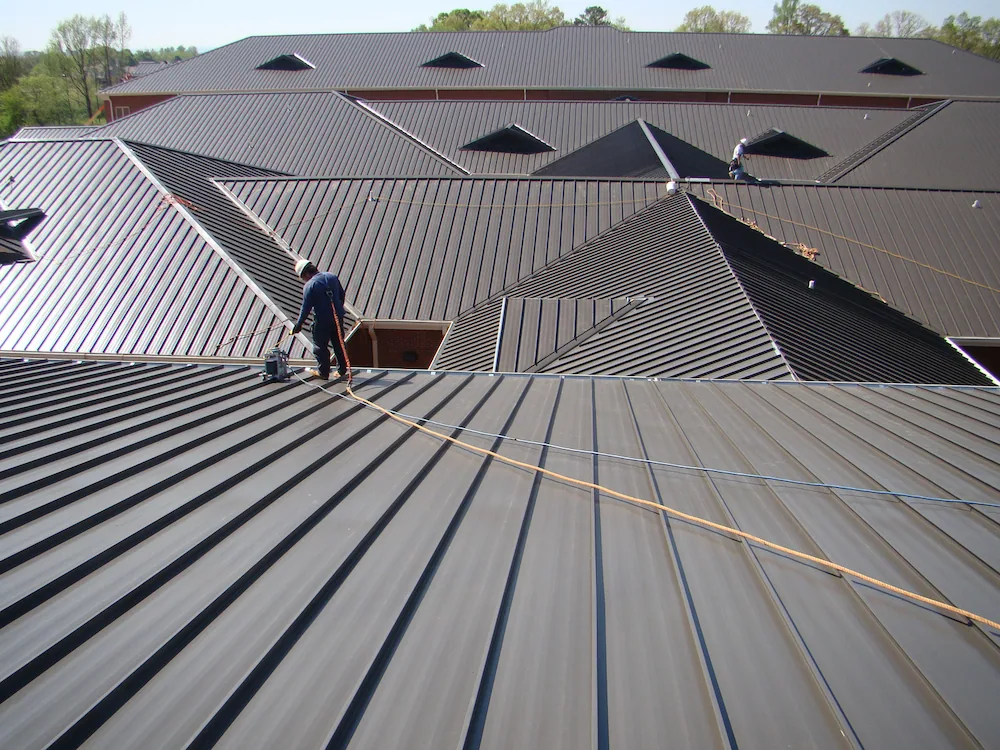
Panel movement can pull at a fixed point or distort a seam where the sheet meets a curb. We inspect the eave, ridge, rake, and expansion details, then compare the panel run with its attachment. Loose fasteners, restricted clips, or a poorly detailed transition may be contributing. We mark the affected panels and check adjacent bays before tightening or replacing a component.

A raised rib can be opened by impact, corrosion, or a connection that no longer locks as intended. We check seam height and engagement along the accessible length. Where a panel has lifted, we inspect under the rib for water entry and substrate damage. A wind damage repair scope can include the affected metal and edge restraint without assuming every panel has failed. Photos show the seam before and after work.

Standing Seam Metal Roofing

Separate finish wear from metal loss

Standing Seam Metal Roofing

Coating fade is not the same as corrosion through the panel. We inspect scratches, cut edges, fastener heads, laps, and areas where water or debris remains. Surface oxidation may be limited to the finish, while a pinhole or rusted attachment can admit water. We document each condition and identify the repair material that can contact the existing coating without causing a compatibility problem.

Panel replacement depends on profile, gauge, length, finish, and whether the matching material can be obtained. We check the support spacing and connections before removing a panel. If only a small section is affected, the repair may be contained. If clips or deck support have shifted, the scope must include those connections. An inspection can map the panels and access limits before pricing a larger metal repair.

Check valleys, curbs, and discharge

Water changes direction at valleys, penetrations, curbs, and wall transitions. We inspect those locations for open seams, lifted flashing, sealant failure, and debris dams. A repair on the field panel will not correct a counterflashing that has pulled away. We trace the route toward the eave or drain and record which component needs to be reset or replaced.

Standing seam profiles need compatible closures and flashing pieces at ends and penetrations. A field-applied sealant can be a temporary measure if movement continues, so we confirm the mechanical detail first. Drainage also depends on panel slope and the outlet path. We check gutters, scuppers, and downspouts for blockage or separation. A metal roof retrofit can be compared when repeated failures involve broad areas, but we inspect the deck and assembly before selecting an overlay.

Standing Seam Metal Roofing

Plan for snow and roof access

Snow and meltwater can load the lower edge and hold debris against a raised rib. At Salt Lake City International Airport, the January snowfall normal is twelve point seven inches from a fifty-one point nine inch year. We inspect eaves, valleys, and panel fasteners before walking or lifting material.

West Valley City identifies SR-201 and I-215 as highways, with Bangerter Highway among its major arterials. Freight and business access can affect where a lift parks and how metal panels arrive. We coordinate truck routes, laydown, and public access with the site contact. If the building is occupied, we set a work boundary around entrances and rooftop equipment. The installation sequence must protect open panel ends and leave a secure edge at each shift.

Compare panel repair with re-covering

Repair cost depends on panel count, seam length, clip access, flashing work, and the amount of finish damage. A loose rib may need a local reset, while a corroded panel with damaged supports can require removal. We show which work is confirmed and what remains hidden under the metal. The price separates panel material from underlayment or structural corrections when those conditions are confirmed.

When leaks recur across several runs, compare repair with replacement or a metal-over-metal retrofit. The existing panel profile, attachment, insulation, and drainage set the limit. We can compare an EPDM membrane only where a low-slope conversion is appropriate and the project design supports it. A broader condition report can group findings by roof plane and prioritize next work. The owner sees the tradeoff in removals, access, and future detail maintenance.

Keep a panel-by-panel record

We record panel rows, seam locations, repaired clips, and transition details. Closeout photos show the work before access equipment leaves. If a panel or support was not reached, we list that exclusion rather than extending the inspection beyond the visible area. That record helps a later review locate the same seam and determine whether movement has continued.

A roof along Bangerter Highway may have different lift staging from a facility near the northern SR-201 corridor. We include the confirmed access window and delivery limits in the project details. For warehouse roof work, loading and equipment clearances may shape the panel sequence. The owner receives a record of the repaired metal, the untested areas, and the next condition to monitor.

Standing Seam Metal Roofing

Common questions

Can a raised seam be resealed without replacing the panel?

Sometimes, if the rib remains sound and the connection can be restored. We inspect the full accessible seam, its clips, and the nearby flashing before choosing a repair. Sealant alone may not hold if movement or a loose connection remains. We document the repair boundary and replace metal where corrosion or damage has compromised the profile.

Why does a metal panel leak at a curb?

The transition can fail even when the field panels remain intact. We check curb height, flashing laps, closure pieces, sealant, and the panel movement allowance. Water can enter at a corner or behind metal that has separated from the curb. The repair targets that transition and its support rather than coating a larger field area without evidence.

Can you replace only one standing seam panel?

A single-panel replacement may work if the profile, length, fastening, and adjoining seams allow removal and reinstallation. We inspect the underlayment and supports before setting the limit. A discontinued finish or panel profile may require a larger section. The estimate identifies matching-material assumptions and any substrate work that remains unconfirmed.

Does snow require a different standing seam detail?

The design and local code determine panel, clip, support, and attachment requirements. We inspect the installed roof and check the project documents before proposing changes. Regional snowfall normals do not establish the design load for an individual building. We verify the applicable requirements for replacement work and document any drainage or edge conditions found in the field.

What should be checked before a metal roof retrofit?

We review panel condition, attachment, deck support, moisture, drainage, and curb height. A retrofit can add thickness and weight, and may cover a problem that should be removed first. Test openings resolve questions about the assembly. The proposal shows where existing material can remain and which details need rebuilding before an overlay is installed.

Review the standing seam roof

ServicesRoof SystemsIndustriesProperty TypesService AreasDamage RepairCapabilitiesManufacturersContactAboutRequest a Roof Assessment555-555-5555
Call555-555-5555