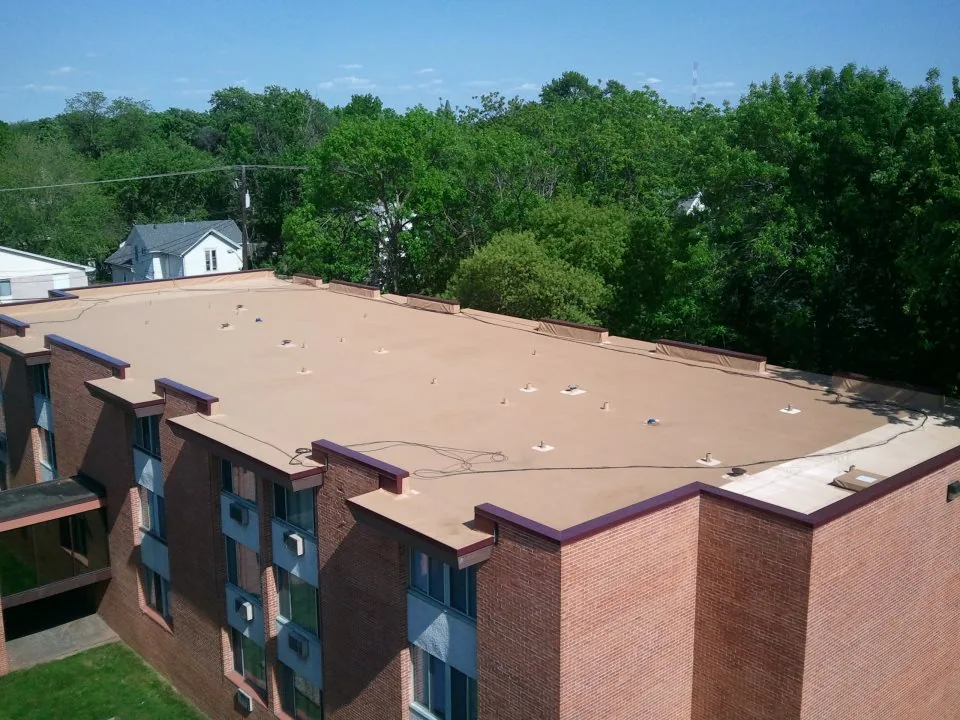
Commercial Roofing in Bangerter Highway Corridor, West Valley City, UT

Coordinate commercial roof repair near Bangerter Highway in West Valley City with delivery access, drainage checks, and a defined dry-in limit.

Set a roof access window near Bangerter

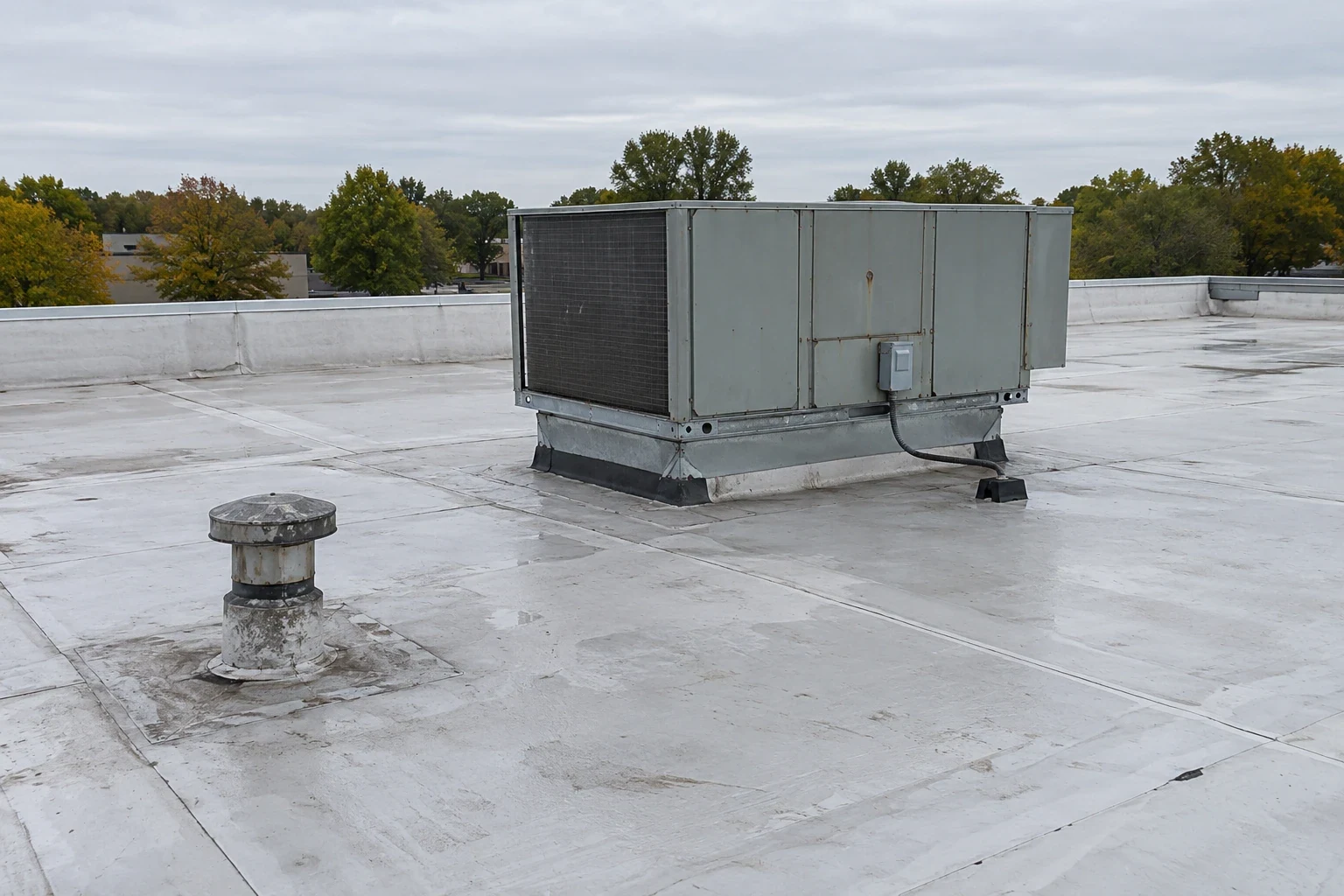
Curb transitions around rooftop equipment deserve close review when water appears near a lifted edge or loose flashing. We check the lap, counterflashing, and insulation before marking a repair line. Bangerter Highway is a major regional limited-access road serving West Valley City, and the city plan links it with trucking and transportation businesses reaching northern industrial sites. That context can help with route planning. The roof and the property access rules set the actual work plan.

We start with the gate, loading lanes, lift position, and roof access point. A busy arterial does not tell us whether a truck can turn or where a crane can stage. We confirm those details with the site contact before setting a delivery window. A commercial roof inspection records the roof zones, seams, penetrations, and drainage so a manager can approve a defined scope instead of a broad allowance.

On the first walk, we trace the route from the leak report to the roof, then compare that point with the nearest seam, drain, and curb. The sequence matters. Water can travel below a membrane before it reaches the ceiling, while an open joint at a curb may be the only failed detail. We record both the reported symptom and the roof evidence so the owner can see why the repair limit lands where it does.
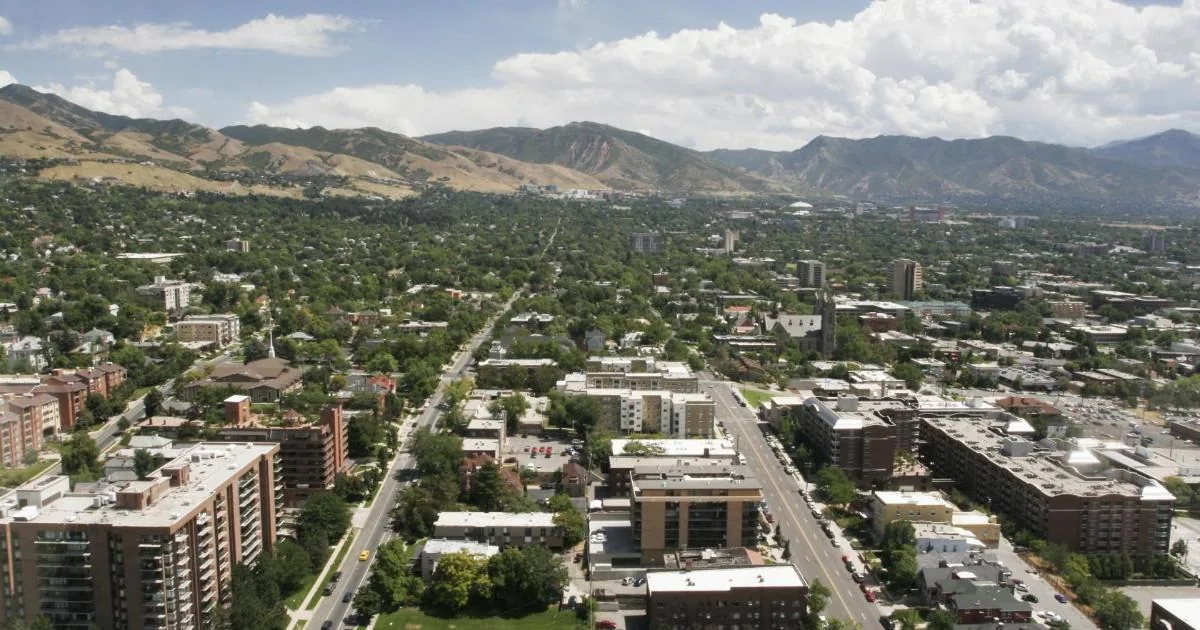
A limited-access highway changes how a crew approaches the district, but it does not replace the property walk. We verify the final turn, gate clearance, overhead lines, staging surface, and route from the ground to the roof. We arrange material staging with the property contact and keep it clear of active vehicle paths where the site allows. If access is shared with trucking activity, we set arrival and removal windows with the person who controls the yard.

The city identifies Bangerter as a route used by transportation businesses accessing northern industrial sites. That is a corridor-level fact, not a statement about each parcel. We keep the roof assessment tied to the actual building. For other building uses, we record their own access limits and roof details.

Bangerter Highway Corridor

Keep the repair line tied to evidence

Bangerter Highway Corridor

A wet insulation edge may sit several feet from the visible ceiling mark. We compare the interior report with seams, curbs, drains, and low areas above it. Where the membrane is soft or the moisture path remains unclear, a test cut shows the roof layers. We photograph the opening and mark the nearest dry, sound substrate. That gives the owner a limit to approve before more membrane is removed.

Roof types can change across a multi-building property or between an addition and the original structure. We identify the membrane, attachment, cover board, and transitions before choosing patch material. An open lap may take a compatible membrane repair; a separated curb may need new flashing and termination. A commercial roof repair scope lists each confirmed defect by location. A moisture survey can help map areas for follow-up where the roof conditions support that method.

Fasteners deserve attention where edge metal meets a changing roof plane. We check for movement, corrosion, pulled heads, and gaps that let water reach the substrate. A loose metal section can often be isolated from a membrane field, but a failed transition may require removal at both materials. The scope names the interface and the required tie-in so a patch does not end at the point where the next leak path begins.

Check the roof through the season

West Valley City’s weather context includes both hot summers and freezing winter periods. The airport record puts August’s normal daily high at 91.7°F and July’s at 94°F; January and December normal lows are below freezing. We use the airport's seasonal normals when planning the inspection calendar. We check the property’s actual membrane and substrate before deciding whether adhesive, sealant, or coating work can proceed.

In its climate record, yearly snowfall averages 51.9 inches, with 12.70 inches as the January mean. Those values prompt us to inspect drain bowls, secondary outlets, perimeter metal, and low spots before the season turns. At each property, we inspect the roof assembly before assigning a repair scope. A drain and scupper inspection can document the actual flow path, while a snow and ice damage review can assess a specific post-event condition before the owner chooses repair or monitoring.

Bangerter Highway Corridor

Price access and roof work separately

Access can change the estimate as much as the repair material. Lift reach, traffic control inside the parcel, material storage, disposal, equipment shutdowns, and the daily dry-in limit all affect labor and sequence. We separate those items from the membrane work. If a test cut reveals wet board or deck damage, the estimate identifies that as a hold point rather than assuming hidden conditions are already confirmed.

Work near northern industrial sites may need to keep vehicle movement open while roof repairs proceed. We mark the ground zone under the work, identify the route that must remain clear, and limit how much roof is open at once. A phased roofing plan can coordinate the daily work area with building operations. Where the scope has expanded beyond repair, removal, deck review, drainage, and dry-in needs are laid out by phase.

Document each roof zone at closeout

Closeout should make the next decision easier. We list repaired seams, curb flashings, drains, and perimeter items, with photos tied to the roof plan. The record notes test-cut locations, substrate condition, materials installed, and unresolved items. If the owner approved a limited repair, the closeout keeps any adjacent weak area visible as a separate follow-up instead of implying it was part of the completed work.

West Valley City identifies Bangerter Highway as a major transportation corridor and a route used by trucking and transportation businesses to reach northern industrial sites. We use that corridor-level context to ask better access questions. The North SR-201 corridor has its own road and site conditions, and a separate northwest-area roof survey should retain the findings observed there. For future budget work, a roof condition report can hold photos and open items for review.

Common questions

Does Bangerter Highway access mean a lift can reach my building?

No. The highway serves the broader city, while each parcel controls its own gate, turning space, staging surface, and overhead clearance. We verify those items with the site contact and select equipment that can reach the work zone safely.

How do you repair a curb leak above an active loading area?

We inspect the curb flashing, nearby lap, insulation, and the route below. Then we set a ground exclusion area and a roof opening small enough to close within the shift. The property contact confirms when loading or equipment shutdowns can occur.

Can you separate roof costs from access costs?

Yes. The estimate can list membrane work, lift or material handling, disposal, and traffic or staging needs as separate items. Concealed insulation or deck conditions remain a review point until a test opening confirms their extent.

What does a test cut tell me that a surface inspection cannot?

It shows the layers below the membrane at a specific location and whether the insulation is dry, compressed, or wet. We photograph the cut and mark the sound edge. That evidence helps define removal without treating one opening as proof of conditions across the entire roof.

How do you keep winter drain work from becoming a larger reroof?

The drain bowl, overflow route, surrounding membrane, and insulation each receive a separate check. If the connection is sound and the outlet is clear, a local repair may be enough. Wet material or repeated failures can justify a broader comparison, with the repair boundary shown before additional work proceeds.

Set a roof access window near Bangerter

ServicesRoof SystemsIndustriesProperty TypesService AreasDamage RepairCapabilitiesManufacturersContactAboutRequest a Roof Assessment555-555-5555
Call555-555-5555