Commercial Roofing in Northwest Quadrant, Salt Lake City, UT

Commercial roof inspection and repair in Salt Lake City's Northwest Quadrant. Check drainage, seams, access, and concealed moisture before setting scope.

Set a roof inspection window in the Northwest Quadrant

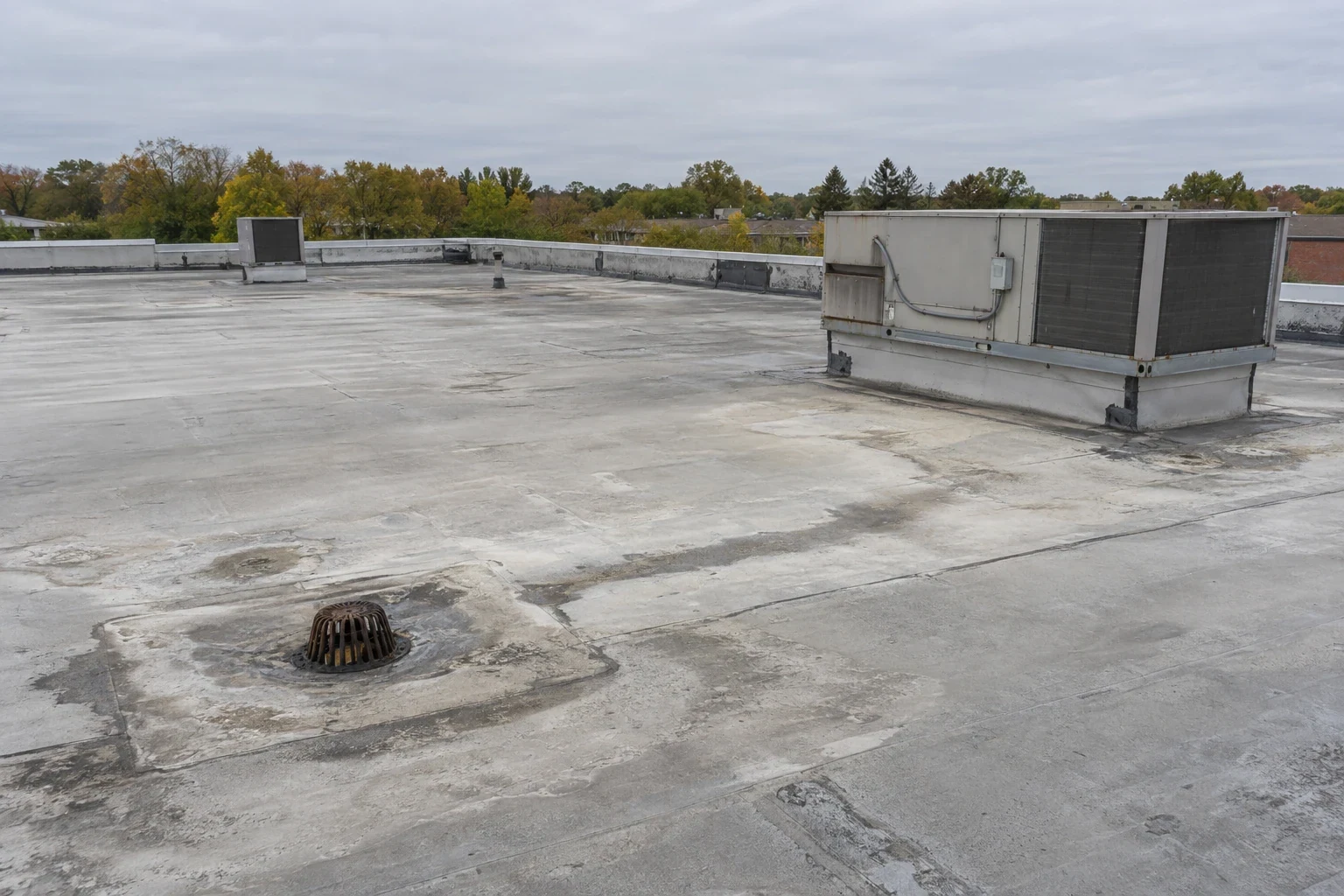
A seam beside a roof drain can open while the field membrane still looks serviceable. We inspect the drain ring, lap, insulation, and nearby low point before deciding whether the repair can stay local. Salt Lake City describes its Northwest Quadrant as an industrial and manufacturing area tied to regional freight activity. That makes roof access and operating coordination part of the estimate, while the building's actual assembly sets the repair boundary.

The quadrant is associated with the state's inland-port and freight network. That context does not identify a specific roof system or loading arrangement. We confirm the address, roof access, equipment routes, and any operating limits with the property contact. Then we map the reported leak against seams, curbs, edge metal, and drainage. A test cut is proposed only when the concealed layers could change the repair or replacement decision.
Freight activity can put a premium on keeping gates, vehicle paths, and work zones clear. Before mobilization, we ask who controls deliveries, where equipment can be staged, and whether roof access requires an escort or a scheduled window. The contact approves those details. A general district description cannot establish the requirements for a particular property, so we check them before a crew or material is dispatched.

At the roof, we identify each building and section in the work order instead of grouping neighboring structures by appearance. Drainage, membrane, and edge conditions can differ between buildings. A commercial roof inspection can produce photos and a location-specific condition record. If a separate property falls in the North SR-201 industrial corridor, its roof still needs a direct inspection before the scope is shared.

Northwest Quadrant, Salt Lake City

Check the perimeter before repairing the field

Northwest Quadrant, Salt Lake City

A lifted edge can admit water under a sheet and expose more membrane than the first opening suggests. We inspect coping joints, perimeter metal, wall transitions, and fasteners for movement, corrosion, or loose attachment. The repair has to terminate on sound material. If the substrate flexes or the insulation is wet beyond the visible edge, we show the owner where a larger cutback may begin.

The city's freight and industrial context does not tell us how a particular roof was built. We inspect attachment and flashing on the actual structure, then note any inaccessible edge. Coping and edge-metal repair may fit a failed termination. When a lap itself has opened, seam failure repair can be scoped around the split if the surrounding membrane remains bonded. The proposal identifies preparation and tie-in limits so a patch is not priced past the evidence.

Inspect drains after snow and freeze cycles

Ice around a drain can hide a cracked ring or a membrane connection that has pulled away. We wait for safe access, clear debris without damaging the roof, and examine the bowl, strainer, overflow, and surrounding surface. Water that remains after the outlet clears calls for a slope and insulation review. We record the low area and adjacent seams so the repair does not stop at the ice line.

Salt Lake City International Airport’s 1991-2020 record gives January a 12.70-inch snowfall normal and an annual normal of 51.9 inches. We use these station normals to schedule winter checks, then inspect the roof drain and low area before setting the repair. Drain and scupper repair can address a failed outlet detail. For a depression that holds water after drainage is open, ponding water roof repair can investigate the surrounding assembly.

Northwest Quadrant, Salt Lake City

Use testing when hidden layers change the price

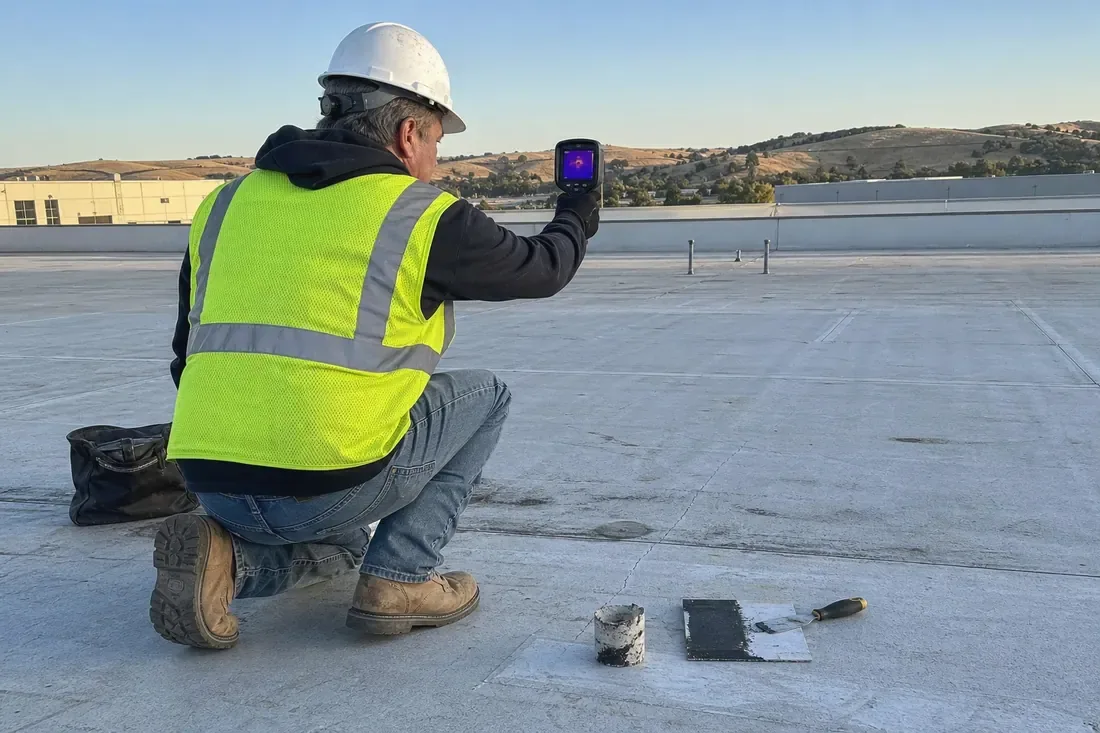
A ceiling stain may sit several feet from the entry point. We compare its location with roof slope, seams, penetrations, and drain paths, then check for soft insulation or delamination where accessible. Infrared or moisture scanning can help identify areas for closer inspection; it does not replace a test opening when the material beneath the membrane controls the tear-off limit. We mark the proposed test location and restore it after documenting the layers.

Winter freeze periods and summer heat both affect how a roof surface and substrate behave. The airport station records below-freezing minimums in January and December, while its normal July high reaches 94.0°F. We check actual temperature and dryness before applying adhesive, sealant, or coating. If a roof survey is needed before the owner compares bids, a roof due-diligence survey can organize visible findings and open questions without presenting hidden damage as confirmed quantity.

Price by roof zone and access window

Price changes with removal depth, repair length, perimeter detail, material, equipment access, protection below, and disposal. Freight operations can also limit delivery times or where a lift can sit, so we confirm the route before estimating mobilization. If a test cut reveals wet insulation, the proposal should state how added removal will be reviewed. The owner can compare a defined repair with a broader option and see what evidence would move the boundary.

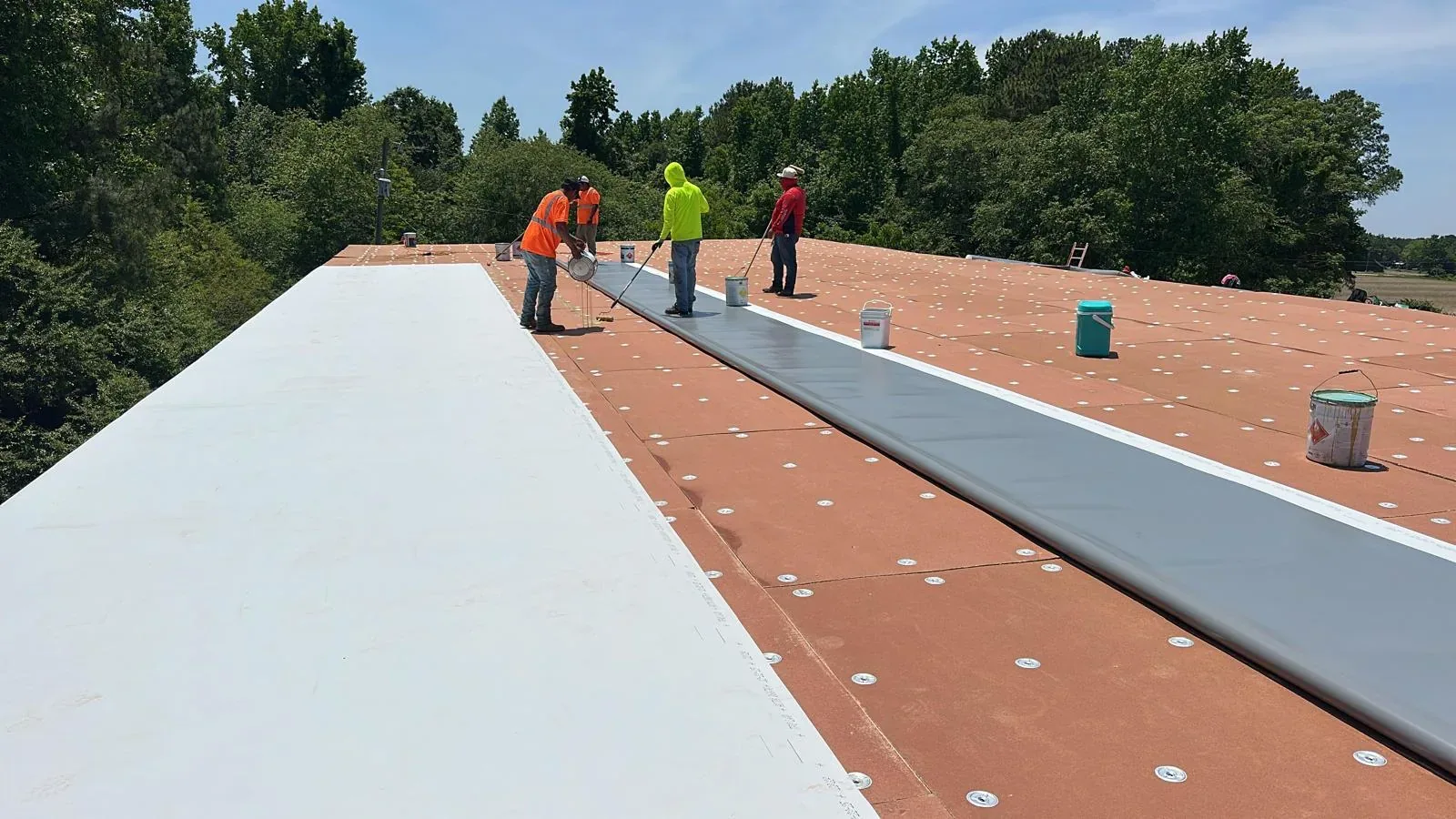
A localized patch can make sense when nearby material is dry and attached. Repeated leaks or moisture across separate zones may support replacement by section. We lay out the work sequence, daily dry-in limit, and any period when an area below must be protected or cleared. Commercial roof replacement can be phased when the assembly condition calls for it. For a property where operations continue, occupied-building reroofing can be considered after access and protection are confirmed.

Give the facilities team a usable closeout

Closeout photos identify the repaired seam, drain, edge, or curb and show the tie-in to existing material. We list the roof zone, repair materials, approved test openings, and any condition left outside scope. If equipment access or another trade affected the work, the record notes the handoff. That detail helps the next inspection distinguish a new defect from the area already repaired.

Salt Lake City's Northwest Quadrant has a broad freight and manufacturing role, but each property's maintenance file should remain specific to its roof. We can prepare a condition report with photos, priorities, and inaccessible areas for budgeting. Share any prior leak map or work order before the next visit. If a second site sits near West Valley City's Northwest Opportunity Area, we inspect and document it separately rather than assume the same assembly or operating limits.

Northwest Quadrant, Salt Lake City

Common questions

Can freight operations continue while a roof section is repaired?

The site contact sets vehicle routes, delivery windows, roof access, and any restrictions below the work. We build a sequence around the approved window and the amount of roof that can be opened and dried in safely. If access changes, the affected work is rescheduled before removal begins.

Does the Northwest Quadrant have one typical commercial roof system?

The district description covers industrial and manufacturing land uses, not one roof assembly. We inspect the building in the work order and record membrane, metal, flashing, drains, and visible substrate before choosing a repair method.

When should a drain repair include a test cut?

A test cut is useful when water marks, soft areas, or repeated leaks suggest wet insulation below the drain connection. We identify the proposed spot and explain how the result could change removal limits. The opening is documented and restored after inspection.

What drives the cost of a repair near the roof edge?

The perimeter length, metal condition, attachment, access height, material, and amount of sound substrate all matter. If deterioration extends behind the visible coping, we separate the confirmed repair from added work that needs removal or testing.

Do airport snow normals describe the Northwest Quadrant directly?

No. The snowfall normal comes from the Salt Lake City International Airport station and provides regional context. We inspect actual snow, ice, drainage, and safe access at the property before starting work.

Set a roof inspection window in the Northwest Quadrant

ServicesRoof SystemsIndustriesProperty TypesService AreasDamage RepairCapabilitiesManufacturersContactAboutRequest a Roof Assessment555-555-5555
Call555-555-5555