Commercial Roofing in South Jordan, UT

Schedule commercial roof inspection and repair in South Jordan with clear access, drainage checks, and work limits tied to the building's condition.

Set the South Jordan roof inspection

A wet core beside an exhaust curb can move a repair from a patch to a larger removal area. We inspect the membrane, flashing, and insulation before setting that boundary. In South Jordan, UT, the city reports nearly 2,000 active business licenses, including home occupations, representing more than 28,000 jobs as of September 2026. That activity spans different property needs; each roof still requires its own field check.

South Jordan covers 25.74 square miles in the southwest part of the Salt Lake Valley. We can inspect one property or map multiple sites, with a separate assembly and access record for each building. The first walk records seams, drains, curbs, and access. A commercial roof inspection helps define what can be repaired and what needs testing.
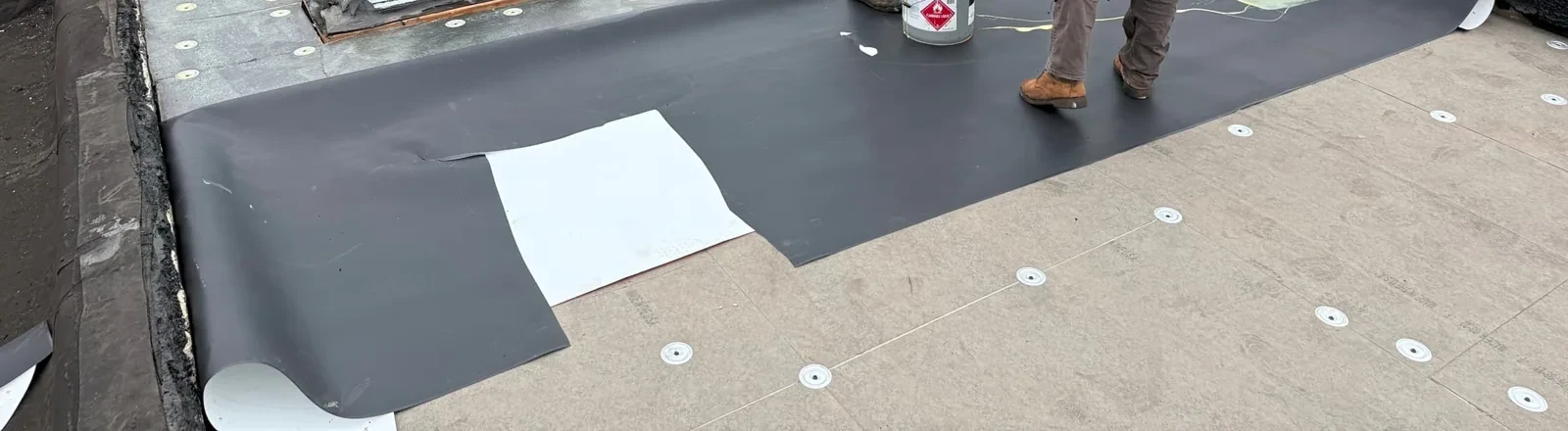
A ceiling leak report gives us a starting point. We compare it with the roof above, then inspect the nearest seam, penetration, curb, drain, and edge. A small test opening can establish whether the suspected leak stops at the membrane or reaches the insulation below. We mark where sound substrate begins and show which area remains concealed. That is the repair boundary the owner can review.

The city’s development team includes economic-development staff, planners, and engineers who assist with business site selection and technical needs. For roofing work, we verify the installed assembly with the owner’s project team and field inspection. An office roof assessment can capture mechanical and perimeter details where an office is the property use.

South Jordan

Follow water to the drain connection

South Jordan

A drain bowl can look clear above while its ring or membrane connection has separated below. We inspect the strainer, bowl, clamping ring, overflow route, and surrounding insulation. A low area may also hold water against an open lap. If the insulation is soft, a test cut can show whether removal should stay at the drain or extend to the nearest sound material.

We keep drainage work separate from membrane repair when the two conditions have different limits. Clearing a path may restore an outlet, while a failed bowl connection needs a roof repair. If a settled area continues to pond, we record the slope and compare a local correction with broader work. A drain and scupper repair can address the outlet and its flashing without adding unconfirmed removal to the price.

Match materials to the existing roof

A patch must bond to the roof that is already installed. We identify membrane type, attachment, insulation, and edge conditions before choosing a compatible repair. Older additions may use a different assembly or meet the original roof at a moving transition. We document that joint and check whether the existing layers remain stable. If the substrate is wet or loose, covering it can preserve the defect rather than correct it.

The city’s license figure includes home occupations alongside other business activity. For a commercial roof, we inspect the building and price its actual condition. For a property with a sound base and suitable details, a recover may be considered. If removal is needed, a replacement scope can show tear-off, deck review, and dry-in as separate steps.

South Jordan

Use Salt Lake Valley weather context carefully

Salt Lake City International Airport station normals put July daily highs at 94.0°F and August highs at 91.7°F. Before applying a liquid or adhesive repair, we check roof surface and substrate conditions against product limits.

Salt Lake City International Airport station snowfall normals show 51.9 inches annually and a January mean of 12.70 inches. We inspect drains, low points, and perimeter edges for blocked outlets, loose metal, or wet insulation before recommending work. A preventive roof visit can capture those details before they interrupt building operations. The inspection record identifies the roof zone, last observed condition, and next action.

Set access and cost by roof zone

Lift reach, loading access, tenant activity, roof layers, and insulation removal affect both cost and timing. We confirm the staging area, route, fire access, and equipment that may need a shutdown. The estimate separates confirmed membrane work from test cuts or deck conditions that remain unknown until opened. If removal reveals a different substrate, the crew secures the area and requests approval before expanding the scope.

South Jordan’s city team assists businesses with site selection and technical needs. For a building project, we coordinate with the owner’s contacts and record roofing questions that affect the sequence. If work occurs over occupied space, the plan marks daily open-roof limits and access windows. A phased occupied-building roof plan can show how the crew protects each area while tenants or building users continue to enter.

Leave the owner a roof record

Closeout identifies the repaired roof zones, material changes, drain details, photos, and any work left outside the approved limit. We note where the test cut ended and whether insulation was dry or replaced. Those details help the facilities contact compare a later leak with the repair. A roof condition report can retain photos and follow-up items for maintenance review.

A South Jordan property should not inherit another city’s access notes or roof condition. We identify the building, route, and repair boundary in its own handoff. West Jordan’s business page lists industrial, office, and retail property categories, while Murray identifies medical, transportation, retail, and professional-office activity in its economy. A roof repair in West Jordan or a Murray roof assessment still needs its own map, access notes, and condition record. A A multi-site roof program can organize those files without carrying one roof’s findings to another. We keep each approval tied to the building that was inspected. Confirmed quantities remain separate from untested areas and future budget assumptions. The closeout ends with the next action and the person responsible for access or approval.

South Jordan

Common questions

Does South Jordan’s business license count tell me how many roofs need work?

No. The city’s reported licenses include home occupations and represent varied business activity, not a roof count or condition report. We inspect the commercial property to identify its assembly, drainage, and repair needs. A site survey provides the evidence for the scope.

How do you decide whether a leak needs a test cut?

We use a test cut when surface checks cannot show whether insulation is wet or how far damage extends. The opening documents the layers and establishes a sound repair boundary. If the condition reaches beyond the initial limit, we secure the area and present the additional work for approval.

Can you inspect more than one South Jordan property in a visit?

We can coordinate access to several buildings, then keep each roof map and report separate. Different membranes, drains, and repair histories change the recommendation. Grouping the visits can help schedule the work, but one roof’s findings do not determine another’s condition.

What affects the timing of commercial roof repair?

Roof access, tenant hours, equipment shutdowns, material handling, weather, and the amount of removal all affect the sequence. We mark the daily dry-in limit and identify hold points before mobilization. If concealed deck damage appears, work pauses there for review before the roof opens farther.

When should a repair be compared with replacement?

Repeated leaks, moisture across multiple areas, or weak attachment can justify comparing a larger scope. We document the repair history and test results, then show removal, drainage, and access as separate factors. A local patch remains an option when surrounding material is sound and dry.

Set the South Jordan roof inspection

ServicesRoof SystemsIndustriesProperty TypesService AreasDamage RepairCapabilitiesManufacturersContactAboutRequest a Roof Assessment555-555-5555
Call555-555-5555