Commercial Roofing in West Jordan Southwest Quadrant, West Jordan, UT

Plan commercial roofing in West Jordan’s Southwest Quadrant with phased access, documented repair limits, and work tied to confirmed roof conditions.

Set a Southwest Quadrant roof scope

A split counterflashing joint can admit water at a wall even when the field membrane looks sound. We check the termination, fasteners, and substrate before opening the roof. West Jordan’s 2023 General Plan designates a Southwest Quadrant and frames it as a major employment center balanced with retail opportunities and affordable housing. Its 1,700 acres are planned for new growth and remain distinct from City Center. Those plans make coordination important; a roof scope still starts at the property.

West Jordan says planning and development involves landowners, developers, companies, City planners, and the City Council. A roof repair or replacement may need to fit a larger site sequence, tenant schedule, or construction hold point. We confirm which team controls roof access and approvals before setting the work limit. A commercial roof inspection records the actual membrane, drainage, curb, and edge conditions for that building.
A district plan does not identify the assembly already installed on a given building. We verify membrane type, roof layers, edge details, penetrations, and any tie-in to new construction. If a roof replacement is part of a broader project, we mark where trades need to pass through or install equipment. The owner can then confirm which roof zones must remain protected until adjacent work is ready.

The city’s Southwest Quadrant plan describes an employment center with retail opportunities and affordable housing. A project may therefore have more than one operator or approval path, but the building’s actual contacts set the sequence. We make a roof access map and identify inspection holds before work begins. A phased occupied-building plan can protect entrances and active operations while work moves across roof sections. The sequence names the daily dry-in line and the person who approves a change.

A project interface needs a clear roofing limit. We identify where new walls, rooftop equipment, or utility work will meet existing membrane. If another trade must fasten through the roof, the scope names who restores the flashing and who photographs the final tie-in. That keeps a completed roof repair from becoming an untracked opening after closeout. The property team can assign each step before access is granted.

West Jordan Southwest Quadrant, West Jordan

Map the roof before pricing the work

West Jordan Southwest Quadrant, West Jordan

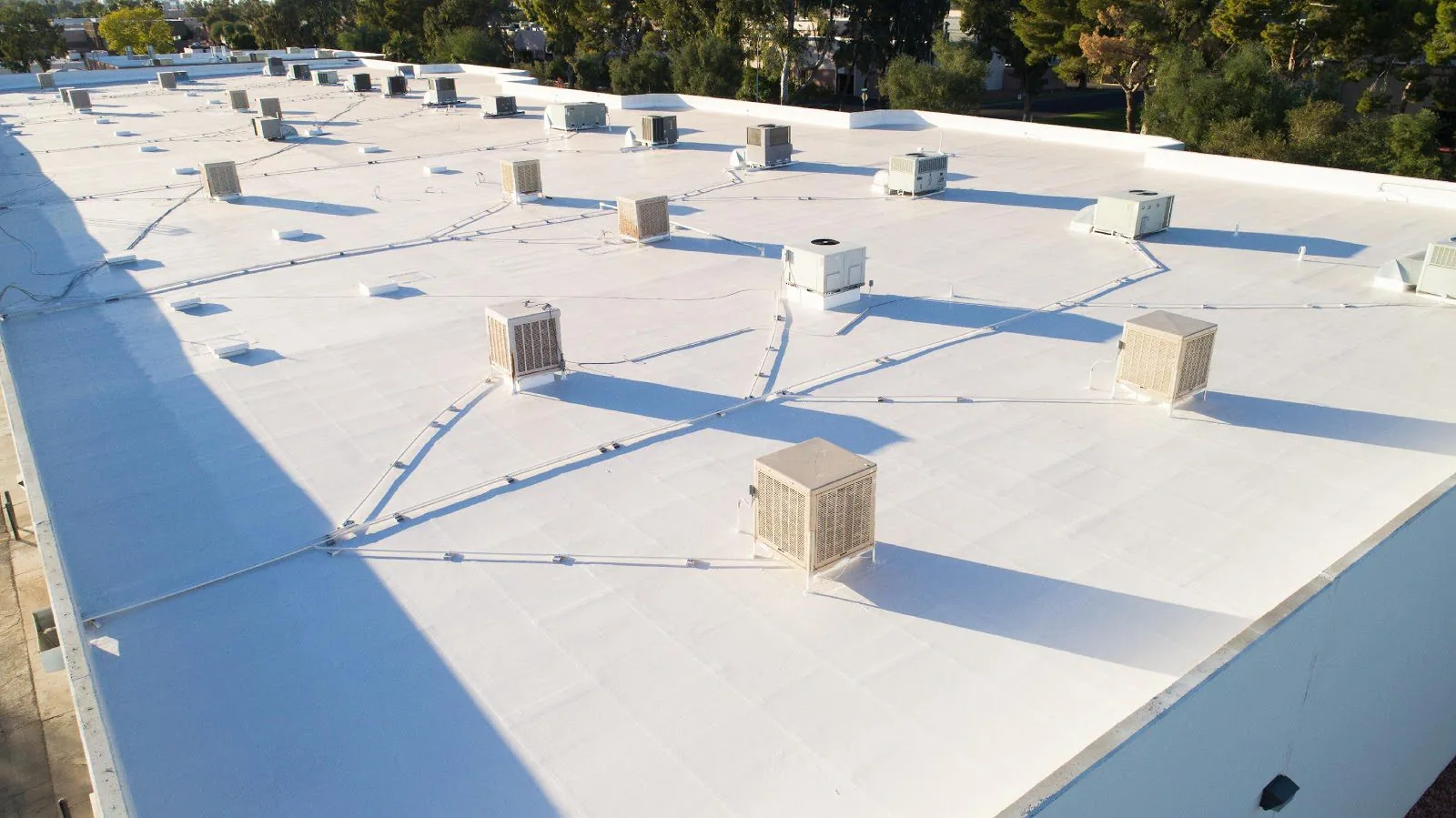
We divide the roof into zones and mark drains, scuppers, curbs, expansion joints, and equipment supports. At a seam, we look for an open lap, wrinkled material, or loss of bond. At an edge, we check whether the termination bar and counterflashing remain tight. If the membrane is soft or insulation appears wet, a test cut can show where removal should stop. Each test opening is tied to a specific point on the roof plan.

For an individual building, we measure the affected zone and distinguish repairable field membrane from hidden layers that require confirmation. A drain and scupper inspection can record whether water reaches an outlet and whether its flashing connection is intact.

On a roof with multiple elevations, the low section may drain toward a different outlet than the upper field. We follow that route and note any overflow that would carry water across a work zone. If equipment blocks access to a drain, the owner helps coordinate a safe inspection window. We can then distinguish a drainage issue from a membrane leak and price the correct detail without grouping unrelated roof areas.

Separate confirmed repair from future work

Cost depends on the approved repair boundary, roof layers, deck condition, access, disposal, and the hours available to open the roof. We list confirmed work first. Concealed insulation or deck damage remains outside that price until a test cut or removal confirms it. If project sequencing requires temporary protection or an inspection hold, those needs appear separately. That makes the scope easier to review alongside other site work.

A localized seam or flashing repair may be enough when the nearby roof is attached and dry. Repeated leaks, multiple wet zones, or a failing deck can justify comparing a larger replacement. We show removal depth, drainage details, and the daily dry-in limit for that option. A replacement scope can be compared with a recover proposal only after the existing assembly and moisture condition are confirmed. The lower initial disruption is not useful if a recover traps wet insulation.

West Jordan Southwest Quadrant, West Jordan

Choose a season and application window

Airport-station normals put the July daily high at 94°F and August at 91.7°F; January and December normal minimums are below freezing. We check the membrane and substrate at the property before selecting adhesive, sealant, or coating and confirm the product’s temperature limits.

The station’s snowfall normal totals 51.9 inches per year, including a 12.70-inch January mean. Ahead of winter, we inspect drain bowls, low points, and perimeter metal. We base the recommendation on what is present: blockage, loose flashing, wet insulation, or a sound outlet. A maintenance inspection can record those details. After a specific event, a snow and ice roof assessment can document damage before repair proceeds.

A winter inspection also checks whether debris or loose material can obstruct a drain or scupper. We photograph any restriction, confirm the outlet route, and note where a roof edge or curb interrupts flow. If the detail is sound, the record can simply carry it into the next maintenance interval. If a defect is visible, the proposal identifies the repair and any access requirement before cold-weather work is scheduled.

Keep approvals and closeout aligned

Before mobilization, we confirm who approves a scope change and who controls access to each roof zone. If a test cut reveals more damage, the crew protects the opening and sends photos for review. That pause keeps concealed work separate from authorized repairs. The closeout records installed materials, repaired details, test locations, and any remaining item that needs another trade or a later budget decision.

The city identifies coordination among landowners, developers, companies, planners, and the City Council as part of area planning. We keep roofing approvals clear within that broader process: one property contact confirms the work limit, access window, and return-to-service condition. A roof condition report can retain photos and open items for future review. If nearby work reaches the wider West Jordan market or 5400 South corridor, those properties receive their own roof map and access record.

Common questions

Does the Southwest Quadrant designation identify my roof’s condition?

No. The plan describes a growth and employment area, not a property’s roof layers, leaks, or remaining service life. We inspect the actual building and record seams, drainage, insulation, and deck conditions before recommending repair or replacement.

How do you coordinate roofing with a larger site project?

We identify the roof zones, access route, trade interfaces, approval contact, and inspection holds before setting a sequence. The daily dry-in line is agreed in advance. If adjacent work changes the access or roof condition, we document the effect and confirm any scope change before proceeding.

Can you price roofing before every concealed layer is opened?

We can price visible, confirmed work and identify a separate allowance or decision point for concealed conditions. A test cut or tear-off may reveal wet insulation or deck damage. We secure that area and provide photos before the owner approves additional removal.

What makes a recover suitable for a project in this area?

The existing roof must have suitable attachment, dry insulation, stable edges, and enough drainage capacity after another layer is added. We inspect those conditions first. If moisture or deck damage is present, removal and replacement may be the better comparison.

Who approves a change if a test cut finds more damage?

The property’s designated contact should be named before work starts. We send the condition and photos, identify the added area and cost, and hold at a protected dry-in point until approval. That keeps project records aligned with the work actually authorized.

Set a Southwest Quadrant roof scope

ServicesRoof SystemsIndustriesProperty TypesService AreasDamage RepairCapabilitiesManufacturersContactAboutRequest a Roof Assessment555-555-5555
Call555-555-5555